


Trump Proposes “Golden Dome” Missile Defense System in Greenland, Creates Tension with Canada
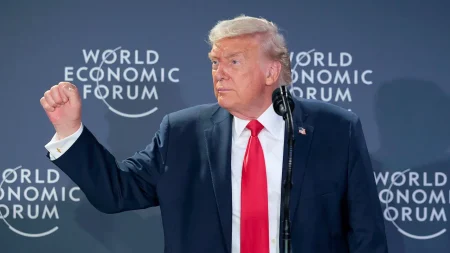
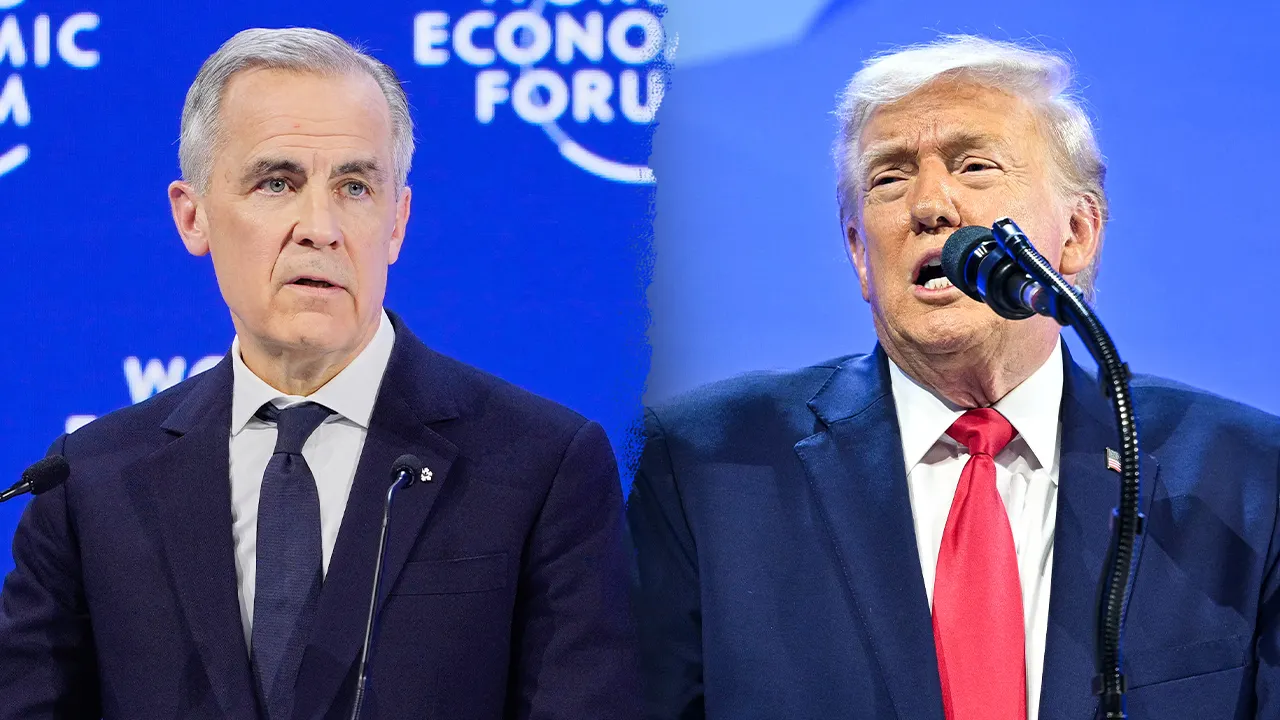
In a bold statement at the World Economic Forum in Davos, President Donald Trump reiterated his interest in U.S. control over Greenland, this time connecting it to his administration’s ambitious missile defense project dubbed the “Golden Dome.” Trump’s remarks have stirred diplomatic tensions with Canada, as he claimed the defensive system would inherently protect our northern neighbor while suggesting they should show more gratitude for American security guarantees. “We’re building a Golden Dome that’s going to, just by its very nature, be defending Canada,” Trump told forum attendees. “Canada gets a lot of freebies from us, by the way. They should be grateful also.” The president specifically targeted Canadian Prime Minister Mark Carney, whose earlier address at the forum appeared to displease Trump. “Canada lives because of the United States. Remember that Mark, the next time you make your statements,” he added in a direct challenge to the Canadian leadership.
The Golden Dome project, unveiled by the White House in May, represents one of the most ambitious missile defense initiatives in American history, with significant technological and financial implications. Treasury Secretary Scott Bessent confirmed that the administration has extended an invitation to Canada to participate in the project, but with conditions. “Greenland is strategically important for Trump’s Golden Dome project to protect the U.S., and he’s invited Canada into that if they want to pay their share,” Bessent explained during a CNBC interview in Davos. The administration has projected costs of approximately $175 billion for the system, which would incorporate space-based sensors, interceptors, and other advanced missile defense technologies. However, the Congressional Budget Office has provided a much broader and potentially more concerning cost estimate, suggesting the space-based components alone could cost between $161 billion and $542 billion over a twenty-year period, raising questions about the project’s fiscal viability and sustainability.
Prime Minister Carney’s address at the forum, while not mentioning Trump directly, seemed to respond to the underlying pressure and dynamics at play. He warned that the rules-based international order is deteriorating as “great powers” increasingly leverage economic and security advantages to pressure allies into compliance. His speech advocated for “middle powers” like Canada to recognize that simple compliance with stronger nations’ demands doesn’t guarantee safety or sovereignty. Instead, he proposed building strength through international partnerships, economic diversification, and steadfast defense of national sovereignty principles. Perhaps most tellingly, Carney specifically reaffirmed Canada’s support for Greenland and Denmark’s right to determine Greenland’s future without external pressure, a clear rejection of Trump’s territorial ambitions thinly veiled as security cooperation.
The dispute highlights the complex and sometimes tense relationship between the United States and its closest allies under Trump’s approach to international relations. His comments suggesting that “Canada lives because of the United States” reflect a transactional view of alliances that has characterized much of his foreign policy. While the United States and Canada share the world’s longest undefended border and maintain deep economic integration, Trump’s approach has often emphasized perceived imbalances in defense spending and trade relationships rather than shared values or mutual benefits. The Golden Dome project, with its enormous price tag and technological ambitions, serves as both a military initiative and a geopolitical bargaining chip in this context, with Greenland’s strategic location being the territorial prize.
The ongoing interest in Greenland isn’t new for Trump, who previously expressed desire for the United States to purchase the massive island from Denmark—a proposal that Danish officials firmly rejected as “absurd” during his first term. Greenland, while technically part of the Kingdom of Denmark, maintains significant autonomy and sits atop valuable mineral resources while occupying a strategically crucial position in the Arctic. Climate change has only enhanced its importance as melting ice opens new shipping routes and access to previously unreachable natural resources. Trump’s renewed focus on Greenland, now framed within the context of the Golden Dome project, suggests a continued belief that territorial control rather than alliance-based cooperation is essential for American security interests, a position that stands at odds with the multilateral approach favored by many traditional U.S. allies, including Canada.
As the Trump administration continues to promote the Golden Dome initiative, important questions remain about its technical feasibility, its astronomical costs, and its implications for international relations and arms control agreements. The Congressional Budget Office’s high-end estimate of $542 billion represents a significant portion of even America’s massive defense budget, raising questions about opportunity costs and budget priorities. Meanwhile, Canada’s reaction signals growing resistance among even the closest U.S. allies to being pressed into supporting ambitious and expensive defense projects that may come with strings attached regarding sovereignty and foreign policy independence. As climate change continues to transform the Arctic region’s strategic significance, and as missile defense technology advances, the intersection of these issues at Greenland may well become one of the defining geopolitical flashpoints of the coming years, testing not just the technical capabilities of the proposed Golden Dome but the diplomatic resilience of some of America’s most important international relationships.