


Finding Truth on “Maury”: The Journey of Paternity Test Babies into Adulthood
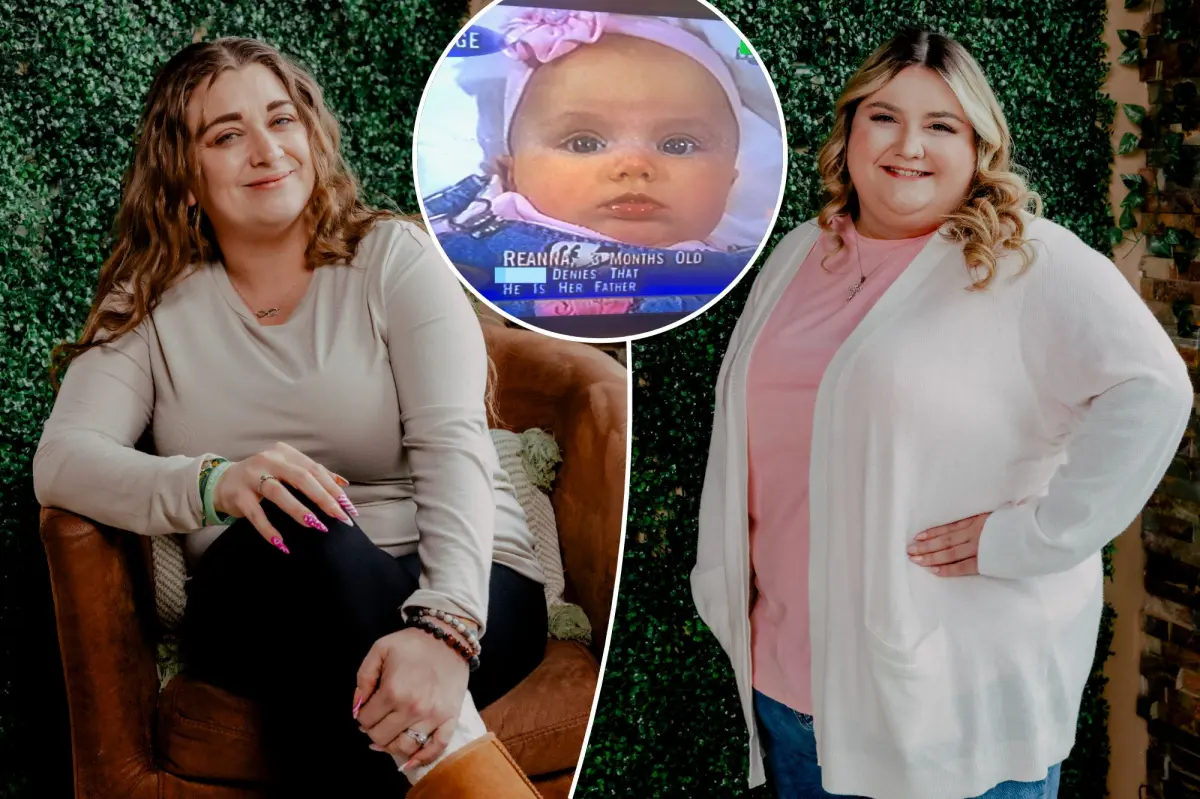
For Reanna Madura, her 18th birthday came with an unexpected revelation. Her mother Melissa Rose, who had harbored a family secret for nearly two decades, finally confessed: “You were on the ‘Maury’ show as a paternity test baby.” Rather than being traumatized, Reanna was thrilled. “Oh my God, that’s so cool!” she exclaimed, though her mother remembers a more colorful reaction involving expletives. This moment of truth marked the end of years of anxiety for Melissa, who had feared her television appearance might scar her daughter. The revelation connects Reanna to a unique group of young adults who began their lives as what pop culture came to know as “Maury babies” – infants at the center of dramatic paternity disputes aired on national television during the show’s three-decade run from 1991 to 2022.
Melissa’s journey to “Maury” began in 1999 when, at just 16, she became pregnant. By October 2000, she was seated on Maury Povich’s stage with 3-month-old Reanna in her arms. “I made a phone call to the show because, at the time, you couldn’t just buy an over-the-counter DNA test at your local pharmacy,” explained Melissa, who described years of “embarrassment” after sharing her personal struggles on national television. The tests cost around $2,500 then – an impossible sum for a teenager with limited resources. Her ex-boyfriend had denied paternity following a heated argument, leaving Melissa desperate for answers. “I was just an uneducated teenager with very little guidance, who wanted the best for my kid,” she recalled. Her story exemplifies the difficult circumstances that brought many guests to Povich’s stage – youth, limited finances, and complex relationship entanglements.
The “Maury” show created an indelible impact on American culture through its paternity test episodes, which followed a reliable formula: fierce on-air confrontations between former partners, emphatic denials from potential fathers, emotional mothers, and the innocent children caught in the middle. Each segment built toward the dramatic climax of Povich opening an envelope and delivering his famous lines – “You are the father!” or “You are not the father!” – to thunderous audience reactions. These revelations often triggered emotional meltdowns captured by pursuing camera crews. While critics condemned the format as exploitative, particularly of lower-income participants, Povich defended his intentions: “All I ever wanted to do was to find out if we could provide young kids with two active parents in their lives instead of one,” he told The Post. “And on the other side, if the fellow was not the father, I wanted to help these families learn the truth. I have no regrets.”
Mental health professionals express concern about the long-term impact on children whose intimate family details were broadcast without their consent. NYC psychotherapist Matt Lundquist explained that parents sometimes make “consequential decisions for their kids without fully thinking through how they will influence a child’s future.” The public nature of these revelations – preserved through reruns and internet clips – can interfere with a child’s ability to establish their own identity separate from being “that baby on Maury.” Upper East Side relationship therapist Genny Finkel warned of potential “intergenerational trauma,” noting that these children “have had to grow up with one of their most vulnerable, private life experiences being caught on tape without their consent.” This could foster feelings of resentment, betrayal, and difficulty establishing trust in relationships. Finkel posed the challenging questions these now-adults might face: “How do you ever trust your parents? And how will that relationship impact the ways you relate to friends, partners or even your own children, who all have access to this personal information about you?”
The contrasting experiences of two “Maury babies” reveal how differently individuals can process this unusual childhood legacy. Reanna, now 25 and working at a call center in Chicago, embraces her story. She feels no resentment toward her mother – in fact, she admires Melissa’s strength in confronting her ex-boyfriend, who was confirmed as Reanna’s biological father. Despite watching the VHS recording of their episode and realizing “my dad never wanted anything to do with me,” Reanna has grown into a well-adjusted adult who works as a youth cheerleading coach and remains close to her mother and younger siblings. “I love that I’m a ‘Maury’ baby,” she said. “I tell everyone I meet. It’s my favorite icebreaker.” Her positive attitude stands in stark contrast to the experience of Makayla Ann, another Midwesterner who appeared on the show at age 3 in 2005. Unlike Reanna, Makayla discovered her television past by accident when someone sent her a link to the episode on Facebook when she was just 10 years old.
For Makayla, now 24 and working as a nutrition aide, the revelation was traumatic. “I was disgusted. It was trashy,” she recalled. Her mother “refused to talk about it,” leaving Makayla to process the information alone. “I resented my mom. She shared a story about me – her drama, my paternity – and it wasn’t hers to tell. The control over my own story was stolen from me at [age] 3.” Throughout her teenage years, Makayla endured bullying as clips from the episode circulated through her school. “Life was really hard for a while,” she said. Now a mother herself to a newborn son, Makayla has become passionate about warning parents against oversharing their children’s lives. “I’m so passionate about encouraging mothers and fathers to think twice before bringing their kids on television or posting them on the internet. You never know where it’s going to end up,” she cautioned. “Anything you share about your kids will be out there forever. I’m still learning how to cope with it.” These divergent experiences highlight the unpredictable consequences when parents share their children’s personal stories without consent – a lesson increasingly relevant in today’s social media age.