



A Nation Divided: Americans Take to the Streets One Year After Trump’s Return to Office
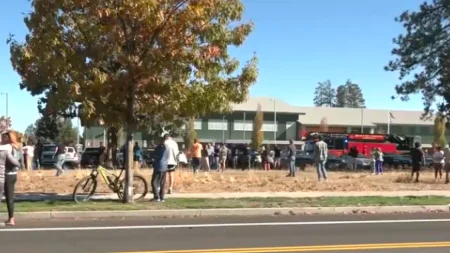
On Tuesday, thousands of Americans from coast to coast abandoned their daily routines to participate in the “Free America Walkout,” a nationwide protest marking the one-year anniversary of Donald Trump’s second presidential inauguration. Organized by the Women’s March—the same group responsible for mobilizing millions after Trump’s first election in 2017—the demonstration represented a powerful rebuke to the administration’s immigration policies. From snow-covered high school campuses to the bustling streets of major cities, participants left schools, offices, and businesses at 2 p.m. local time, creating scenes reminiscent of past American protest movements. The walkout’s timing on a weekday was deliberately chosen to disrupt normal activities and highlight how society depends on the collective participation of its citizens. “A walkout interrupts business as usual,” explained organizers on their website. “It makes visible how much our labor, participation, and cooperation are taken for granted—and what happens when we withdraw them together.”
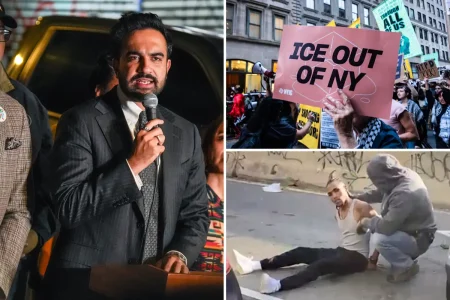
The demonstrations unfolded simultaneously across America’s urban landscape, with particularly notable gatherings in Atlanta, New York City, Minneapolis, and Washington, D.C. In New York, protesters converged outside Trump Tower, their voices rising in unison with chants calling for policy changes as they held aloft handmade signs expressing their grievances. What made these protests particularly striking was their inclusivity—people of all ages participated, including high school students who braved winter conditions to make their voices heard despite being too young to vote. School administrators in several districts, recognizing their students’ desire for civic engagement, reportedly sent notifications to parents and arranged for proper supervision during the protests, striking a balance between supporting student expression and maintaining safety.
At the heart of these demonstrations lies deep concern over the administration’s approach to immigration enforcement. Protesters specifically targeted Immigration and Customs Enforcement (ICE), which has expanded dramatically under Trump’s second term. The administration has deployed thousands of additional ICE agents and federal personnel to cities nationwide in what critics describe as an unprecedented crackdown on undocumented immigrants. This escalation has generated intense controversy, with protest organizers explicitly characterizing the administration’s approach as “fascist” in their public messaging. “One year into Trump’s second regime, we face an escalating fascist threat: ICE raids on our communities, troops occupying our cities, families torn apart, attacks on our trans siblings, mass surveillance, and terror used to keep us silent,” stated the Women’s March website, adding, “It is time for our communities to escalate as well.”
The tensions surrounding immigration enforcement reached a flashpoint following a recent tragedy in Minneapolis, where an ICE agent fatally shot 37-year-old Renee Nicole Good. According to reports, Good’s vehicle was blocking an immigration enforcement operation when the shooting occurred. This incident has become a rallying cry for critics of the administration’s approach, intensifying scrutiny of use-of-force policies within federal immigration agencies. The death has transformed abstract policy debates into something far more personal and emotional for many Americans, serving as a painful reminder of the human consequences that can result from aggressive enforcement tactics. For protesters, Good’s death symbolizes what they view as excessive force and a fundamental lack of accountability in immigration operations.
While the nationwide protests remained largely peaceful, they revealed the profound divisions that continue to define American political life. On one side stand those who believe the administration’s strict immigration enforcement represents necessary protection of national sovereignty and the rule of law. On the other are those who see these same policies as fundamentally inhumane and contrary to America’s traditional identity as a nation of immigrants. This ideological chasm has only deepened during Trump’s second term, with each side increasingly viewing the other not merely as political opponents but as existential threats to their vision of what America should be. The walkout demonstrates how immigration has become perhaps the most emotionally charged policy area in contemporary American politics, touching on fundamental questions of national identity, human rights, and the proper limits of state power.
Beyond the specific issue of immigration, the Free America Walkout speaks to broader concerns about the direction of American democracy. By describing their actions as withdrawing “labor, participation, and consent,” organizers framed the protest within America’s long tradition of civil disobedience—positioning themselves as inheritors of movements led by figures like Martin Luther King Jr. and Cesar Chavez. The reference to withholding “consent” specifically invokes fundamental democratic principles about the government deriving its legitimacy from the governed. For the protesters, their action represents not merely disagreement with specific policies but a statement that certain government actions have crossed boundaries that undermine the social contract itself. As the country moves deeper into Trump’s second term, the walkout suggests that political activism will remain a defining feature of American civic life, with citizens increasingly willing to step outside normal channels to express their dissent when traditional forms of political participation feel inadequate to address their concerns.