

The Hidden Winter Wonderland: Life Beneath the Snow
In the quiet stillness of winter, when snow blankets the landscape in a thick white coat, most of us imagine a dormant world waiting for spring’s return. We see the surface calm, but beneath that peaceful covering exists a vibrant, hidden ecosystem that scientists call the subnivium – a secret realm where life thrives even as temperatures plummet above.
The subnivium forms when snowfall accumulates to about 15 centimeters deep, creating a network of small hollows and pathways around fallen trees, rocks, and vegetation. This natural igloo provides remarkable insulation, maintaining a consistent temperature of about 1°C regardless of how frigid the air becomes above. That single degree above freezing makes all the difference, supporting a diverse community of organisms that continue their life cycles throughout winter. According to Jonathan Pauli, a community ecologist at the University of Wisconsin-Madison, this insulated labyrinth offers crucial protection from the harsh elements above, allowing a complex web of life to persist during what many once considered a “dormant” season.
Down in this winter sanctuary, an intricate dance of life and death continues uninterrupted. Bacteria and fungi remain active, breaking down autumn’s fallen leaves and organic matter. These microbes perform essential ecosystem services, consuming dead plant material, respiring carbon dioxide, and storing carbon in their cells. Research shows that deeper snowpacks support larger and more diverse microbial populations, ultimately contributing to more carbon-rich soil. When spring arrives and these microbes die, they release a flush of nutrients into the soil precisely when emerging plants need them most. Meanwhile, a fascinating array of arthropods – springtails, centipedes, rove beetles, and specialized spiders – hunt, breed, and move through this undersnow environment. Some species like the meshweaver spider and certain rove beetles are subnivium specialists, thriving in winter while remaining dormant during summer months.
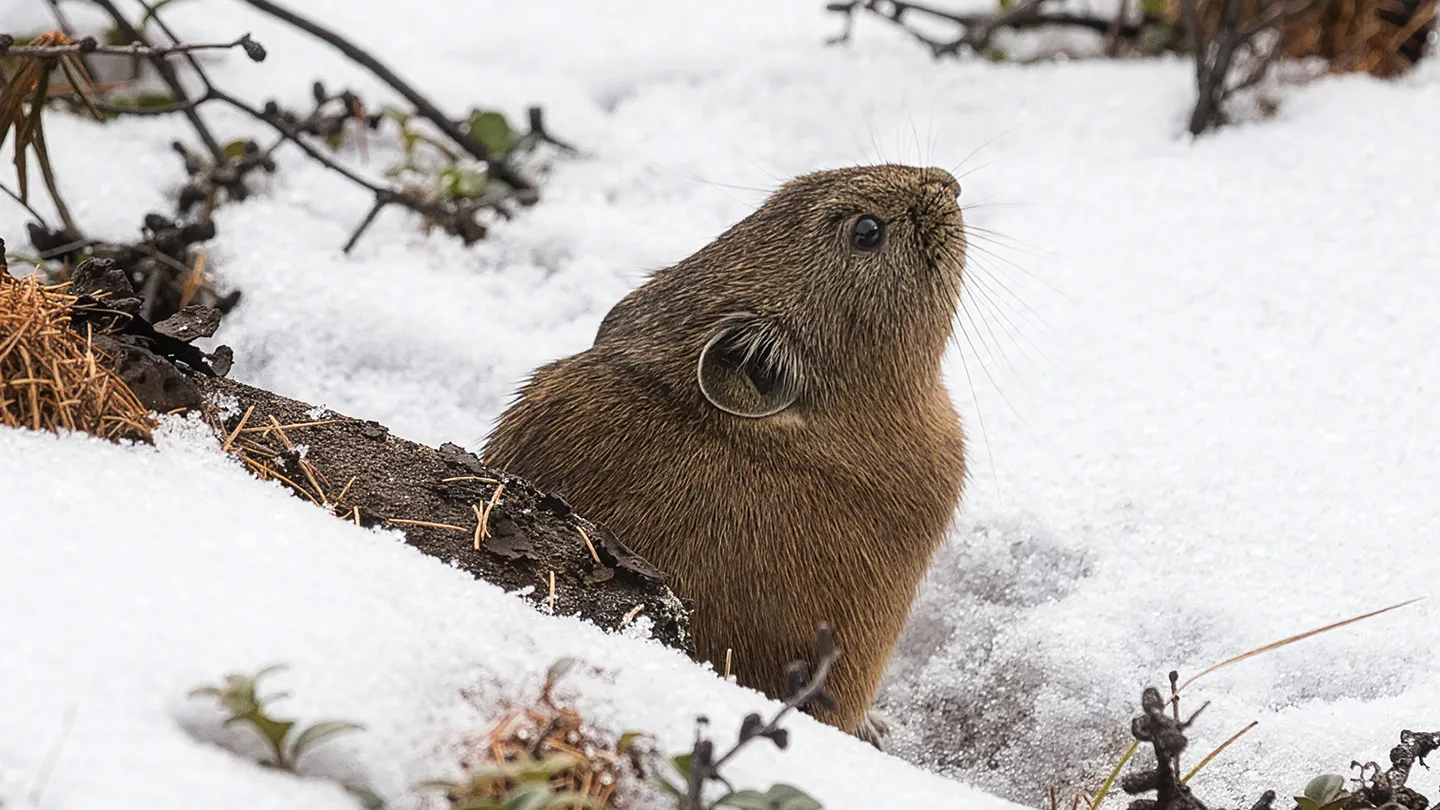
Larger animals also depend on the subnivium for survival. Small mammals like voles and lemmings seek shelter there, feeding on plants and trying to avoid predators. These mammals, in turn, attract hunters like the American marten, a cat-sized predator that slips in and out of the subnivium in pursuit of prey. Even birds like ruffed grouse and willow ptarmigans, though primarily living above the snow, dive into drifts to roost and stay warm. Marmots and pikas rely on the consistent temperatures to maintain their winter hibernation or survival. This interconnected food web continues functioning beneath the snow while the world above appears lifeless, demonstrating nature’s remarkable adaptability to extreme conditions.
However, climate change poses a serious threat to this delicate ecosystem. Rising global temperatures are reducing both the duration and depth of winter snowpack. Research published in Nature Climate Change projects that the annual presence of the subnivium worldwide will decrease from 126 days per year (based on 2014 data) to just 110 days by century’s end. The consequences could be devastating. Without adequate snow insulation, the ground freezes more frequently, causing plant roots and microbes to rupture. When microbes burst, they release nutrients months before plants can utilize them, creating a “double whammy” effect that weakens trees and forests year-round. Specialized subnivium arthropods face potential local extinction. Larger animals suffer too – a drought and low-snow winter in North Cascades National Park caused a significant decline in pika populations at lower elevations and forced hibernating marmots to expend four times the normal energy to maintain body temperature, resulting in a 74 percent population drop.
Scientists are now racing to understand and protect these vulnerable winter ecosystems. Elizabeth Burakowski of the University of New Hampshire is hunting for climate refuges – areas where the subnivium might persist despite warming trends. High elevations and north-facing slopes, which warm more slowly than surrounding areas, could serve as protective pockets. Forest management also offers potential solutions. Burakowski describes a “Goldilocks zone” for tree density – thin enough to allow snow accumulation on the forest floor but thick enough to provide shade that prevents rapid melting. Strategic forest thinning in some areas might help preserve vital subnivium habitat.
As our winters continue to change, the fate of countless organisms hangs in the balance. The subnivium reminds us that nature’s interconnected systems often operate beyond our immediate perception, with the health of forests and wildlife communities dependent on processes occurring beneath the snow. By understanding and protecting this hidden winter world, we might preserve not just a fascinating ecosystem but the larger environmental systems it supports throughout all seasons. While the long-term solution requires dramatic reduction in carbon emissions, immediate conservation efforts can help these snow-dependent communities survive as our climate continues to change. The next time you walk across a snow-covered landscape, remember the bustling world beneath your feet – a winter wonderland in the truest sense, fighting for its continued existence.