


ISIS Claims Responsibility for Deadly Attack on Chinese Restaurant in Afghanistan
In a tragic turn of events that highlights the ongoing security challenges in Afghanistan, ISIS claimed responsibility for a suicide bombing at a Chinese restaurant in Kabul that claimed multiple lives. The attack, which occurred in broad daylight, has further strained international relations and raised concerns about the safety of foreign nationals in the Taliban-controlled country.
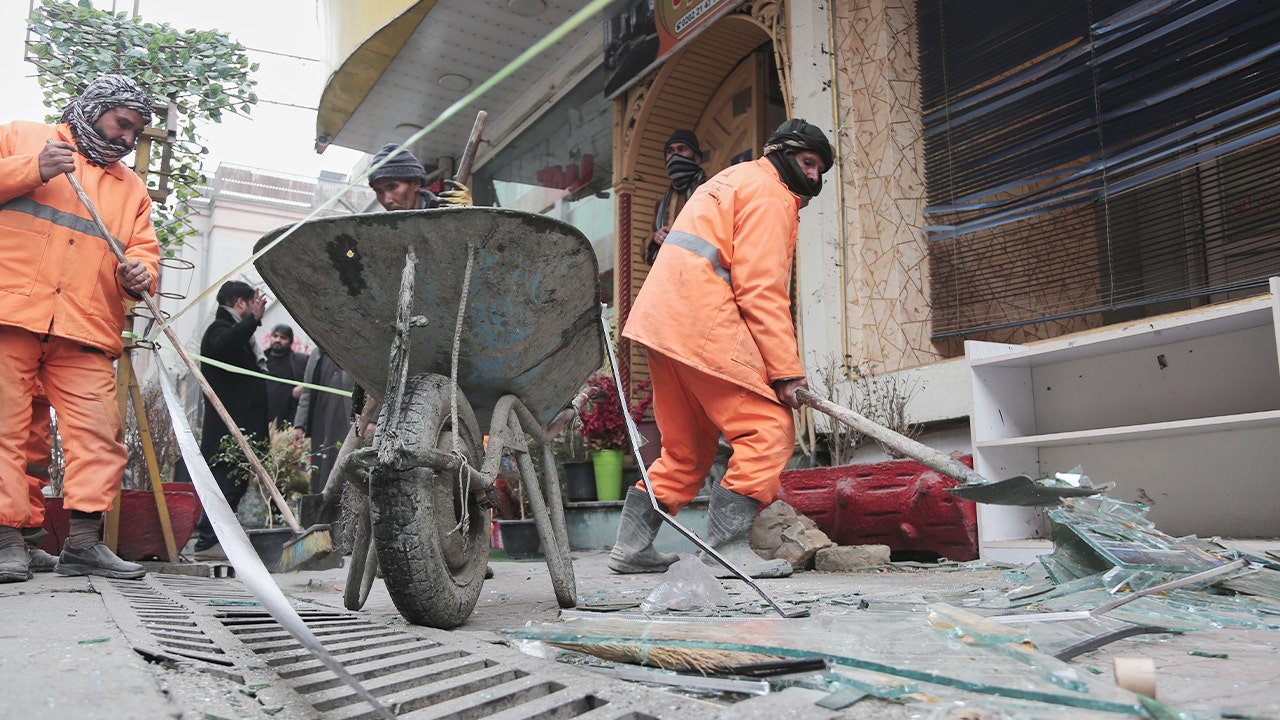
The explosion took place around 3 p.m. local time at a Chinese noodle restaurant in Kabul’s Shahr-e-Naw neighborhood, a relatively upscale area frequented by both locals and foreigners. According to Abdul Mateen Qani, a spokesman for the Afghan Interior Ministry, the attack was carried out by a single person affiliated with ISIS-Khorasan (ISIS-K), one of the terrorist organization’s most dangerous branches. This group has emerged as a significant threat in the region, frequently targeting those they perceive as enemies, including both the Taliban government and international entities. Kabul police command spokesman Khalid Zadran reported that seven people lost their lives in the explosion – six Afghan nationals and one Chinese citizen. Several others suffered injuries of varying severity. The restaurant was jointly operated by Abdul Majeed, a Chinese Muslim from Xinjiang province, along with his wife and an Afghan partner named Abdul Jabbar Mahmoud, making it both a cultural bridge and, unfortunately, a symbolic target.
The motivations behind the attack appear to be multifaceted, reflecting the complex geopolitical landscape of the region. ISIS-K has explicitly stated that it targets Chinese citizens in retaliation for Beijing’s treatment of Uyghurs, a Muslim minority group in China’s northwestern Xinjiang province. Human rights organizations have documented extensive abuses against this community, including mass detention, surveillance, and restrictions on religious practices. Additionally, ISIS-K has expressed opposition to the Afghan government’s growing relationship with China, which has sought to expand its economic and political influence in Afghanistan following the U.S. withdrawal in 2021. This attack represents not just random violence but a calculated move within a broader ideological and political conflict, using terrorism to disrupt international relations and destabilize the region.
China’s response to the incident was swift and pointed. Foreign Ministry spokesperson Guo Jiakun confirmed that one Chinese national had been killed and five others wounded in the attack. While offering condolences to the families affected, Jiakun also noted that officials from the Chinese Embassy in Afghanistan had visited the injured in local hospitals. Significantly, the spokesperson called on the Afghan government to strengthen security measures to better protect Chinese nationals and institutions within the country. “China strongly condemns and firmly opposes any form of terrorism,” Jiakun stated, emphasizing Beijing’s stance against extremist violence. The Chinese government also issued a stark travel advisory, urging its citizens to avoid travel to Afghanistan and recommending that those already in the country “take extra precautions, step up security and depart high-risk regions as soon as possible” – a clear indication of China’s growing concerns about the security situation under Taliban rule.
This attack comes at a particularly sensitive time for Afghanistan’s international relations and internal governance. Since retaking control in August 2021, the Taliban has struggled to contain ISIS-K, which views the Taliban as insufficiently extreme and has launched numerous attacks against both government targets and civilians. The Taliban’s promises to provide security and stability – a key justification for their rule – are undermined by each successful terrorist attack. Simultaneously, the Afghan government has been seeking international legitimacy and economic partnerships, with China emerging as a potentially significant partner due to its non-interventionist foreign policy and interest in Afghanistan’s natural resources. The bombing threatens to complicate these developing ties, creating additional challenges for an Afghan economy already devastated by decades of conflict, international sanctions, and the sudden withdrawal of foreign aid following the Taliban takeover.
The broader implications of this attack extend well beyond Afghanistan’s borders. For China, it represents a concerning vulnerability in its Belt and Road Initiative and its broader ambitions in Central and South Asia. For the international community, particularly Western nations that have maintained distance from the Taliban government, the attack highlights the complex reality that Afghanistan remains a haven for terrorist groups despite changes in leadership. Most tragically, for ordinary Afghans and foreign residents who were simply going about their daily lives, the bombing is a stark reminder of the persistent danger that has become normalized in a country that has experienced over four decades of continuous conflict. The restaurant attack joins a long list of similar incidents where civilians have paid the ultimate price for geopolitical conflicts and extremist ideologies, further traumatizing a population that has already endured immeasurable suffering.
As investigations continue into the precise nature of the explosion, this attack serves as a sobering reminder that Afghanistan’s path to peace and stability remains fraught with obstacles. The intertwined challenges of terrorism, economic development, human rights, and international relations create a complex web that defies simple solutions. For citizens and visitors in Kabul, such violence disrupts not just lives but also the small moments of normalcy – like sharing a meal at a restaurant – that represent human resilience and cross-cultural connection in the face of adversity. As different powers compete for influence in Afghanistan, it is ultimately ordinary people caught in the crossfire who continue to pay the highest price for these unresolved conflicts.