

Software Engineers Mistaken for ICE Agents Face Hostile Confrontation in Minneapolis
In a startling case of mistaken identity, a group of software engineers found themselves caught in the crossfire of political activism while simply trying to enjoy lunch together in Minneapolis. The incident, which unfolded at Clancey’s Deli, highlights how rapidly misinformation can spread and the intense emotions surrounding immigration enforcement in America today.
The trouble began when one of the engineers received a notification on his phone from an anti-ICE Signal chat group called “SW Minneapolis Rapid Response.” The alert claimed that plainclothes Immigration and Customs Enforcement agents were present at the restaurant. Ironically, the engineer who received this message was himself sympathetic to the anti-ICE cause. “My friend was shocked,” explained Lee, one of the software engineers present. “He’s on the anti-ICE side politically. He lives nearby. He’s eaten there before. And suddenly he’s seeing messages saying we’re ICE.” This misidentification set in motion a chain of events that would quickly escalate beyond anyone’s expectations.
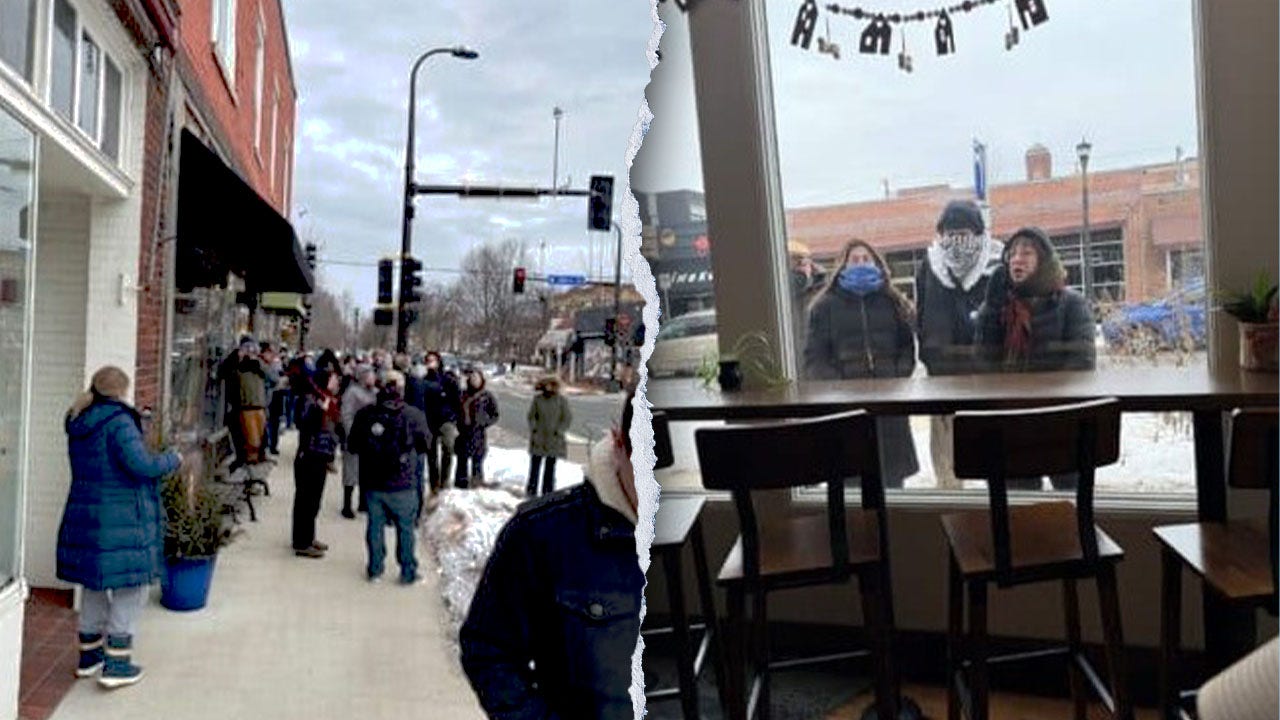
Within minutes of the alert being shared, dozens of activists converged on the restaurant, pressing their faces against the windows and creating an increasingly tense atmosphere. The engineers, all white men dressed casually in sweatshirts and jackets, were unaware of the brewing situation until they attempted to leave the establishment. As they stepped outside, they were immediately confronted by a hostile crowd hurling insults and accusations. Video footage captured protesters shouting, “You’re a f—— bootlicker b—-!” and “Get out of our f—— neighborhood!” The situation deteriorated further with protesters yelling “I hope you die” and even labeling the confused diners as “pedophiles.” The engineers found themselves trapped in a nightmare scenario, subjected to verbal abuse while trying to explain their actual identities.
Despite repeated attempts to clarify the misunderstanding, the engineers struggled to convince the crowd of their true occupations. “We do custom apps for a whole bunch of companies around Minnesota and the country,” one of them explained, attempting to defuse the situation. Another asked pointedly, “Do I look like an ICE agent?” only to be met with the response, “Yeah, you look like a f—— ICE agent.” This exchange demonstrates how perception can become reality in emotionally charged situations, where appearances alone – in this case, being white males in casual attire – can trigger assumptions and hostility. The protesters appeared unwilling to consider any explanation that contradicted their initial belief that these men were federal agents operating undercover.
The confrontation raises important questions about activism, community vigilance, and the unintended consequences of rapid response networks. While such networks are designed to alert communities to potential enforcement actions that might affect vulnerable populations, this incident shows how easily they can lead to misidentifications and potentially dangerous confrontations. One of the engineers tried to engage with the protesters about their tactics, saying “This is what’s wrong with your guys’ cause,” when asked if he would support them. His response – “The way you guys are acting? No. And I don’t support ICE either. I’m just trying to enjoy my lunch!” – encapsulates the frustration of being caught between political forces while attempting to go about ordinary daily activities.
The Minneapolis incident occurs against a backdrop of heightened tensions surrounding immigration enforcement nationally. The confrontation demonstrates how polarized the political environment has become, where mistaken identity can lead to immediate hostility rather than careful verification. For the software engineers, what should have been a routine lunch break became an unsettling encounter with the sharp edge of activism gone awry. For activists, the incident might serve as a reminder of the importance of verification before mobilization. And for communities caught in the middle of these tensions, it underscores the challenges of maintaining civil discourse in an era where mistrust runs deep and assumptions can spread faster than facts.