



Deadly Train Collision in Southern Spain Claims At Least 40 Lives
Catastrophic Crash Marks Spain’s Worst Rail Disaster in a Decade
In a devastating transportation tragedy that has shocked the nation, two passenger trains collided in southern Spain on Sunday evening, killing at least 40 people and leaving dozens more hospitalized with injuries ranging from minor to critical. The accident, which occurred near the small town of Adamuz in Andalusia, represents the deadliest rail disaster in Spain since at least 2013, with officials warning that the death toll could still rise as rescue operations continue.
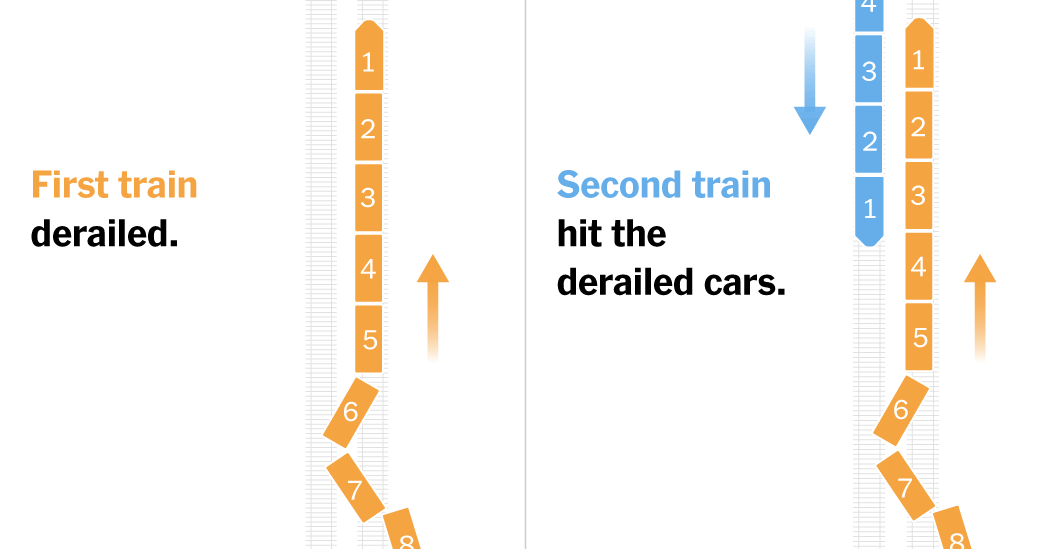
The collision took place at approximately 7:45 p.m. local time when a northbound high-speed train operated by private company Iryo suddenly derailed on its journey from Málaga to Madrid. Within seconds of the initial derailment, the train collided catastrophically with a southbound Renfe train traveling from Madrid to Huelva. Renfe, Spain’s state-owned railway operator, has a long history of managing the country’s extensive rail network, while Iryo represents the newer private sector participation in Spanish rail transport. According to preliminary reports from transportation officials, the accident occurred on a straight section of track where the two trains had been running in opposite directions on parallel tracks—a configuration designed specifically to prevent such collisions.
“It was utter chaos,” described the mayor of Adamuz, who praised local residents for their immediate and heroic response to the disaster. In the critical moments after the crash, townspeople transformed their personal vehicles into makeshift ambulances, rushing injured passengers to hospitals before official emergency services could arrive at the remote location. Others brought essential supplies—food, water, blankets, and tools—to the crash site, where survivors and rescue workers battled deteriorating weather conditions and approaching darkness. This spontaneous civilian mobilization likely saved numerous lives in the critical golden hour after the tragedy, according to emergency medical personnel who later arrived at the scene.
Investigation Focuses on Track Condition as Possible Cause
As recovery efforts continue, investigators are already examining potential causes of the deadly accident. Notably, officials have indicated that neither excessive speed nor human error appears to be at fault—both trains were reportedly operating within normal speed parameters at the time of the collision. Spain’s Minister of Transportation revealed that preliminary investigation is focusing on whether a break in a section of track might have been “the cause or the consequences” of the initial derailment. Track integrity issues would represent a particularly concerning finding, as Spain’s rail infrastructure undergoes regular maintenance and inspection protocols that should theoretically prevent such structural failures.
Railway safety experts consulted by multiple news organizations have pointed out that modern rail systems typically incorporate numerous redundant safety mechanisms designed to prevent precisely this type of collision. Automatic braking systems, real-time position monitoring, and sophisticated signaling infrastructure all serve as layers of protection against train-to-train impacts. That these systems apparently failed to prevent Sunday’s disaster raises serious questions about potential systemic issues within Spain’s rail safety framework. The country’s Transportation Safety Board has dispatched a specialized team of investigators to the site, where they will analyze everything from track metallurgy and maintenance records to the trains’ black box recorders and communication logs between dispatchers and train operators.
The human toll of the disaster continues to mount as families await news of loved ones. Approximately 300 passengers were aboard the northbound Iryo train, according to company statements, while Renfe has not yet disclosed the passenger count for its southbound service. Hospitals throughout the region have implemented emergency protocols to handle the surge of injured travelers, with medical personnel being recalled from off-duty status to assist with treatment. Psychological support teams have also been deployed to assist survivors and families of victims, many of whom experienced severe trauma during the chaotic aftermath of the collision. Red Cross representatives established a temporary support center in Adamuz where relatives could gather to receive information and assistance, while a dedicated information hotline quickly became overwhelmed with concerned callers seeking updates on passengers.
Impact on Spain’s Renowned High-Speed Rail Network
The accident has forced the suspension of much of Spain’s high-speed rail network connecting Madrid with cities in southern Spain—a significant disruption to one of Europe’s most important transportation arteries. Opened in 1992 with the Madrid-Seville line coinciding with that year’s World Expo, Spain’s high-speed rail network has grown to become the largest in Europe, connecting more than 50 cities across 2,468 miles of dedicated track. This extensive network has been a point of national pride and a model for other countries developing similar systems, with its impressive safety record making Sunday’s disaster all the more shocking to transportation experts and the Spanish public alike.
Prime Minister Pedro Sánchez, who immediately traveled to the site upon hearing news of the accident, addressed the nation in a somber televised statement. “Today is a day of mourning for all of Spain,” he declared, announcing three days of official national mourning for the victims. “We will spare no resource in determining what happened, supporting the affected families, and ensuring such a tragedy never occurs again on our railways.” The government has established an emergency response committee coordinating efforts between multiple agencies, while King Felipe VI has postponed all scheduled public appearances to focus on the national emergency.
The tragedy occurs at a challenging time for European rail transportation, which has been promoted as a safer and more environmentally friendly alternative to air travel. Industry analysts note that despite occasional high-profile accidents, rail remains statistically far safer than road transportation, though this offers little consolation to those directly affected by Sunday’s catastrophe. The European Commission has offered assistance to Spanish authorities, including access to specialized disaster response resources and investigative expertise from the European Union Agency for Railways. As the investigation continues and the full human cost becomes clearer, questions about infrastructure investment, maintenance protocols, and the balance between public and private operation of essential transportation services are likely to dominate Spain’s political discourse in the coming months.
Community Response Highlights Solidarity in Crisis
The response from the Adamuz community exemplifies the profound human capacity for solidarity in moments of crisis. Witnesses describe seeing farmers abandon their fields and shopkeepers close their businesses to rush toward the accident site with whatever supplies they could gather. Local hotels opened their doors to stranded passengers and families of victims, while community kitchens worked through the night preparing meals for emergency workers and survivors. “In our darkest moment, we saw the very best of humanity,” reflected one survivor who was pulled from the wreckage by local volunteers before emergency services arrived.
As dawn broke on Monday, the grim reality of Spain’s worst rail disaster in a decade came into sharper focus. Rescue workers, some visibly exhausted after working through the night, continued the painstaking process of searching the wreckage for any remaining victims or survivors. Engineers assessed the extensive damage to the rail infrastructure, while transportation officials began implementing alternative arrangements for the thousands of travelers affected by service cancellations. The coming days will bring difficult questions about responsibility and prevention, but for now, the nation’s focus remains on supporting those who have lost loved ones and helping the injured recover from both physical and psychological trauma.
The collision near Adamuz joins a somber list of transportation disasters that have periodically struck Spain despite its generally excellent safety record. As investigators piece together the sequence of events that led to Sunday’s tragedy, their findings will likely influence rail safety protocols not just in Spain but throughout Europe and beyond. For the families of the victims, however, no explanation will fully mitigate their loss—a painful reality acknowledged by officials as they pledge transparency in the investigation and comprehensive support for all affected by this national tragedy.