


Texans’ Season Ends in Disappointment: A Story of Resilience and Learning
The Houston Texans’ promising season came to a disheartening conclusion with a 28-16 defeat to the New England Patriots in the AFC Divisional Round. What began as a campaign full of hope ended with a painful playoff exit that showcased both the team’s vulnerabilities and its character. At the center of this disappointment stood quarterback CJ Stroud, whose first-half performance became the focal point of the game’s narrative. The rookie signal-caller, who had dazzled throughout the regular season, threw four interceptions in the first half alone, including a devastating pick-six that helped the Patriots build a commanding 21-10 halftime lead. These turnovers proved to be the difference in a game that felt winnable for Houston, despite the errors. The mistakes came in various forms – some were the result of brilliant defensive plays, others stemmed from poor decisions or miscommunications. Regardless of their cause, each interception sucked more life from the Texans’ sideline and energized a Patriots team that capitalized on nearly every opportunity presented to them.
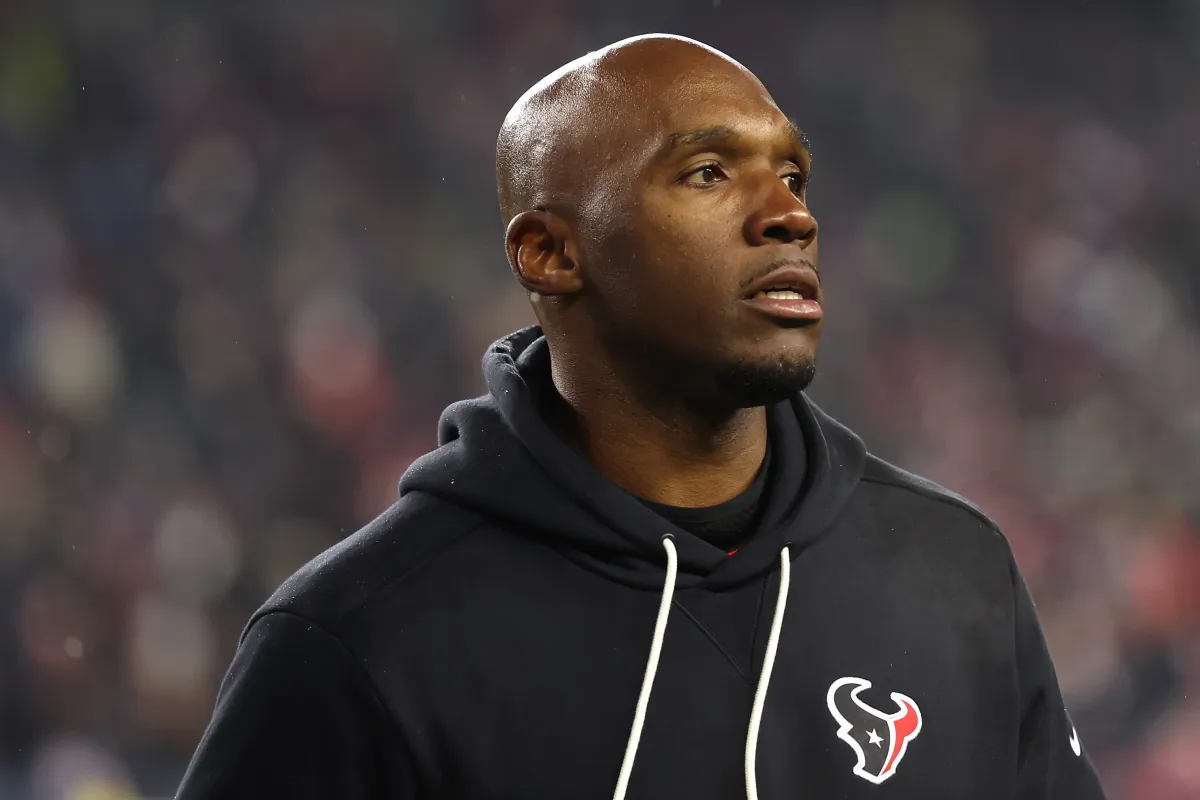
Despite the cascade of first-half errors, head coach DeMeco Ryans stood firmly behind his young quarterback when many were calling for a change. “CJ’s our guy,” Ryans declared in the post-game press conference, his voice unwavering despite the sting of defeat. “I believed that he could come back out in the second half and flip it. I believed that he can play better, and he did that.” This vote of confidence speaks volumes about Ryans’ leadership philosophy and his commitment to developing his players through both success and adversity. Rather than benching Stroud – a move that might have protected the rookie from further damage but potentially shattered his confidence – Ryans chose the path of trust and development. This decision, while questioned by some fans in the heat of the moment, reflects the organization’s long-term vision for Stroud as their franchise quarterback. The coach’s message to the team at halftime was clear and consistent with his season-long approach: “It doesn’t matter what happened in the first half. You have to flush it, remove it, and you just have to go out and finish the right way.”
True to Ryans’ belief, Stroud and the Texans showed remarkable resilience in the second half. Though the statistics don’t tell the complete story – Stroud finished with just 212 yards, completing only 20 of 47 attempts with one touchdown against those four interceptions – the team’s response after halftime demonstrated their fighting spirit. The Texans mounted several promising drives that kept them within striking distance, making what could have been a blowout into a competitive contest. This resilience in the face of adversity has been a hallmark of the team under Ryans’ leadership. Throughout the season, the Texans had shown an ability to overcome difficult situations, to learn from mistakes rather than be defined by them. Even in defeat, this quality was evident, as they refused to concede despite the deficit and the pressure of the playoff stage. For a young team still finding its identity, this mentality may prove more valuable in the long run than an additional playoff win would have been.
On the other side of the field, Patriots quarterback Drake Maye experienced his own struggles, including several fumbles that gave the Texans opportunities to climb back into the game. However, the difference ultimately came down to two factors: Maye made fewer critical mistakes in key moments, and the Patriots’ defense delivered a masterclass in opportunistic football. Every time the Texans seemed poised to shift momentum, New England’s defense would make a crucial stop or create another turnover. This combination proved too much for Houston to overcome, despite their improved second-half performance. The contrast between the two teams highlighted the fine margins that often decide playoff games – the Patriots’ ability to minimize the impact of their own mistakes while maximizing the Texans’ errors ultimately decided the outcome. For a young Houston team, this lesson in playoff football’s unforgiving nature will likely serve as valuable experience for future postseason runs.
The aftermath of such a defeat inevitably brings questions about the future. While some fans called for backup quarterback Davis Mills to replace Stroud during the game’s lowest moments, Ryans’ postgame comments made it clear that the organization remains fully committed to Stroud as their quarterback of the future. This unwavering support, even after a difficult performance on the biggest stage, speaks to the confidence the coaching staff and front office have in their young quarterback’s ability to learn and grow from this experience. Rather than viewing the playoff loss as a definitive statement about Stroud’s capabilities, the organization appears to see it as part of the natural development process for a rookie quarterback. The offseason will likely bring adjustments and additions to support Stroud’s growth, but a fundamental change in direction seems highly unlikely based on Ryans’ comments and the team’s overall trajectory.
As the Texans enter the offseason earlier than they had hoped, the organization and its fans find themselves in a position both disappointing and promising. While the playoff exit stings, particularly given how it unfolded, the larger context provides significant reason for optimism. A team that exceeded expectations throughout the season, led by a rookie quarterback and first-year head coach, gained valuable playoff experience that should serve them well in the future. The relationship between Ryans and Stroud, tested in the crucible of playoff pressure, emerged intact and potentially strengthened by their shared adversity. As painful as the loss to New England was, it represents not an endpoint but a milestone in the development of what appears to be a rising team in the AFC. The true measure of this Texans team will not be found in this single defeat, but in how they respond to it when they return to the field next season, armed with the lessons that only experience can provide.