




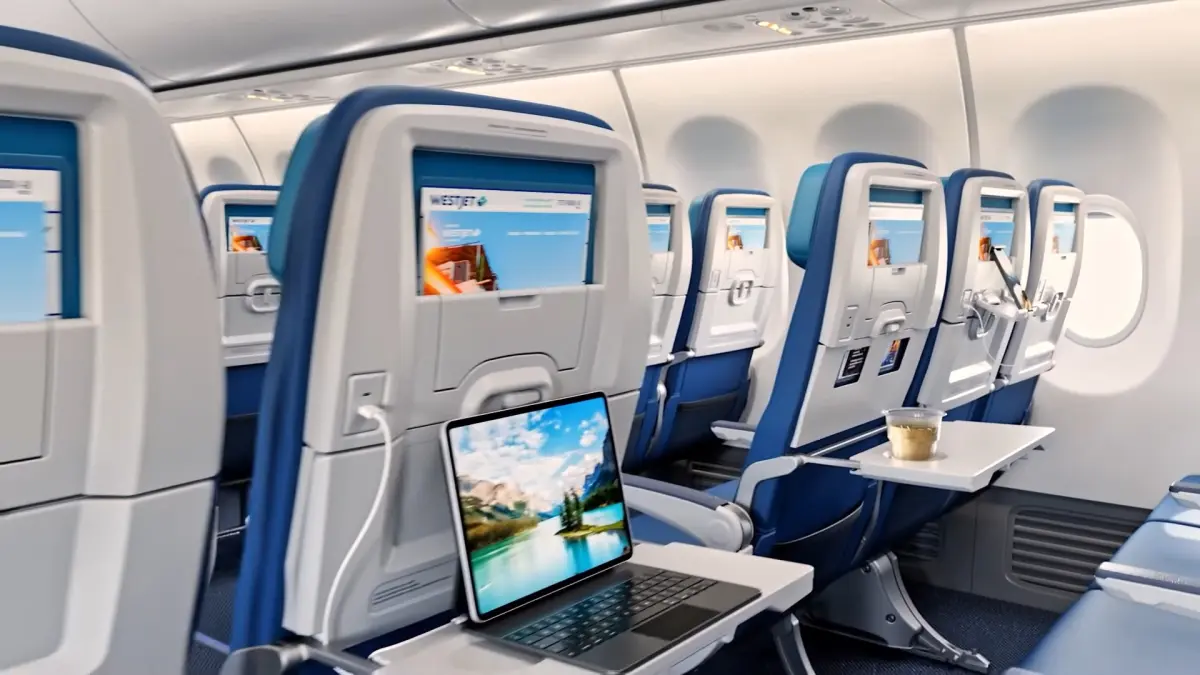
WestJet Reverses Course on Controversial Seat Configuration
In a significant shift that has been welcomed by both passengers and crew, WestJet Airlines announced on Friday that it will abandon its controversial non-reclining economy seating configuration on certain Boeing 737 jets. The decision follows an intense backlash on social media, where videos of tall passengers with their knees pressed uncomfortably against the seats ahead of them went viral, sparking outrage and debate about airline comfort standards. WestJet CEO Alexis von Hoensbroech acknowledged the misstep in a candid statement, explaining, “WestJet tried seat pitches that are popular with many airlines around the globe as they serve to provide affordable airfares. At the same time, it is just as important to react quickly if they don’t meet the needs of our guests.” This reversal represents a rare instance of an airline responding directly to consumer complaints by undoing a cost-saving measure, rather than simply offering premium alternatives at additional cost.
The controversy began last year when the Canadian carrier reconfigured its economy seating to accommodate more spacious premium options at the front of the aircraft. This redesign reduced the space between rows of seats—known in industry parlance as “pitch”—to a tight 28 inches, allowing for an additional row of seating on affected aircraft. The change was widely interpreted as testing the boundaries of airline “add-on culture,” where basic comfort features become premium options. While reclining seats remained available on these flights, passengers needed to pay extra for the privilege, creating a two-tier system of comfort that many travelers found objectionable. The backlash intensified in January when social media platforms became flooded with images and videos showcasing the cramped conditions, eventually forcing the Onex Corp-backed airline to pause the rollout of the new configuration last month.
Beyond passenger discomfort, the redesign faced significant resistance from WestJet’s frontline staff. Both pilots and flight attendants raised serious concerns about the new seating arrangement, with objections extending beyond mere comfort to include safety considerations. Crew members questioned whether passengers could safely evacuate from such confined spaces in emergency situations—a fundamental safety requirement for all commercial aircraft. Flight attendants found themselves in particularly difficult positions, regularly facing the brunt of passenger frustration while having limited ability to address the underlying cause. Alia Hussain, president of the union local representing WestJet’s cabin personnel, described a working environment that had become increasingly hostile due to constant complaints, with flight attendants sometimes having to reseat particularly tall passengers who simply couldn’t fit in the redesigned spaces.
The situation highlights a broader tension in the airline industry between profit maximization and maintaining acceptable standards of customer service. Airlines worldwide have gradually reduced seat pitch and width over decades, transforming what was once considered minimum acceptable standards into premium options available at additional cost. WestJet’s attempt to push these boundaries further met with unusually strong resistance, suggesting there may be a limit to how far airlines can go in reducing passenger space before triggering significant backlash. In an industry often criticized for ignoring customer complaints, WestJet’s decision to reverse course and return to its previous standard economy seat configuration represents a notable exception to the trend of diminishing passenger comfort in favor of increased capacity and revenue opportunities.
The episode also underscores the growing power of social media to influence corporate decision-making. What might once have been limited to individual complaint letters or localized news coverage became an international embarrassment for WestJet when videos of cramped passengers went viral online. This digital amplification of customer dissatisfaction created public relations pressure that ultimately contributed to the airline’s change of heart. For WestJet, which had traditionally positioned itself as a more customer-friendly alternative to larger carriers, the seating controversy threatened to undermine its brand identity and competitive positioning. By acknowledging the mistake and taking concrete steps to address it, the airline has attempted to reclaim its reputation as a carrier that values passenger feedback.
For the airline industry as a whole, WestJet’s reversal may serve as a cautionary tale about the limits of cost-cutting measures that directly impact the passenger experience. While consumers have gradually accepted reduced service levels, smaller seats, and numerous fees for what were once standard inclusions, this incident suggests there remains a threshold beyond which customer resistance becomes economically significant. Alia Hussain’s expressed satisfaction with the airline’s decision reflects not only relief among cabin crew who will no longer face angry passengers but also acknowledgment that working conditions and customer experience are inextricably linked in service industries. As airlines continue to balance profitability with passenger satisfaction, WestJet’s experience demonstrates that listening to both customers and frontline staff can sometimes prevent costly missteps in an industry where reputation and customer loyalty remain valuable despite increasing commodification of air travel.