


Trump’s New Frontier: Mexico in the Crosshairs
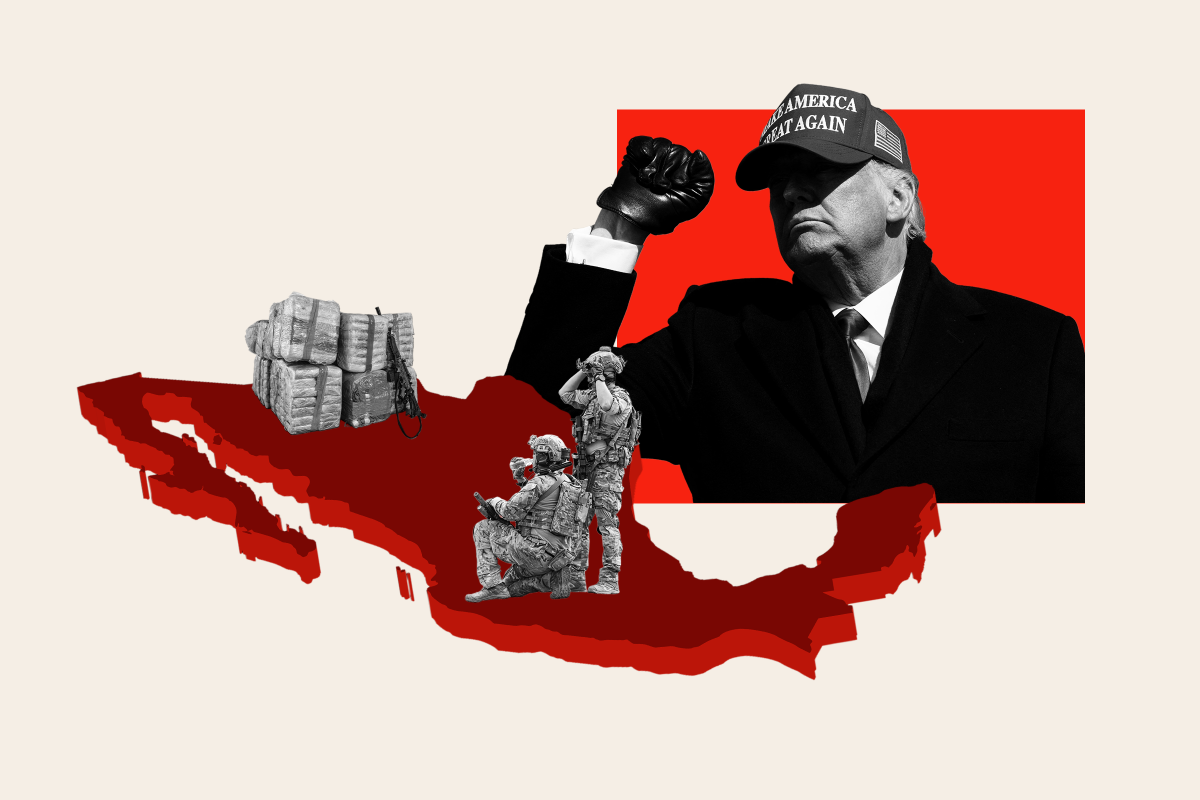
In the shadow of President Donald Trump’s dramatic threats against Iran and his unusual interest in acquiring Greenland, another country now faces the prospect of American military intervention: Mexico. Following the audacious U.S. Delta Force operation that captured Venezuelan President Nicolás Maduro and his wife earlier this month, Trump has pivoted his attention to Mexico’s cartel crisis, framing it as a direct threat to American national security. “Mexico has to get their act together,” Trump declared bluntly after Maduro’s capture, “because they’re pouring through Mexico, and we’re gonna have to do something.” This stern warning, coupled with the Federal Aviation Authority’s recent restrictions on flights over Mexico and parts of Central America, signals that new operations may be imminent.
Unlike Maduro, whose legitimacy was contested internationally, Mexican President Claudia Sheinbaum enjoys broad regional support and has even received occasional praise from Trump himself. The two nations recently signed a new security cooperation agreement aimed at countering cartels and stopping the flow of fentanyl across their shared border. Yet experts like Leonardo Curzio from the National Autonomous University of Mexico believe “Trump is playing a double game with Mexico,” simultaneously fostering cooperation while creating conditions for potential unilateral action. After witnessing the precisely executed capture of Maduro, many international observers are taking Trump’s threats far more seriously than his previous seemingly outlandish proposals. The success of the Venezuela operation demonstrated the administration’s willingness and ability to employ limited force to achieve specific objectives, regardless of international criticism or congressional oversight.
The history of U.S. covert operations in Mexico is extensive, from Cold War-era espionage to modern drug enforcement initiatives. Trump’s designation of eight major cartels as foreign terrorist organizations last year—six of which operate primarily in Mexico—added new weight to this longstanding effort. While there have been notable successes like the captures of cartel leaders El Mayo and El Chapo, controversial programs like “Operation Fast and Furious” show the mixed record of U.S. interventions. According to Reuters reporting, CIA-vetted U.S. military units have been running operations on Mexican territory for years, often with Mexican government cooperation. Trump has now signaled an expansion of these efforts, recently telling Fox News: “We are gonna start now hitting land with regard to the cartels.” This statement serves both as a warning to the cartels themselves and as implicit pressure on Mexican officials who have struggled to contain the violence despite genuine efforts.
The complex reality of Mexico’s cartel crisis goes beyond mere enforcement failures. Miguel Alfonso Meza of the human rights group Defensorxs argues that the problem isn’t a lack of authority but rather widespread collusion between cartels and government institutions across party lines. “It is false to think that cartels exist where there is an absence of Mexican state authorities; rather, there exists a complex arrangement between cartels and formal authorities that rule together over the country: the narcostate,” Alfonso explains. This entrenched corruption creates a daunting challenge for any intervention strategy. Further complicating matters, some effective solutions might run counter to U.S. interests, such as drug decriminalization or addressing the flow of weapons from the United States into Mexico. The Mexican Embassy emphasizes Sheinbaum’s adherence to the Estrada Doctrine against foreign intervention, stating: “We defend the Estrada Doctrine and what our country’s foreign policy represents, which is established in the constitution. That is, against interventions and in favor of the peaceful solution to any conflict.”
Military experts caution that even successful operations against cartels often produce unintended consequences. Erin McFee of the Atlantic Council points to the aftermath of El Mayo’s capture in 2024, which led to a “narcopandemia” in Culiacan with the city experiencing its deadliest period in over a decade despite heavy military presence. “Decapitation strategies alone almost always lead to more violence,” McFee warns. Any effective approach would need to be “tightly scoped, Mexico-led, and focused on integrated campaigns that combine precision targeting with long-term support to local institutions.” Without addressing these structural factors, interventions risk creating power vacuums that new factions will violently compete to fill. Perhaps most concerning is the potential for cartel retaliation on U.S. soil. The DEA has assessed that cartels already operate to some degree in all 50 states, and McFee notes that “the infrastructure for retaliation is already entrenched and expanding.” Recent attacks on U.S. officials demonstrate the vulnerability of American public servants to such threats, with McFee warning that “the United States lacks both the self-protection culture and the security infrastructure to ensure readiness for cartel reprisals.”
The geopolitical implications of a more forceful U.S. approach extend beyond immediate security concerns. Mexico’s historical experience with American intervention—particularly the Mexican-American War of 1846-1848 that established the modern border—remains deeply embedded in national consciousness. “In Mexico, the U.S. invasion of 1847 is still remembered; sovereignty is a very delicate issue that Mexicans have deeply ingrained in their DNA,” explains Oliver Santín from the National Autonomous University of Mexico. Sheinbaum’s historically high approval ratings, reaching 80 percent at one point, suggest she could emerge from any confrontation as a powerful symbol of regional resistance to Trump’s policies. Even though many Mexicans are frustrated with ongoing cartel violence, Santín believes a U.S. intervention “would be perceived as a violent action against a government that has shown itself to be more receptive than ever to its counterpart in Washington.” As Trump’s “Don-roe Doctrine” unfolds across Latin America, the delicate balance between cooperation and sovereignty in U.S.-Mexico relations faces its most significant test in decades, with profound implications for regional security, bilateral relations, and the lives of citizens on both sides of the border.