



Singapore Maintains Global Passport Dominance as Europe Shows Strong Presence
In the latest Henley Passport Index released in January 2026, Singapore has maintained its position as the world’s most powerful passport for the second consecutive year, offering its citizens visa-free access to an impressive 192 destinations worldwide. This achievement highlights the city-state’s continued diplomatic success and global influence despite its relatively small size. The index, now in its 20th year, uses International Air Transport Association (IATA) data to rank passports based on the number of destinations their holders can visit without requiring a pre-arranged visa. The consistency of Singapore’s performance demonstrates its strategic focus on international relations and diplomatic ties that benefit its citizens with unprecedented global mobility.
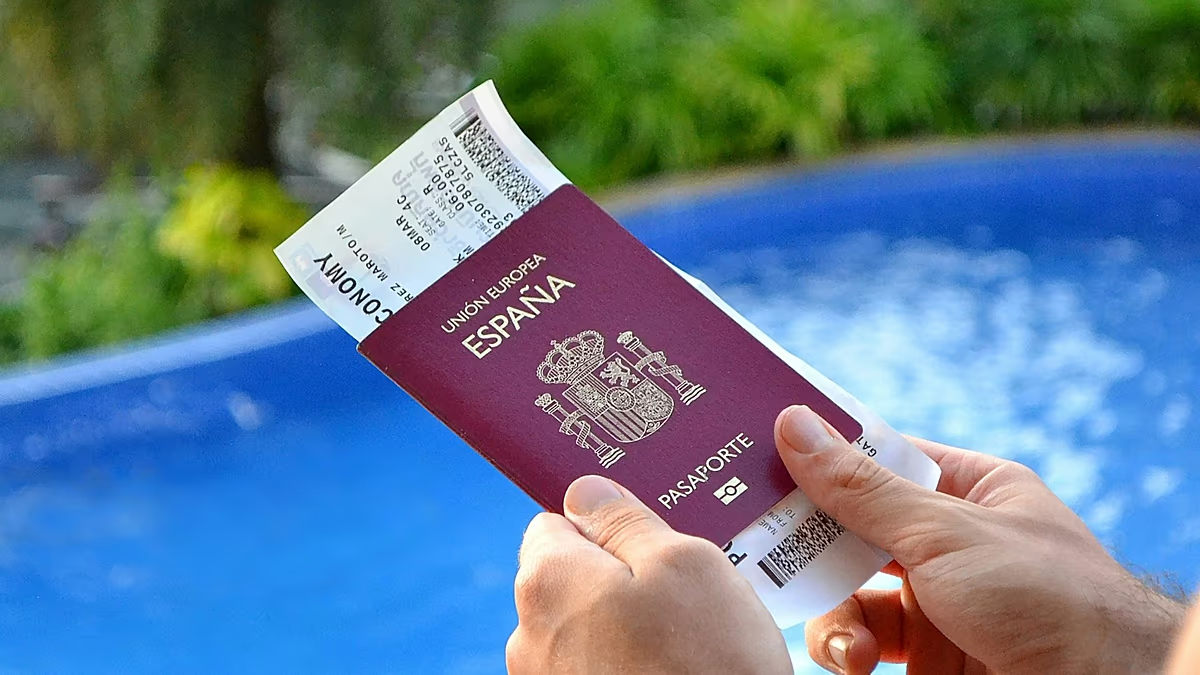
Close behind Singapore are Japan and South Korea, which share second place with visa-free access to 188 destinations. This strong showing by Asian countries at the top of the rankings reflects the region’s growing diplomatic and economic influence in global affairs. European nations continue to demonstrate their traditional passport strength with five countries—Denmark, Luxembourg, Spain, Sweden, and Switzerland—tied for third place, each providing access to 186 countries without visa requirements. Following closely in fourth position are Austria, Belgium, Finland, France, Germany, Greece, Ireland, Italy, the Netherlands, and Norway, whose passports grant entry to 185 destinations. The fifth position features Hungary, Portugal, Slovakia, Slovenia, and notably, the United Arab Emirates, which has made remarkable progress in the rankings.
While European countries dominate the top tiers of the index with 30 nations in the top 10, significant disparities exist within the continent itself. Belarus lags considerably with visa-free access to just 79 countries, placing it at 60th in the global rankings. Similarly, Kosovo’s passport allows entry to only 81 destinations, positioning it at 59th place alongside China and Botswana. Nevertheless, Kosovo represents one of the success stories in terms of improvement, having climbed an impressive 38 positions since 2016. These contrasts within Europe highlight how political relationships, economic development, and international standing continue to influence a nation’s passport power and, by extension, the mobility of its citizens.
The United Arab Emirates stands out as the index’s most dramatic success story over the past two decades, rising 57 places to reach fifth position in 2026. This remarkable ascent reflects the UAE’s strategic diplomatic initiatives and growing global influence. The Gulf nation has now surpassed the United Kingdom, which has slipped to seventh place, demonstrating how traditional Western powers no longer hold exclusive dominance over passport privilege. The United States, once among the world’s most powerful passports, continues to hold its position at 10th place, maintaining the same ranking as in 2025 but marking its lowest historical position in the index. This shift in the global passport hierarchy indicates evolving power dynamics in international relations and reflects how countries are strategically prioritizing visa agreements to enhance their citizens’ global mobility.
Dr. Christian H. Kaelin, chairman of Henley & Partners, the Chicago-based citizenship by investment consultancy behind the rankings, emphasizes the growing significance of passport privilege in today’s interconnected world. According to Dr. Kaelin, a passport’s strength now plays “a decisive role in shaping opportunity, security, and economic participation,” with the benefits of global mobility increasingly concentrated among citizens of economically powerful and politically stable nations. This observation highlights how passport strength serves as both a reflection and reinforcement of global inequality, where citizens of higher-ranked countries enjoy greater freedom of movement, access to business opportunities, education, healthcare, and quality of life, while those with weaker passports face significant barriers to international mobility.
The 2026 Henley Passport Index ultimately reveals a world where global mobility remains unevenly distributed, despite the overall increase in visa-free travel opportunities. While many countries have expanded their visa-free networks over the past two decades, the gap between the strongest and weakest passports continues to represent significant disparities in opportunity. As international relations continue to evolve amid changing geopolitical dynamics, economic shifts, and global challenges, passport power will remain a crucial indicator of a nation’s standing in the world order. For individuals, the passport they hold continues to fundamentally shape their access to global opportunities, underscoring why passport rankings capture not just diplomatic relationships between countries, but also the lived realities of citizens navigating an increasingly complex international landscape.