



A Harrowing Solo Run: American Bobsledder Kris Horn’s Remarkable Display of Skill and Composure
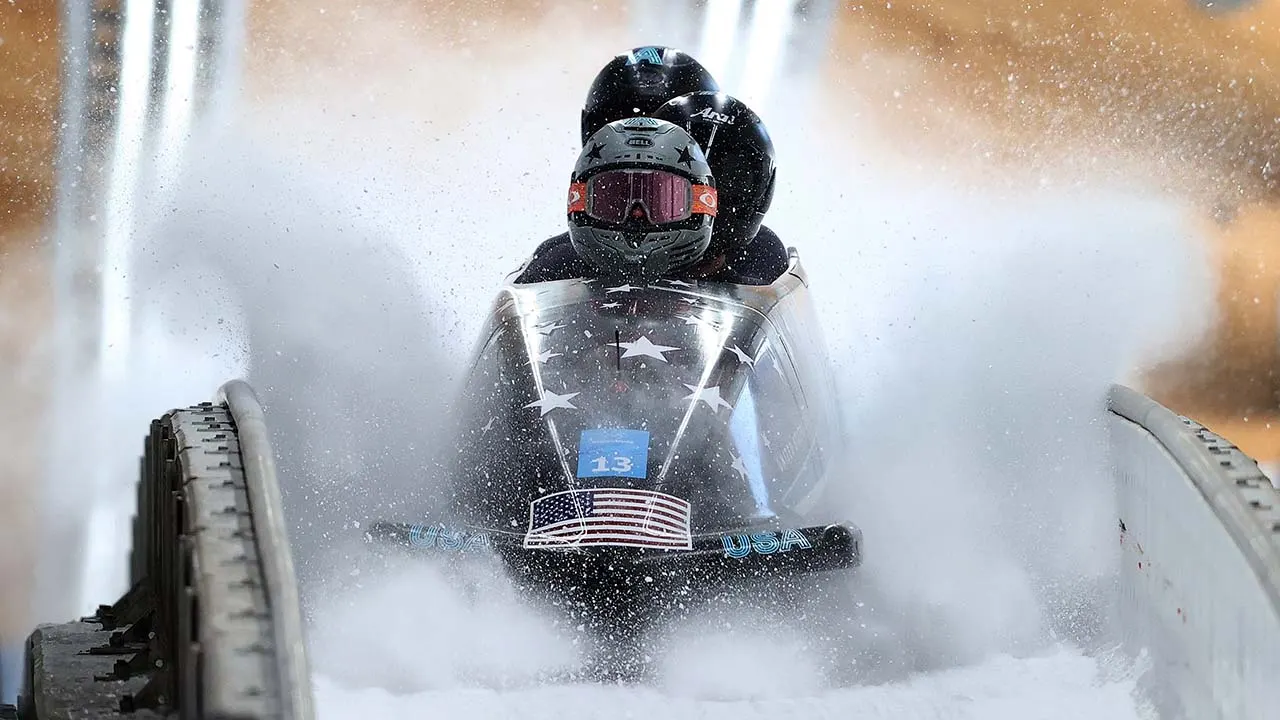
In a heart-stopping moment that demonstrated both the dangers and the extraordinary skill required in elite bobsledding, American driver Kris Horn found himself in a situation no sledder ever wants to experience. During a World Cup event at the iconic St. Moritz track in Switzerland, Horn ended up piloting a four-man sled completely alone, reaching speeds of approximately 75 mph on one of the world’s most challenging ice tracks. The incident, which could have ended in catastrophe, instead became a testament to Horn’s exceptional driving abilities and quick thinking under extreme pressure. As Horn entered the sled first—the standard procedure for drivers—a chain reaction of mishaps prevented his three teammates from joining him, leaving Horn to navigate the treacherous course solo in a vehicle designed specifically for four athletes with carefully distributed weight.
The dramatic scene unfolded when Ryan Rager, who had stepped in as a replacement for injured teammate Carsten Vissering, appeared to stumble during the loading process. This created a domino effect that prevented both Hunter Powell and Caleb Furnell from reaching their positions in the sled. Powell took the worst of the mishap, being thrown violently toward the track wall and striking his back against the unforgiving ice surface. The impact looked potentially serious to onlookers, though Powell later downplayed the injury, telling The Associated Press he was “a little sore” but expected to “be fine in a couple days.” Team officials confirmed that X-rays for all affected athletes came back negative, a fortunate outcome given the violent nature of the incident and the inherent dangers of the sport.
With his teammates left behind at the starting block, Horn found himself in a precarious situation that few bobsled drivers ever face. The four-man sled, specifically designed for balanced weight distribution with four athletes aboard, suddenly became dangerously unpredictable with only Horn’s weight to stabilize it. Additionally, the brakeman, whose critical role is to stop the sled at the finish line, was no longer aboard. Despite these challenges, Horn’s training and instincts took over as he navigated the twisting, high-speed track for a full minute, maintaining remarkable control of the under-weighted sled. His prior experience as a brakeman proved invaluable as he not only guided the sled across the finish line but then managed to move to the back of the vehicle and pull the brake handles himself, bringing the powerful sled safely to a stop.
The incident highlighted not only the dangers inherent to bobsledding but also the tight-knit nature of the international bobsled community. As Horn’s sled came to a stop at the finish area, athletes and coaches from multiple national teams rushed to check on his condition, showing the camaraderie that exists even among fierce competitors. Horn, displaying remarkable composure after such a frightening experience, simply waved to nearby television cameras to signal he was unharmed. This gesture of reassurance was particularly meaningful given that Horn had already experienced a crash during the two-man World Cup race just the day before, an incident that had resulted in injuries to his brakeman Vissering, who suffered abrasions severe enough to keep him from competing in the four-man event.
The timing of this incident adds another layer of complexity and pressure for the American team. With only one World Cup race weekend remaining before USA Bobsled and Skeleton selects its team for next month’s Milan Cortina Olympics, every run and every result carries significant weight. Athletes are not only competing against international rivals but also, in a sense, against their teammates for coveted Olympic spots. The physical and mental toll of Horn’s back-to-back mishaps—first the two-man crash and then the solo four-man run—creates additional challenges as the team approaches these crucial selection decisions. For Horn and his teammates, recovering physically and psychologically from these incidents while maintaining focus on Olympic qualification demonstrates the extraordinary mental fortitude required at the elite level of this demanding sport.
What makes bobsledding particularly fascinating is the blend of athleticism, technology, teamwork, and courage it demands. The loading process, which appears straightforward to casual observers, requires precise timing and coordination among teammates who must enter the sled in sequence while it’s already moving, then settle into aerodynamic positions for a run that combines extreme speeds with intense G-forces. When this delicate choreography fails, as it did for the American team in St. Moritz, the consequences can be immediate and dangerous. Yet Horn’s ability to adapt to the unexpected situation—controlling an improperly balanced sled at speeds that would terrify most people, then successfully performing the brakeman’s job despite being in the wrong position—showcases why bobsled drivers are considered among the most skilled pilots in all of sports. As the Olympic selection process reaches its final stages, this incident, while frightening, provides compelling evidence of Horn’s exceptional skill and composure under the most challenging circumstances possible.