


America’s Bold Move: Capturing Maduro and Signaling Global Power
The recent U.S. operation to capture Venezuelan leader Nicolás Maduro has sparked intense debate both domestically and internationally. What some view as an alarming breach of international norms, others see as a calculated demonstration of American resolve and capability in an era of growing authoritarian aggression. The operation has raised fundamental questions about sovereignty, deterrence, and the rules-based international order that has governed relations between nations since World War II. As Washington defends its actions, critics worry about precedent while supporters point to the stark message it sends to adversaries like China and Russia who have themselves shown little regard for international boundaries and norms.
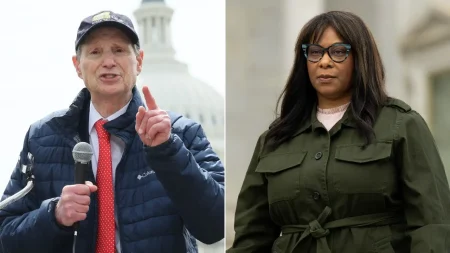
At the heart of the debate lies a profound concern about international precedent and potential repercussions. Representatives from both parties have expressed alarm about how America’s adversaries might exploit this action to justify their own territorial ambitions. Republican Congressman Don Bacon worries that “Russia will use this to justify their illegal and barbaric military actions against Ukraine, or China to justify an invasion of Taiwan,” while Democratic Representative Ro Khanna pointedly asks, “What will we say now if Putin tries to capture Zelenskyy?” These concerns reflect a deeper anxiety that by violating Venezuelan sovereignty, the United States may have undermined the very international legal framework it has championed for decades. The UN human rights office reinforced this perspective, suggesting the operation “damages the architecture of international security and makes every country less safe” by signaling that “the powerful can do whatever they like.” China and Russia, predictably, have seized on this narrative, condemning the action as a “blatant use of force against a sovereign state” that “seriously violates international law.”
However, proponents of the operation counter that these arguments misunderstand both the nature of deterrence and the behavior of America’s adversaries. According to Pedro Garmendia, a Washington-based geopolitical risk analyst, “I don’t think Putin or Xi ever doubted that power overrides sovereignty. What we’ve seen consistently from China and Russia is that they use rhetoric around international law when it suits them and ignore it when it doesn’t.” This perspective suggests that America’s rivals are hardly constrained by legal norms but rather by hard calculations of capability and will. The operation’s lethality—resulting in the deaths of dozens of Venezuelan and Cuban security personnel as U.S. forces pushed through layers of resistance—demonstrated both in unmistakable terms. President Trump publicly acknowledged the necessity of force given the threat environment and the presence of foreign forces embedded within Maduro’s security apparatus. For analysts, this willingness to use decisive force and own it publicly carries its own deterrent value, especially given that Venezuela represented a significant investment for both Russia and China. The embarrassment of seeing their ally’s leader captured “when a Chinese special envoy had just met with Maduro hours before” delivers a message no diplomatic protest could match.
Beyond its lethality, the operation’s execution revealed American capabilities that likely sent chills through adversaries’ security establishments. The raid showcased months of meticulous preparation, including training on a full-scale replica of Maduro’s compound and CIA-developed intelligence on his daily routines. This preparation allowed for a precision strike during Maduro’s most vulnerable moment, with airspace suppression, rapid insertion, and coordinated ground movement unfolding in minutes—denying Venezuelan and allied forces any meaningful opportunity to respond. President Trump later emphasized that this preparation demonstrated the deliberate rather than impulsive nature of the operation, arguing that speed and overwhelming force were essential to prevent Maduro’s escape or a prolonged confrontation. Former FBI counterintelligence operative Eric O’Neill observed that these operational details likely matter more to Beijing and Moscow than legal debates at the United Nations. “They didn’t even get a chance to blink before Maduro was gone,” he noted, adding that the execution underscored America’s ability to “find its adversaries anywhere in the world”—a capability that rivals simply cannot match regardless of their disregard for international norms.
Perhaps most significantly, the Maduro operation demonstrated America’s institutional experience in planning and executing complex, intelligence-driven missions—the product of decades refining counterterrorism and special operations capabilities. U.S. officials point to the seamless integration of intelligence collection, rehearsal, logistics, and kinetic force as evidence of a mature operational system that can be activated with minimal warning. This institutional competence represents a deterrent advantage that adversaries must assume exists even when they cannot directly observe it. While China intensifies military pressure on Taiwan through near-daily air incursions and large-scale exercises, and Russia continues its war in Ukraine while rejecting international legal judgments, their condemnations of the U.S. operation strike many as hypocritical posturing. The contrast between their rhetoric about international law and their own behavior reinforces the operation’s intended message: while adversaries may invoke legal principles when convenient, what truly shapes their calculations is demonstrated capability—especially when paired with the experience to plan, rehearse, and execute complex operations without warning.
The aftermath of the Maduro operation has created a moment of reckoning about America’s role in the world and the evolving nature of great power competition. While the debate over international norms continues in diplomatic circles and congressional chambers, strategists argue that the operation’s deterrent value lies precisely in its demonstration that the United States maintains both the will and capability to act decisively when its interests are threatened. For a world increasingly characterized by authoritarian aggression and weakening international institutions, the capture of Maduro may represent less a break from norms than an acknowledgment of their limitations in constraining determined adversaries. As Washington navigates the diplomatic fallout and security implications, the operation’s ultimate significance may lie less in the legal precedents it sets than in the clear message it sends about American resolve in an era of renewed great power rivalry—a message that speaks the language adversaries understand most clearly: demonstrated power rather than principled restraint.