



Federal Reserve Chairman Jerome Powell Under Criminal Investigation as Term Nears End
Justice Department Probe Raises Questions About Fed Independence and Market Stability
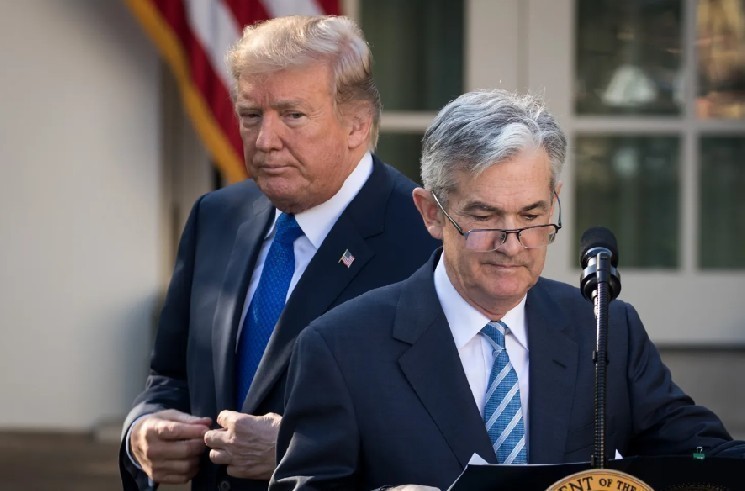
In a stunning development that has sent ripples through financial markets, Federal Reserve Chairman Jerome Powell has become the subject of a criminal investigation by federal prosecutors, according to a report by The New York Times. The investigation comes at a particularly sensitive moment as Powell’s term as Chair approaches its conclusion, potentially reshaping the landscape of American monetary policy and financial governance.
Investigation Centers on Congressional Testimony About Renovation Project
Sources cited by The New York Times reveal that prosecutors are examining whether Powell deliberately downplayed the scope and cost of a renovation project for the Federal Reserve’s headquarters building during his testimony to Congress. The investigation has escalated significantly, with Powell confirming he has received a grand jury subpoena and has been informed by the Department of Justice about potential criminal charges related to his Senate testimony from June of last year.
“The U.S. Department of Justice informed me that it is considering criminal charges against me in relation to my Senate testimony last June,” Powell acknowledged in a recent statement. “The matter is reportedly related to testimony concerning the renovation project of the Fed’s headquarters in Washington.”
The timing of the investigation has raised eyebrows throughout Washington and Wall Street, coming as Powell’s term as chair winds down while monetary policy remains at a critical juncture for the U.S. economy. The Federal Reserve has been navigating the challenging terrain of persistent inflation while trying to avoid triggering a recession through its interest rate policies.
Powell Claims Investigation Is Politically Motivated Attack on Fed Independence
In a forceful response that has intensified the controversy, Powell has characterized the investigation as a thinly veiled attack on the Federal Reserve’s independence. The Chairman directly connected the probe to the institution’s interest rate decisions, suggesting that the Justice Department’s investigation serves as a pretext for exerting political pressure on the central bank’s monetary policy.
Powell’s allegations paint a troubling picture of the relationship between the executive branch and the ostensibly independent Federal Reserve. He has described the Justice Department’s actions—including the issuance of subpoenas and threats of indictment—as unprecedented in the central bank’s history, claiming they represent tactics employed by the Trump administration to influence rate decisions.
“The Federal Reserve stands at a crossroads,” Powell stated, framing the situation as a critical choice between maintaining evidence-based monetary policy or yielding to political pressure. His remarks underscore the institutional stakes of the investigation, suggesting that the Fed’s ability to make independent decisions based on economic data rather than political considerations hangs in the balance.
Trump Denies Involvement as Political Tensions Escalate
President Donald Trump has quickly distanced himself from the investigation, issuing a statement denying any involvement with the Justice Department’s actions against Powell. “The subpoena that the Justice Department sent to Powell has absolutely nothing to do with policy interest rates or monetary policy,” Trump declared, pushing back against implications that the administration is attempting to influence monetary policy through legal pressure.
Trump’s statement comes against the backdrop of his previous criticisms of Powell and the Federal Reserve’s interest rate policies. Throughout his presidency, Trump frequently expressed dissatisfaction with the Fed’s decisions, particularly when rate hikes were implemented, creating an already tense relationship between the White House and the central bank.
The conflicting narratives between Powell and Trump highlight the political dimensions of what would otherwise be a straightforward investigation into potential misrepresentations to Congress. The situation has created uncertainty about the motivations behind the probe and raised concerns about the politicization of institutions that have traditionally operated with significant independence from executive branch influence.
Potential Impact on Financial Markets and Bitcoin’s Position
Financial analysts are closely monitoring the situation, with some suggesting that the investigation could have significant implications for market stability and investor confidence in traditional financial systems. Cryptocurrency experts, in particular, have noted that undermining trust in the Federal Reserve could potentially strengthen alternative assets like Bitcoin.
HashKey Group analyst Tim Sun characterized the Justice Department’s case as potentially setting an “extremely dangerous precedent” if successful. “If the investigation is successful, it would undermine and destabilize confidence in the entire dollar and the U.S. Treasury system. This would benefit non-sovereign assets like Bitcoin,” Sun explained.
The analyst further suggested that political control over the Federal Reserve could lead to more dramatic consequences: “If the Fed falls under the chairman’s control, leading to a sharp depreciation of the dollar or a loss of control over interest rate expectations, Bitcoin may indeed be approaching its historic moment.”
These observations reflect growing concern among market participants about the stability of traditional financial institutions and governance structures, with some investors increasingly viewing decentralized assets as hedges against institutional uncertainty.
Uncertainty Looms as Powell’s Chair Term Approaches End
While Powell’s term as Federal Reserve Chair concludes in May, his membership on the Federal Reserve Board of Governors extends until January 2028, creating questions about his future role at the institution. Powell has not yet indicated whether he intends to remain on the Board after his chairmanship ends, adding another layer of uncertainty to an already complex situation.
The investigation’s resolution—and Powell’s response to it—will likely have far-reaching implications for monetary policy, market confidence, and the relationship between political leadership and financial governance. Central bank independence, long considered essential for effective monetary policy, now faces one of its most significant tests in recent memory.
As markets digest these developments, investors, policymakers, and citizens alike are watching closely to see how this unprecedented situation unfolds. The outcome could reshape not only Powell’s legacy but also the institutional framework that has governed American monetary policy for generations.
This article does not constitute investment advice and is presented for informational purposes only.