


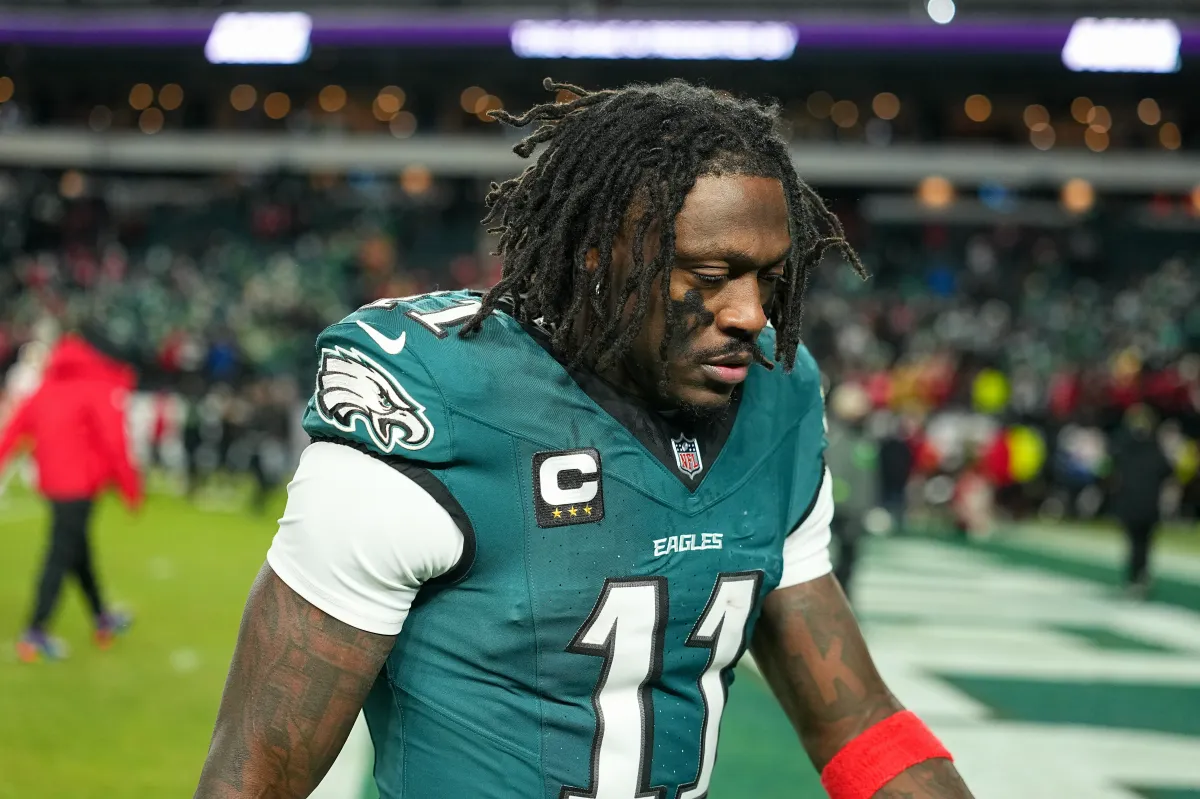
Eagles Season Concludes with Tense Moments and Silent Aftermath
The Philadelphia Eagles’ season reached a disappointing conclusion on Sunday with a 23-19 defeat to the San Francisco 49ers at Lincoln Financial Field. Nearly 70,000 fans watched as their playoff hopes faded, but it was what happened on the sidelines and after the game that captured as much attention as the on-field action.
During the first half, tensions flared between wide receiver AJ Brown and head coach Nick Sirianni in full view of the cameras. The heated exchange occurred after Brown dropped a critical pass on third down, with Sirianni appearing visibly frustrated with his star receiver. When questioned about the incident afterward, Sirianni downplayed the confrontation, explaining to NBC Sports reporter Dave Zangaro that he was simply trying to get Brown off the field to allow the punt team to enter. “I was trying to get him off the field because we were about to punt. I love AJ,” Sirianni insisted, attempting to frame the interaction as procedural rather than emotional. However, the body language between coach and player told a different story to many observers, who saw it as emblematic of deeper frustrations within the team.
Brown’s performance fell well short of expectations for a player of his caliber in such a crucial playoff matchup. He managed just three receptions for 25 yards, a negligible impact for someone considered among the league’s elite receivers. More concerning were the dropped passes that came at pivotal moments, potentially changing the trajectory of a game decided by just four points. His subdued statistical output mirrored the Eagles’ overall offensive struggles that ultimately led to their playoff elimination.
The postgame atmosphere revealed even more about Brown’s state of mind, as he declined to speak with media members following the loss – a notable violation of NFL policy that requires players to be available for interviews after games. As reported by Ari Meirov of the 33rd Team, Brown’s silence spoke volumes about his frustration level following the defeat. This decision potentially exposes him to league discipline, though the NFL has been inconsistent in enforcing these media obligations. For comparison, Kansas City Chiefs tight end Travis Kelce faced no consequences after declining media appearances during the regular season, while former Seahawks running back Marshawn Lynch once claimed he accumulated over $1 million in fines for his repeated media avoidance.
The NFL’s media requirements aren’t arbitrary – they serve the league’s broader commercial interests. When star players share their perspectives after games, it maintains fan engagement, drives conversation throughout the week, and ultimately supports the economic engine that enables lucrative player contracts like Brown’s. As a veteran who participated in last year’s Super Bowl, Brown understands these obligations are part of his professional responsibilities, making his decision to remain silent all the more telling about his emotional state following the season-ending loss.
For Philadelphia, this defeat and its aftermath raise questions about team chemistry and leadership heading into the offseason. While one sideline disagreement and a missed media session don’t necessarily indicate deep-rooted problems, they certainly don’t project the image of a unified team moving forward with confidence. As Eagles fans process another playoff disappointment, they’ll be watching closely to see how the relationship between their star receiver and head coach evolves, and whether this tension was merely the heat of the moment or a sign of more significant issues within the organization.