


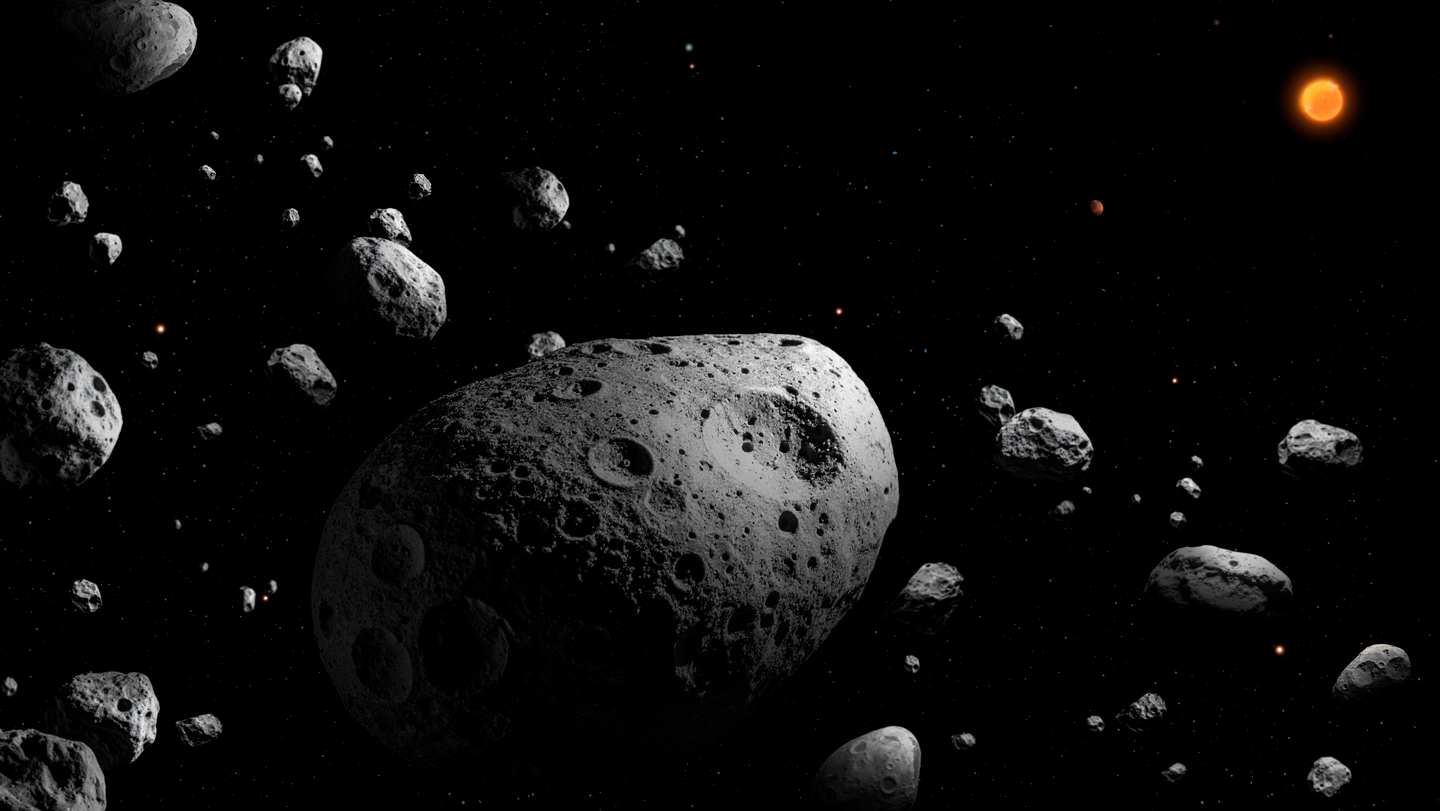
Cosmic Speedster: Newly Discovered Asteroid Sets Rotation Record
In a remarkable astronomical discovery, scientists have identified an asteroid that spins at an unprecedented rate, completing a full rotation in just 112 seconds—about the same time it takes for a typical Ferris wheel to make one revolution. This finding, announced by astronomer Sarah Greenstreet at the American Astronomical Society meeting, shatters previous records and offers new insights into the composition and origins of asteroids in our solar system.
The asteroid, designated 2025 MN45, was spotted by the cutting-edge Vera C. Rubin Observatory in Chile, a facility designed to scan the entire southern sky every few nights over a decade. This comprehensive surveillance capability gives astronomers an unparalleled ability to track objects that move and change across the night sky. During its initial “first look” imaging period last spring, the observatory detected approximately 2,100 solar system objects, with the surprising revelation that about 90 percent had never been documented before. By analyzing brightness variations, researchers determined the rotation periods of 76 asteroids in this collection.
These rotation measurements are far more than just interesting statistics; they provide crucial information about the fundamental nature of asteroids. “Rotation speeds are important because they’re one of the only ways we can learn about the internal strengths, compositions and collisional histories of asteroids,” explains Greenstreet, who works at the University of Washington in Seattle. The extraordinary speed of 2025 MN45 indicates that it must possess substantial structural integrity to prevent it from disintegrating under the tremendous centrifugal forces generated by its rapid spin. This challenges the common understanding that most large asteroids are loosely bound “rubble piles” that would fly apart if they rotated faster than once every 2.2 hours.
Among the Rubin Observatory’s discoveries were sixteen asteroids spinning faster than this theoretical limit, with three completing rotations in less than five minutes. However, none approach the blistering pace of 2025 MN45, which spins more than 15 times faster than previous record holders that typically took between 30 minutes and an hour to complete a rotation. This places 2025 MN45 in a category of its own and raises intriguing questions about its formation and history.
Given its extraordinary rotation speed, researchers believe 2025 MN45 must be composed of solid rock or clay material. Greenstreet suggests it might have originated from the dense core of a larger parent body that was involved in a catastrophic collision, effectively liberating this more cohesive fragment. This scenario would explain both its unusual composition and its remarkable spin rate, which could have been accelerated during the violent separation event.
The discovery of 2025 MN45 and other fast-spinning asteroids suggests that the asteroid belt between Mars and Jupiter may harbor many more of these cosmic speedsters than previously thought. “We think that there could be potentially lots of these speedy spinners in the belt,” notes Greenstreet. Documenting and studying the diverse characteristics of asteroids helps astronomers reconstruct the complex and violent history of our solar system, adding another piece to the cosmic puzzle of how our neighborhood in space evolved over billions of years.