



Rubin Observatory Discovers the Fastest-Spinning Large Asteroid in Our Solar System
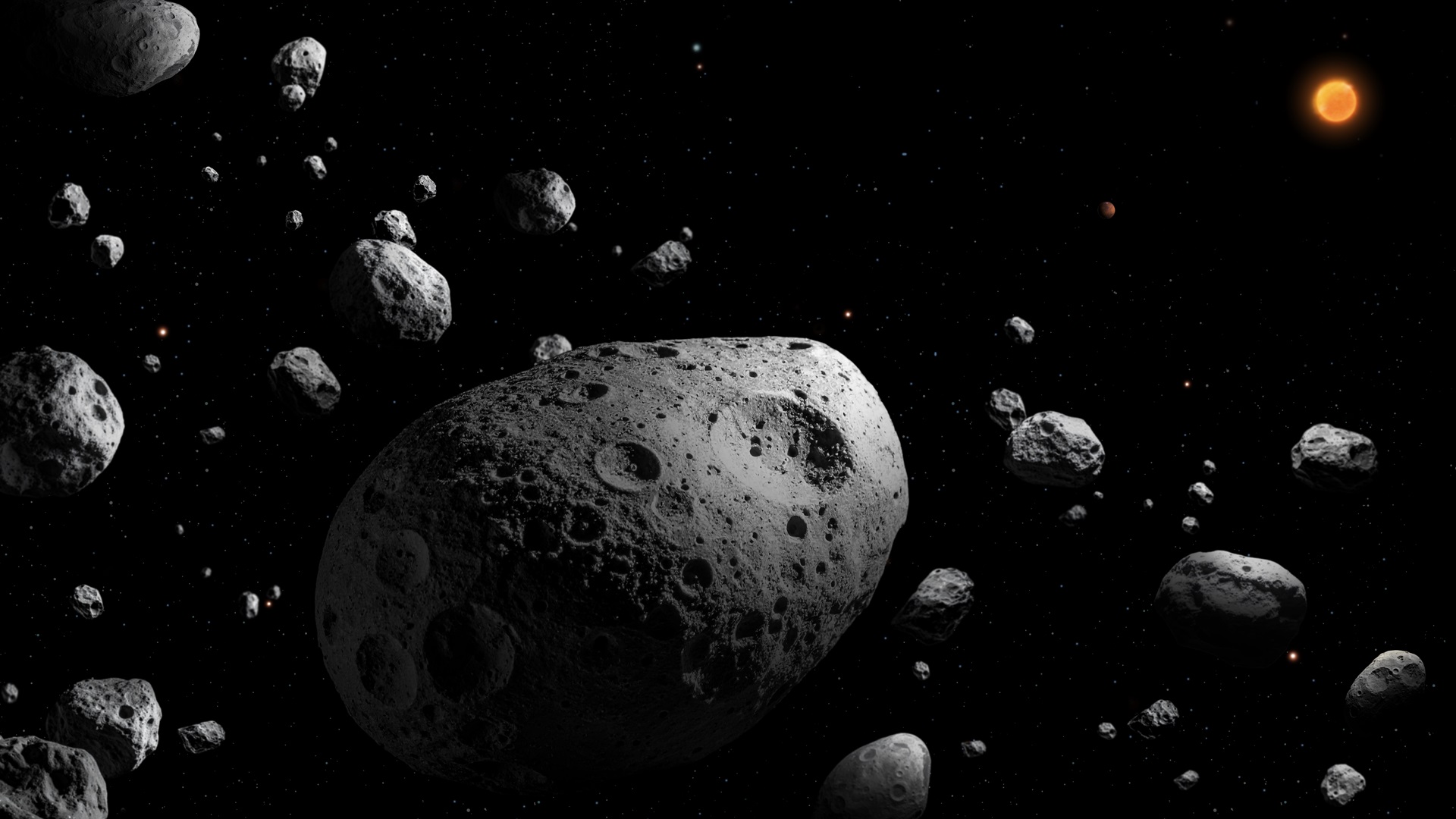
In a groundbreaking discovery announced at the American Astronomical Society’s winter meeting in Phoenix, astronomers revealed they’ve found an asteroid that spins faster than any other known space rock of comparable size. Asteroid 2025 MN45, measuring nearly half a mile (710 meters) across, completes a full rotation in just 1.88 minutes—a dizzying pace that challenges our understanding of these ancient celestial objects. “This is now the fastest-spinning asteroid that we know of, larger than 500 meters,” explained University of Washington astronomer Sarah Greenstreet, who leads the Rubin Observatory’s working group for near-Earth objects and interstellar objects. The finding represents the first peer-reviewed scientific paper based on data from the Vera C. Rubin Observatory’s powerful LSST Camera in Chile, marking an exciting milestone for this advanced astronomical facility that promises to revolutionize our view of the night sky.
The discovery emerged from observations of more than 2,100 solar system objects detected during the observatory’s commissioning phase. By analyzing variations in reflected light, Greenstreet and her colleagues determined the physical properties of 76 asteroids, almost all residing in the main asteroid belt between Mars and Jupiter. Among these objects, the team identified 16 “super-fast rotators” with revolution periods ranging from 13 minutes to 2.2 hours, and three exceptionally rapid “ultra-fast rotators” that complete a revolution in less than five minutes. 2025 MN45 stands out even among these speedsters, with its rotation rate of less than two minutes making it the fastest large asteroid ever documented. Such extreme rotation rates provide crucial insights into the object’s physical nature and origin story, offering astronomers a window into the violent past of our solar system.
Unlike the majority of asteroids, which scientists believe consist of loosely bound “rubble piles,” 2025 MN45 appears to be made of solid rock. “We also believe that it’s likely a collisionary fragment of a much larger parent body that, early in the solar system’s history, was heated enough that the material internal to it melted and differentiated,” Greenstreet explained. This scenario suggests that a primordial collision blasted 2025 MN45 from the dense core of a larger asteroid, sending it spinning rapidly into space. The discovery challenges previous assumptions about how fast large asteroids can rotate before flying apart due to centrifugal forces. While astronomers have previously detected fast-spinning smaller asteroids (less than 500 meters wide), finding larger objects rotating at such extreme rates is unprecedented and provides new constraints for models of asteroid formation and evolution.
To appreciate the extreme nature of this asteroid’s rotation, imagine standing on its surface—though you’d need extraordinary technology to avoid being flung off immediately. As Greenstreet colorfully described it: “If you were standing on it, it would probably be quite the ride to be going around on the outside edge of this thing that’s the size of eight football fields.” The experience would far exceed the thrill of any terrestrial amusement ride, with speeds exceeding 40 mph just from rotation alone. The centrifugal force at the equator would significantly reduce the effective gravity, making any loose material likely to escape the asteroid’s surface entirely. This extreme rotation also explains why the object must be composed of solid rock rather than looser material—any rubble pile spinning this fast would simply disintegrate under the centrifugal forces.
The Vera C. Rubin Observatory, which made this discovery possible, represents one of astronomy’s most ambitious projects. Jointly funded by the National Science Foundation and the U.S. Department of Energy’s Office of Science, the observatory benefited from early contributions by Microsoft co-founder Bill Gates and software executive Charles Simonyi. The University of Washington, one of the founding members of the consortium behind the project, played a significant role in its development, with several university researchers contributing to this groundbreaking study. The observatory’s Simonyi Survey Telescope was named in honor of Charles Simonyi’s family, acknowledging their support for this revolutionary scientific instrument designed to conduct a ten-year survey of the visible sky.
Beyond the thrill of discovery, this finding has profound implications for our understanding of the solar system’s formation and evolution. “This is only the beginning of science for the Rubin Observatory,” Greenstreet emphasized. “We are already seeing that we can study smaller asteroids at farther distances than we’ve ever been able to study before. And being able to study these fast rotators further, we’re going to learn a lot of really crucial information about the internal strength, composition and collisional histories of these primitive solar system bodies that date back to the formation of the solar system.” As the Rubin Observatory continues its systematic survey of the sky in the coming years, astronomers anticipate discovering many more unusual objects, each providing new clues about our cosmic neighborhood’s past. Asteroid 2025 MN45 stands as just the first of many exciting discoveries that will reshape our understanding of the solar system’s small bodies and the dynamic processes that have shaped them over billions of years.