




Unexpected Assault During Atlantic City New Year’s Eve Rescue
In a dramatic turn of events on New Year’s Eve, what began as a standard water rescue in Atlantic City became a bizarre and dangerous confrontation. A 31-year-old New Jersey man named Christopher Treadway was spotted floating in the frigid waters off the Atlantic City beach shortly after noon. While conscious, he wasn’t actively swimming, prompting immediate concern from onlookers who called emergency services. First responders quickly mobilized, with rookie firefighter Dominic Gitto taking the lead by wading into the icy waters with a longboard to reach the seemingly distressed individual. What should have been a straightforward rescue, however, took an unexpected and alarming turn that would test the training and resolve of everyone involved.
As Gitto and a fellow firefighter reached Treadway, the situation rapidly deteriorated. Rather than showing relief at the sight of rescuers, Treadway became agitated, jolting and floundering in the water as if startled by their approach. His behavior quickly escalated from resistance to outright aggression when he allegedly produced a concealed screwdriver and lunged at Gitto in an apparent attempt to stab him. Fortunately, the firefighter’s training kicked in, allowing him to deflect the assault and maintain control of the situation. Despite this shocking development, the rescue team remained focused on their primary mission – getting Treadway safely to shore. They attempted to secure him to a rescue sled hitched to a waverunner, but his continued resistance forced them to adapt their approach, ultimately forming a human chain to manually drag him through the shallow water toward the beach.
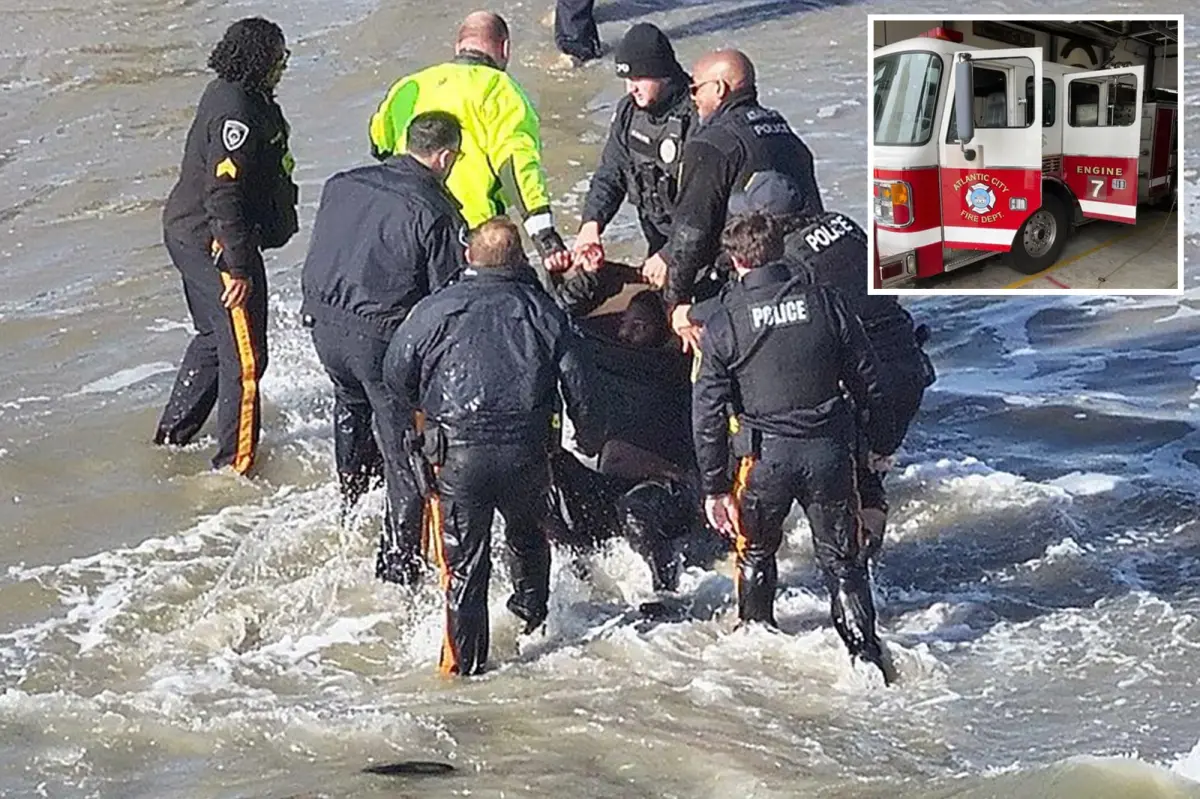
The struggle continued even as they approached the shore, with Atlantic City Police officers joining firefighters in their efforts to subdue the combative man. Video footage of the incident shows Treadway continuing to thrash violently as the team worked to extract him from the water. This prolonged resistance in such hazardous conditions created additional dangers for everyone involved, particularly given the near-freezing temperatures of the ocean. Officials would later suggest that Treadway was likely experiencing a psychiatric episode during the incident, which might explain his erratic and aggressive behavior. Following his extraction from the water, Treadway was taken into custody on the beach and subsequently admitted to a psychiatric inpatient unit for evaluation, prioritizing his mental health needs while also addressing the public safety concerns his actions had raised.
The aftermath of the rescue revealed the physical toll it had taken on those involved, particularly rookie firefighter Gitto. During the prolonged struggle in the icy waters, his protective dry suit had been compromised, allowing the freezing ocean water to seep in. As a result, Gitto required treatment for acute hypothermia – a potentially life-threatening condition characterized by dangerously low body temperature. This additional layer of danger highlights the extraordinary risks first responders willingly accept when answering calls for help. Despite being relatively new to the job with only “a few months” of experience, Gitto’s actions exemplified the highest standards of emergency response, prioritizing the safety of others even at significant personal risk. His willingness to endure these harsh conditions while simultaneously defending himself from attack speaks volumes about his character and commitment to public service.
Atlantic City Fire Chief Scott Evans was quick to recognize Gitto’s exceptional performance under extraordinarily difficult circumstances. In public statements following the incident, Evans praised the rookie firefighter’s “professionalism and personal sacrifice,” noting that his actions were all the more impressive given his limited experience. “Our firefighters are trained to handle hazardous situations, including cold-water rescues, and this incident underscores the importance of that training and teamwork,” Evans told local media. This sentiment was echoed by the Atlantic City firehouse, which added in a social media post: “Great work by Firefighter Gitto, and all companies involved. A life was definitely saved.” These commendations reflect not only appreciation for Gitto’s individual performance but also acknowledgment of the collaborative effort required to successfully navigate such a complex emergency situation – one that combined the challenges of water rescue with the unpredictability of a potential mental health crisis and the threat of violence.
While the rescue team focused on providing immediate safety and medical care, law enforcement authorities pursued the legal dimensions of the case. Treadway now faces multiple serious charges stemming from the incident, including aggravated assault with a deadly weapon, possession of a weapon for unlawful purposes, resisting arrest, and obstruction. These charges reflect the gravity of his actions and the potential harm that could have resulted from his alleged attack on first responders. However, the case also highlights the complex intersection of mental health issues and criminal behavior, raising important questions about appropriate interventions and responses when individuals experiencing psychiatric crises engage in dangerous conduct. The Atlantic City New Year’s Eve incident serves as a powerful reminder of the unpredictable nature of emergency response work and the extraordinary courage demonstrated by those who choose careers dedicated to saving others, often at considerable risk to themselves – even when those they’re trying to help become the source of danger.