


Zelenskyy’s Pointed Remarks on Maduro’s Capture as U.S. Asserts Global Power
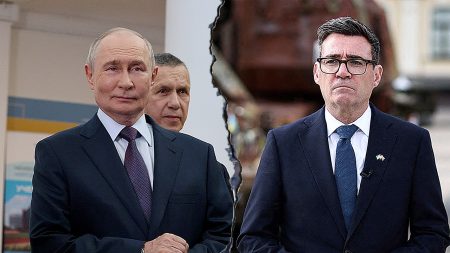
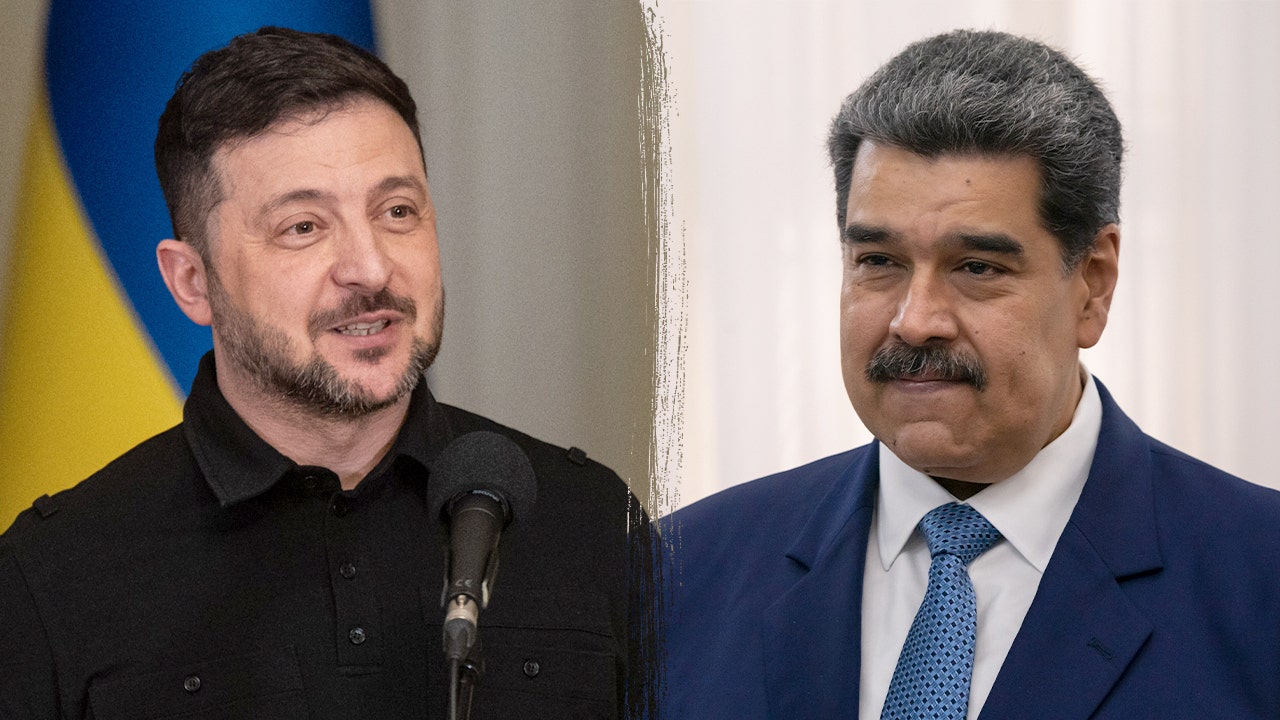
In a moment that revealed the interconnected nature of global authoritarian challenges, Ukrainian President Volodymyr Zelenskyy offered a subtle but unmistakable message following the United States’ dramatic capture of former Venezuelan leader Nicolás Maduro. Speaking to reporters in Kyiv after meeting with national security advisors from the Coalition of the Willing, Zelenskyy’s response was brief but loaded with implication: “Well, what can I say is, if you can do that with dictators, then the United States knows what to do next,” he remarked with a telling smile. The statement, while diplomatically ambiguous, seemed to draw a parallel between Maduro and other authoritarian leaders, particularly Russian President Vladimir Putin, whose forces continue to wage war against Ukraine. This intersection of two major international crises—Venezuela’s political turmoil and Russia’s ongoing aggression in Ukraine—highlights the complex web of global power dynamics that the Trump administration now navigates.
The audacious military operation that captured Maduro represented an extraordinary assertion of American power projection. In the early hours of the morning in Caracas, U.S. forces extracted Maduro and his wife, Cilia Flores, from their compound and transported them to the USS Iwo Jima before flying them to New York to face federal charges. Dubbed “Operation Absolute Resolve,” the mission involved more than 150 aircraft and coordinated efforts across military, intelligence, and law enforcement agencies—a demonstration of American capabilities that surely resonated with observers worldwide. Attorney General Pam Bondi released a superseding indictment charging Maduro with leading a narco-terrorism conspiracy tied to large-scale cocaine trafficking into the United States, along with related drug importation and weapons offenses. Flores faces similar charges related to a decades-long cocaine trafficking conspiracy and firearms offenses, building upon indictments originally filed in 2020. This bold action signaled a new era of American willingness to directly intervene against leaders deemed criminal by U.S. authorities.
The international response to Maduro’s capture immediately highlighted the geopolitical fault lines that define the current world order. Russia’s Ministry of Foreign Affairs swiftly condemned the operation, demanding the Trump administration release the “legitimately elected president of a sovereign country and his spouse”—language that pointedly challenged the legitimacy of U.S. actions. This response underscores the growing Russia-Venezuela alliance that has developed in recent years, with Moscow seeing Caracas as a strategic foothold in the Western Hemisphere. When asked about potential communication with Putin regarding the operation, President Trump’s response was notably direct: “I’m not thrilled with Putin. He’s killing too many people.” This statement represented a more confrontational tone toward the Russian leader than previously demonstrated, perhaps signaling a shift in the complex Trump-Putin relationship that has been the subject of speculation and controversy throughout both of Trump’s presidential campaigns and his first term.
Meanwhile, the war in Ukraine continues unabated, forming a critical backdrop to these developments. Zelenskyy used the Coalition of the Willing meeting to emphasize Russia’s ongoing aggression: “Russia has not shown a genuine willingness to pursue peace. Instead, it continues its aggressive war, violence and destabilization, using negotiations as a tactic to buy time,” he stated, adding that Moscow “employs provocations and manipulations to derail progress in the peace process.” These remarks came as Russian forces continued launching large-scale drone and missile attacks against Kyiv, even as the Trump administration reportedly works to secure a potential peace agreement to end the nearly four-year conflict. The juxtaposition of American action against Maduro while Ukraine continues to suffer under Russian bombardment creates a complex narrative about American priorities and capabilities in confronting hostile regimes around the world.
The capture operation itself represents a significant evolution in how the United States addresses perceived threats from foreign leaders. Chairman of the Joint Chiefs General Dan Caine characterized the mission as “a testament to the dedication and unwavering commitment to justice and our resolve to hold accountable those who threaten peace and stability.” This framing attempts to establish a principle that individual leaders can be held personally accountable through direct U.S. military action—a dramatic departure from traditional approaches relying on sanctions, diplomatic isolation, or support for internal opposition movements. Such a precedent raises profound questions about national sovereignty, international law, and the boundaries of American power projection. Within Venezuela itself, Maduro’s sudden removal has sparked suspicions of potential betrayal within the country’s ruling elite, suggesting that internal fractures might have facilitated the U.S. operation—a dimension that adds further complexity to an already multilayered geopolitical situation.
As these events unfold, they reveal the intricate interconnections between seemingly disparate international crises. Zelenskyy’s suggestive comment about what the U.S. “knows what to do next” speaks to the hope among Ukrainian officials that American resolve demonstrated against Maduro might translate to stronger support for Ukraine’s defense against Russian aggression. The Trump administration now faces the delicate task of balancing its bold action in Venezuela with the ongoing challenges in Eastern Europe, while managing relationships with adversarial powers like Russia and China, both of which have entered the diplomatic fray surrounding Maduro’s capture. This moment of American assertion comes at a time of significant global instability, with traditional norms of international relations being rewritten through actions rather than agreements. Whether this represents a new doctrine of more direct American intervention or a singular event driven by specific circumstances remains to be seen, but the reverberations from Caracas will undoubtedly be felt in Moscow, Beijing, and capitals worldwide for years to come.