


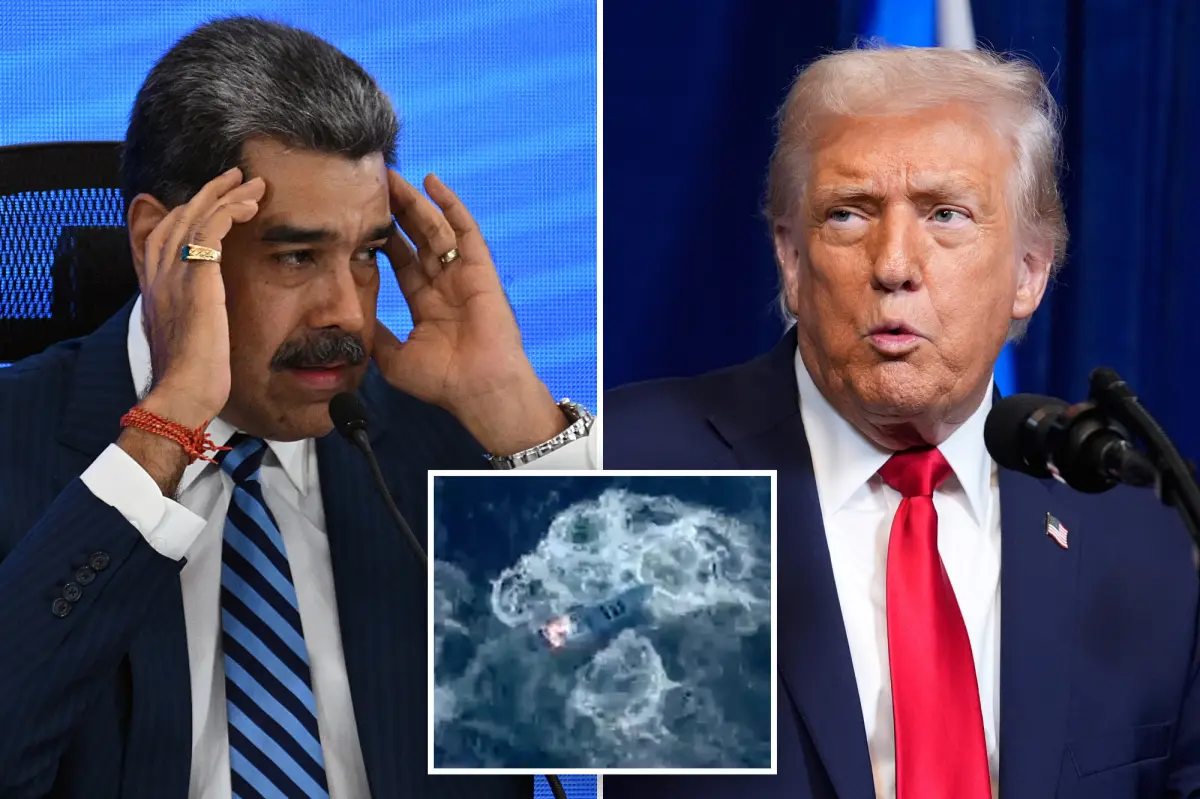
Venezuela’s Maduro Signals Openness to U.S. Engagement Amid Rising Tensions
In a candid interview broadcast on Venezuelan state television, President Nicolás Maduro has expressed willingness to engage with the United States on two major fronts: combating drug trafficking and expanding oil investment opportunities. Speaking to Spanish journalist Ignacio Ramonet in a New Year’s Eve conversation, the controversial leader stated, “The US government knows, because we’ve told many of their spokespeople, that if they want to seriously discuss an agreement to combat drug trafficking, we’re ready.” This overture comes at a particularly tense moment in U.S.-Venezuela relations, following reports of a CIA drone strike on Venezuelan soil targeting what was believed to be a cartel-operated docking area. Maduro extended his invitation beyond security cooperation, adding that “if they want oil, Venezuela is ready for U.S. investment, like with Chevron, whenever they want it, wherever they want it and however they want it.” This statement represents a potentially significant shift in tone from the typically confrontational stance Maduro has maintained toward Washington.
The timing of Maduro’s comments is particularly noteworthy, coming amid an intensified U.S. campaign targeting drug trafficking operations with alleged links to the Venezuelan government. Since early September, the United States has conducted at least 35 strikes against suspected drug-smuggling vessels operating in the Caribbean Sea and Eastern Pacific, with reports indicating these operations have resulted in approximately 115 casualties among suspected traffickers. This aggressive approach appears to be part of a broader strategy to pressure the Maduro regime, as the Venezuelan president himself faces U.S. indictments on charges of drug trafficking, money laundering, and corruption. The most recent escalation—a drone strike reportedly authorized by the CIA on Venezuelan territory—represents a significant intensification of tactics. While Maduro declined to address this specific operation directly in his interview, simply stating he could “talk about it in a few days,” the strike’s execution on sovereign Venezuelan territory marks a dramatic development in this ongoing conflict.
The United States government has made no secret of its dissatisfaction with the current Venezuelan administration. Secretary of State Marco Rubio articulated this position clearly in mid-December, stating, “The current status quo with the current Venezuelan regime is intolerable for the United States.” Rubio expanded on this assessment with serious allegations, claiming the Maduro government “operate[s] and cooperate[s] with terrorist organizations against the national interest of the United States – not just cooperate, but partner with and participate in activities that threaten the national interest of the United States.” This characterization provides important context for understanding the recent escalation in U.S. operations targeting drug trafficking networks with alleged connections to Caracas. According to Rubio, “Our goal is to change that dynamic and that’s why the president is doing what he’s doing.” The statement suggests that the recent military actions are part of a coordinated strategy rather than isolated responses to specific trafficking incidents.
The recent CIA drone strike on Venezuelan soil, which former President Trump himself revealed in a radio interview on December 26, represents a significant escalation in this ongoing conflict. Prior to this operation, U.S. anti-trafficking efforts had been focused on maritime targets outside Venezuela’s territorial boundaries. By conducting a direct strike on a docking facility within Venezuela, the United States has crossed a new threshold in its campaign against the Maduro regime. This development raises important questions about sovereignty, international law, and the potential for further escalation. The fact that Maduro has chosen not to immediately condemn this action but rather to signal openness to cooperation on anti-trafficking efforts suggests a possible recalculation of his position. Whether this represents a genuine shift in policy or merely a tactical maneuver remains to be seen.
The conflict between the United States and Venezuela must be understood within its broader historical and geopolitical context. Venezuela possesses the world’s largest proven oil reserves, making it a potentially vital economic partner for energy-hungry nations. Under Maduro’s leadership, however, the country has experienced catastrophic economic decline, with hyperinflation, food shortages, and a massive refugee crisis sending millions of Venezuelans fleeing to neighboring countries. The United States has maintained sanctions against the Maduro government, which it has refused to recognize as legitimate following disputed elections. By offering to open Venezuela’s oil industry to expanded U.S. investment, Maduro appears to be dangling the possibility of economic cooperation as an incentive for potential diplomatic normalization. The reference to Chevron, which already operates in Venezuela under special U.S. Treasury licenses, suggests Maduro envisions expanding existing arrangements rather than starting from scratch.
The road ahead for U.S.-Venezuela relations remains highly uncertain. Maduro’s expressions of openness to cooperation on drug trafficking and oil investment represent potential opening gambits in what would inevitably be a complex diplomatic process. The United States government faces difficult decisions about how to respond to these overtures while maintaining its position on democratic reforms and human rights concerns in Venezuela. For ordinary Venezuelans, these high-stakes geopolitical maneuvers unfold against a backdrop of continuing humanitarian challenges. The potential for eased tensions with the United States might offer hope for economic improvement, but any genuine progress would require substantial policy changes from both Washington and Caracas. As this situation continues to evolve, the international community will be watching closely to see whether Maduro’s stated readiness for cooperation translates into concrete actions, and whether the United States proves willing to engage with a government it has long sought to isolate and pressure.