



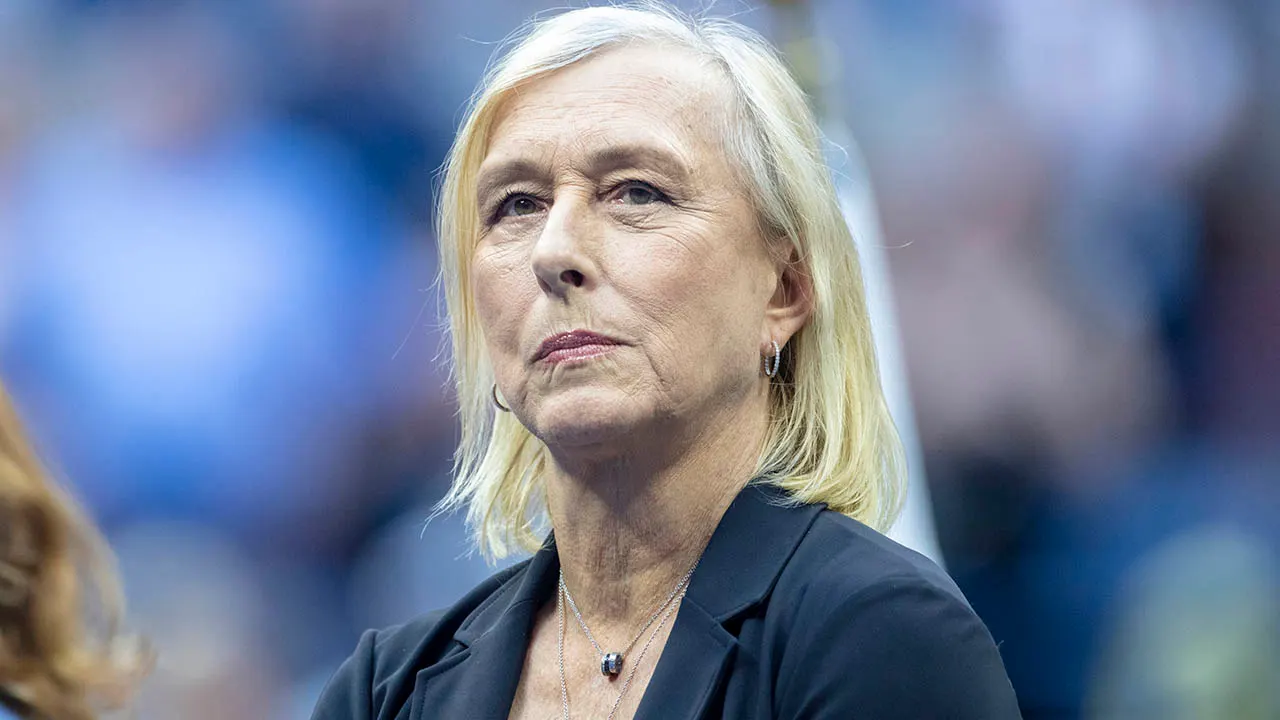
Martina Navratilova Defends J.K. Rowling in Debate Over Women’s Spaces
Tennis legend Martina Navratilova has stepped into a heated social media debate to defend “Harry Potter” author J.K. Rowling on the contentious topic of transgender individuals in women’s spaces. The exchange began when Rowling responded to English columnist Dan Hodges, who had criticized what he considered “hostile” treatment of transgender women in female-designated areas. With her characteristic directness, Rowling sarcastically thanked Hodges for his “bravery” in explaining to women how they should regard transgender individuals, suggesting his male perspective was neither needed nor welcome in this conversation. What followed was a passionate defense of women’s right to define their own spaces based on biological sex.
Rowling’s argument centered on a fundamental distinction: while she fully supports the freedom of transgender individuals to dress and identify as they choose, she firmly maintains that biological reality cannot be dismissed, and that women have the right to speak about this reality without being silenced. “I don’t believe a man literally becomes a woman when he identifies as one, and as I have freedom of speech, I have the right to call him a man,” Rowling stated firmly. She emphasized that the “verifiable truth of sex” provides the legal foundation for women’s rights and safeguarding measures. When another user attempted to dismiss these concerns as merely a “fringe issue,” Navratilova stepped in with her own perspective, stating, “Fringe for you maybe. Not so fringe for the women who are affected by males in women’s sex based spaces. Compelled speech is not ok either.”
Navratilova’s intervention is particularly interesting given her complex political positioning. While known for her liberal views and criticism of Trump, she has been consistently outspoken about protecting women’s sports from what she sees as unfair competition from biological males. Last December, she expressed frustration that Republicans had taken ownership of this issue, writing on social media: “And I am so mad that the Republicans captured this issue – shame on all the elected Democrats who keep silent on this!!! #whataboutthewomen.” Her comment highlights the political complexity of this debate, where traditional partisan lines have become blurred, and many liberal women find themselves at odds with progressive positions on gender identity when it comes to sports and sex-segregated spaces.
At the Independent Women’s Forum’s Take Back Title IX rally in June, Navratilova offered insight into her evolving thinking on the subject. She described how she and other advocates initially sought compromises that would allow transgender women to participate in women’s sports. “And the more we try to find a way to mitigate the advantage, to handicap, to somehow to include, the more we figured out it’s not possible. It’s not possible to do it in a fair way,” she explained. This perspective comes from someone with unparalleled credentials in women’s sports—Navratilova won 18 Grand Slam singles titles and is widely regarded as one of the greatest tennis players of all time. Her expertise lends significant weight to her arguments about competitive fairness, yet she has faced harsh criticism for these views.
The backlash against Navratilova has come primarily from those who might otherwise be her political allies. At the same rally, she expressed bewilderment at being labeled with terms like “homophobe” despite coming out as gay in 1981, long before it was socially acceptable to do so. “Now, it’s, ‘Oh, you’re a homophobe.’ Go figure. I’ve been out since ’81. Yeah, I’m a homophobe,” she said sarcastically. “You’re a bigot, you’re a transphobe, you’re a Nazi, you’re a fascist, you’re a communist,’ everything and everything in between. And this is coming from the left. I am the left! My people are turning on me. They’re turning on us women who speak up for women’s sex-based rights.” Her frustration points to a growing division within progressive movements, where discussions about sex and gender have created significant fractures.
Both Rowling and Navratilova represent prominent voices in what has become one of the most divisive cultural debates of our time. Their willingness to take controversial positions despite intense criticism reflects their convictions about protecting spaces and opportunities for biological women. While their opponents argue that such positions harm transgender individuals and deny their identities, Rowling and Navratilova maintain that biological differences matter in certain contexts and that acknowledging this reality isn’t an act of bigotry but a necessary component of preserving women’s rights. As this debate continues to unfold in social media exchanges, legislative battles, and sports governing bodies’ decisions, these high-profile figures ensure that questions about the balance between inclusion and fairness remain at the forefront of public conversation.