


A Light-Hearted Exchange Between Eric Adams and Andy Cohen
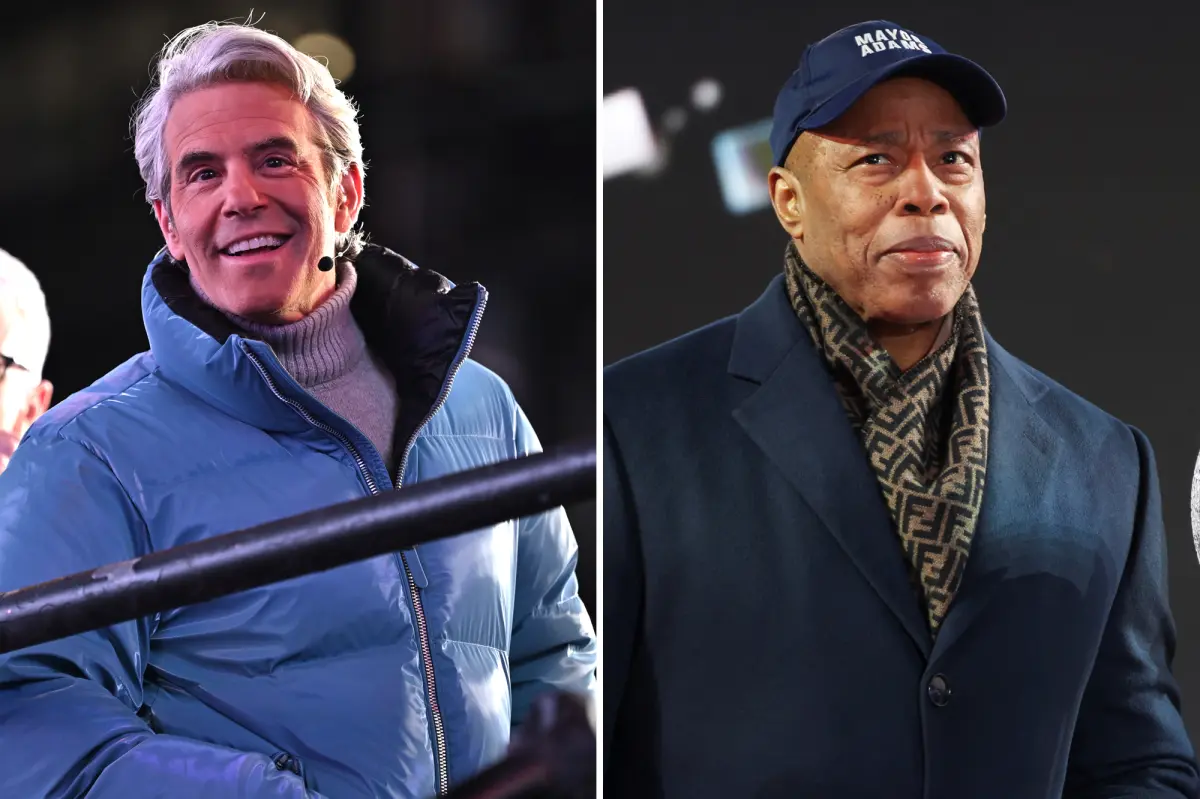
In a humorous response to television personality Andy Cohen’s New Year’s Eve comments, former New York City Mayor Eric Adams quipped, “I have two letters for him: AA,” referring to Alcoholics Anonymous. This playful jab came after Cohen, who co-hosted CNN’s New Year’s Eve celebration with Anderson Cooper, delivered some pointed remarks about Adams as the mayor’s term concluded. The exchange, which took place amid the traditional Times Square festivities, captured attention as Cohen began a critique of what he characterized as Adams’ “chaotic, horrible” tenure, before being gently restrained by Cooper and actor B.J. Novak. The moment highlighted the often colorful intersection of entertainment and politics that characterizes New York City’s public sphere.
The televised moment occurred during the transition of mayoral power in New York City, as Zohran Mamdani’s inauguration approached. Cohen, drink in hand during the broadcast, appeared eager to share his unfiltered thoughts about the outgoing administration. His attempt to criticize Adams’ term was a typical example of the candid, sometimes boundary-pushing commentary that has become a hallmark of CNN’s New Year’s Eve coverage with Cohen and Cooper. When Adams learned of Cohen’s comments, his response to The Post came with a laugh, suggesting he took the criticism in stride rather than with offense, demonstrating the thick skin often required in New York politics where public figures frequently face direct and sometimes harsh assessment from media personalities and citizens alike.
Cohen’s television comments included a factual misstatement when he referred to Adams receiving “pardons,” when in fact the federal corruption case against the former mayor had been dropped by the Department of Justice under the Trump administration rather than through a presidential pardon. This confusion highlights how complex political and legal situations can sometimes be misrepresented in the quick-paced environment of live television, especially during festive occasions when hosts may be less inhibited. The distinction is significant in terms of the technical resolution of Adams’ legal challenges, though Cohen’s broader sentiment about the controversial nature of Adams’ mayoral tenure reflected views held by some New Yorkers as the city transitioned to new leadership.
The exchange between Adams and Cohen exemplifies the unique relationship between New York City politicians and the entertainment industry. New York’s mayors have historically navigated a landscape where their policies and personalities become fodder not just for serious political analysis but also for late-night comedy, celebrity commentary, and social media discourse. Adams’ willingness to respond directly to Cohen’s comments with humor rather than indignation demonstrates an understanding of this dynamic. It also shows how public figures in the city often engage with criticism through the same media channels where they are critiqued, creating an ongoing dialogue that blends governance, entertainment, and public relations in ways unique to America’s largest city.
Beyond the immediate exchange, this incident reflects broader themes about how political legacies are discussed and shaped in contemporary media environments. As Adams’ term ended amid various controversies and investigations, Cohen’s attempted commentary—though interrupted and factually flawed—represented one of many voices contributing to the public narrative about the mayor’s time in office. The informal setting of New Year’s Eve celebrations, with its tradition of loose and sometimes intoxicated commentary, provided a platform for expressions that might not appear in more formal political discourse. Adams’ response, referencing Cohen’s apparent inebriation, simultaneously deflected the criticism while acknowledging the context in which it was delivered, effectively neutralizing the attack through humor.
This moment between a former mayor and a television personality encapsulates how political communication has evolved in the modern era. Rather than formal press conferences or policy debates, significant political commentary now often emerges from entertainment programs, social media exchanges, and celebratory events. Adams’ quick-witted response demonstrates his understanding that in today’s media landscape, a politician’s ability to navigate these informal channels with authenticity and humor can be as important as their handling of traditional political forums. As New York City welcomed a new mayor, this brief exchange served as a fitting epilogue to Adams’ tenure—a reminder that in the nation’s media capital, the lines between politics, entertainment, and personal interaction remain perpetually blurred, creating moments of unexpected levity even amid serious transitions of power.