


Oman: The Middle East’s Hidden Gem for Authentic Travel
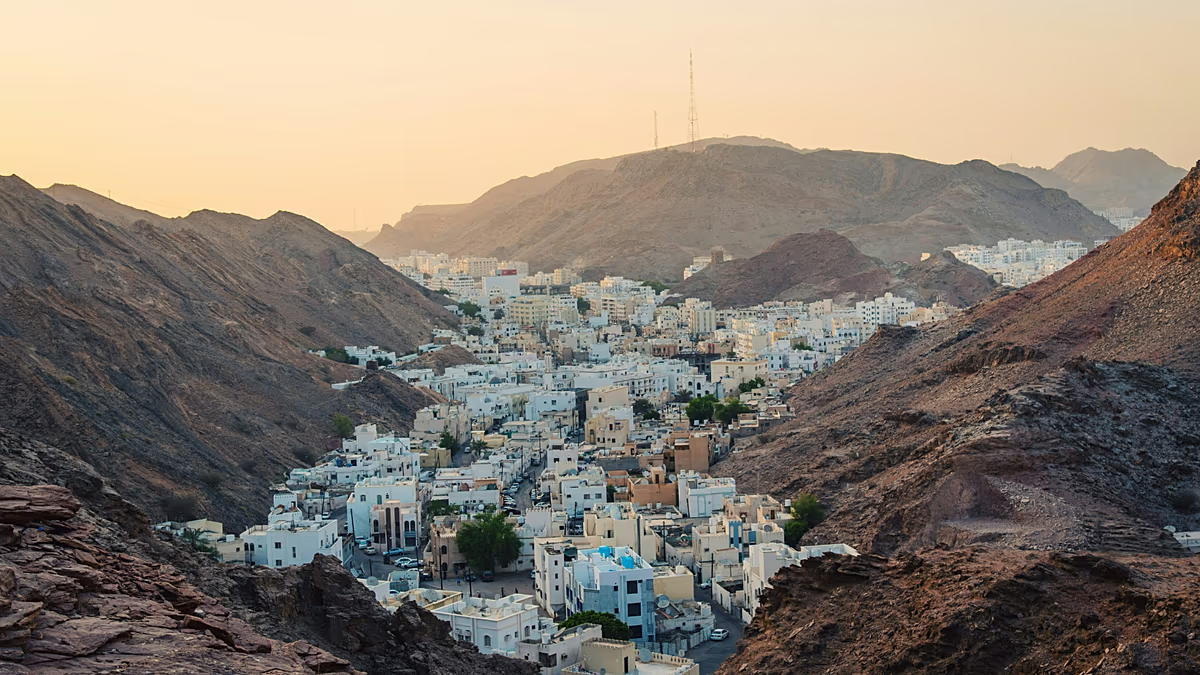
In an era when Dubai glistens with skyscrapers and Saudi Arabia pours billions into tourism megaprojects, neighboring Oman offers something refreshingly different: an authentic Middle Eastern experience that honors tradition while welcoming visitors with genuine warmth. The Sultanate has been quietly gaining popularity among travelers seeking something beyond the commercial glitz of its Gulf neighbors. “The Omanis are deeply proud of their natural beauty and cultural heritage, and their tourism policies are designed to protect both,” explains Daniel Waters, Sales Manager at adventure tour company Wild Frontiers. “This means you won’t find sprawling high-rise cities or generic resort experiences.” Add to this mix the pleasant weather during European winters and relatively short flight times, and it’s easy to understand why discerning travelers are increasingly drawn to this understated jewel of the Arabian Peninsula. Recent studies confirm that while cultural experiences remain central to Oman’s appeal, nature and active lifestyle activities have grown significantly in popularity, creating a perfect balance for the modern explorer looking for depth and adventure.
Oman’s accessibility is set to improve further with the introduction of a unified Gulf tourist visa in early 2026, allowing visitors to seamlessly travel between Bahrain, Kuwait, Oman, Qatar, Saudi Arabia, and the United Arab Emirates with a single permit. For those concerned about safety – particularly women and LGBTQ+ travelers – Oman offers a reassuring environment while maintaining traditional values. “Oman is an incredibly safe and welcoming country, which immediately makes it appealing to travelers,” Waters notes, “but it remains traditional at heart, so a bit of cultural awareness goes a long way.” This means respecting local customs regarding dress and behavior: when visiting mosques, both men and women should cover arms and legs, with women also covering their heads. In public swimming areas, modest attire is expected, though standard swimwear is acceptable at private hotel pools or remote locations. Most large hotels and many restaurants serve alcohol, making for a comfortable experience that balances respect for local culture with visitor comfort.
One of Oman’s most compelling features is its remarkable geographical diversity compressed into a relatively small area. “You don’t need to travel far to experience that diversity – mountains, desert and coast are all within a few hours’ drive of each other,” says Waters. The country’s coastline deserves special attention, not just for its pristine beaches ideal for snorkeling, diving, and boat trips, but also as home to the world’s largest population of endangered loggerhead and green turtles. The Ras Al Jinz Turtle Reserve in the Ash Sharqiyah South governorate stands as a testament to Oman’s commitment to conservation, offering guided tours to observe these magnificent creatures nesting. Visitors can witness this ancient ritual while learning about conservation efforts through the reserve’s interactive museum and research facilities. For those visiting during the khareef (monsoon) season from late June to mid-September, the Dhofar governorate transforms into a lush, tropical landscape that seems almost impossible in this part of the world – a stark contrast to the arid terrain typically associated with the Arabian Peninsula.
Beyond the coastal wonders, Oman’s diverse topography offers exceptional opportunities for wildlife enthusiasts. Expert guide Dan Lay, who leads 13-day tours for Naturetrek, highlights the country’s rich biodiversity: “From birdwatching strolls in the mountains, to boat trips in search of pelagic species, and the rare mammals and reptiles of the deserts, Oman has a huge amount to offer the keen naturalist.” Lay’s itineraries span the country, from the northern Ras al Sawadi Peninsula with its coastal birds to the vast ‘Empty Quarter’ of the Arabian Plateau where hundreds of sandgrouse gather at the Muntasar natural spring. The wadi Al Mughsayl, which winds deep into the mountains, provides habitat for desert owls, while boat tours offer chances to spot dolphins and whales. For plant enthusiasts, the legendary frankincense trees grow in the wadis, connecting visitors to the ancient trade that once made this region prosperous. The mountain regions also offer spectacular hiking opportunities through dramatic wadis (valleys) that cut through the rugged landscape, providing both adventure and glimpses of traditional mountain villages that have maintained their way of life for centuries.
The Sharqiya Sands, a vast sea of red-gold dunes stretching over 12,000 square kilometers and located just 2.5 hours from Muscat International Airport, offers one of Oman’s most immersive cultural experiences. This portion of the Sahara Desert remains one of the Arabian Peninsula’s most pristine regions and is home to Bedouin communities who maintain elements of their traditional nomadic lifestyle despite the encroachment of modernity. Eco-conscious tented camps have emerged among the dunes, allowing visitors to experience desert nights enhanced by Bedouin traditions. Anwar Al Shaikh, owner of the family-run Luxury Desert Camp – a collection of dome tents and marquees powered by solar energy with greywater recycling systems – offers guests authentic cultural immersion. Visitors can participate in camel rides while learning about desert ecology, observing native flora like ghaf trees and hardy shrubs, and potentially spotting wildlife such as desert foxes or migrating birds. These excursions often include encounters with some of the remaining Bedouin families, providing insights into their daily routines, traditional dwellings, and remarkable desert survival skills.
The cultural richness of the Sharqiya Sands experience extends beyond observation to participation. Back at the camp, guests can engage in traditional activities guided by Bedouin women, including Omani coffee-making ceremonies that follow age-old preparation rituals, weaving with camel wool using techniques passed down through generations, applying kohl eye-lining (a practice with both cosmetic and protective purposes in the desert), and crafting traditional desert tools. For those seeking more adrenaline-pumping experiences, the dunes provide perfect terrain for adventure sports like dune bashing in 4×4 vehicles and sandboarding down the steep slopes. This combination of cultural immersion, natural beauty, and adventure perfectly encapsulates what makes Oman special: a destination that honors its heritage while thoughtfully welcoming visitors to experience its unique charms. As travelers increasingly seek authentic experiences that go beyond the typical tourist track, Oman stands ready to offer a journey that feels both genuinely Middle Eastern and refreshingly untouched by mass tourism – a rare combination in today’s globalized world.