




U.S. Military Strike on Narcotics Trafficking Vessels Claims Five Lives
In a significant counter-narcotics operation on December 31, U.S. Southern Command conducted precision strikes against two vessels engaged in drug trafficking activities, resulting in the deaths of five individuals identified as narco-terrorists. The military action, revealed on Wednesday, was carried out after intelligence confirmed the vessels were following established narcotics trafficking routes. This operation represents a forceful response to the intersection of drug trafficking and terrorism that continues to challenge security forces in regions monitored by U.S. Southern Command.
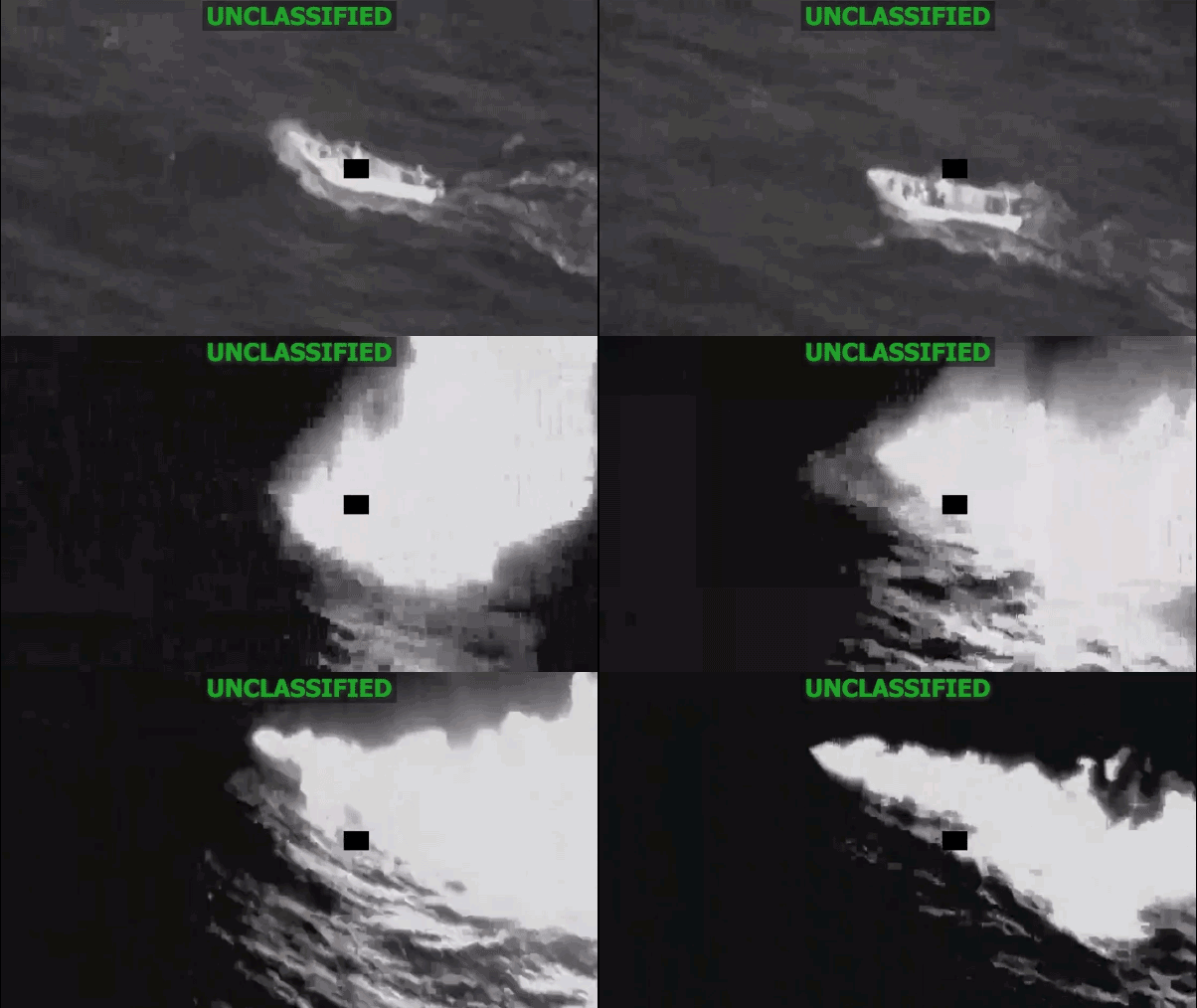
The Department of War has classified this military action under “Operation Southern Spear,” signaling a coordinated effort to disrupt the flow of illegal narcotics that fund terrorist organizations. According to official reports, three individuals were killed aboard the first vessel, with two additional casualties on the second vessel. U.S. military officials released video footage showing at least one of these strikes at sea, providing visual confirmation of the operation’s execution. The released footage, while limited, demonstrates the precision capabilities employed by U.S. forces in targeting specific maritime threats.
These kinetic strikes highlight the evolving approach to combating narco-terrorism, moving beyond traditional interdiction methods toward more direct military engagement when specific threat criteria are met. The designation of these vessels’ operators as members of “terrorist organizations” suggests that U.S. intelligence had identified direct links between the drug trafficking activities and known terrorist groups, effectively placing them within the framework of national security threats rather than merely criminal enterprises. This classification allows for different rules of engagement than would typically apply to counter-narcotics operations.
The timing of this operation—occurring on the last day of the year—raises questions about whether it represents an intensification of counter-narcotics efforts or the culmination of long-term intelligence gathering. Earlier on the same day, another strike was announced, though U.S. Southern Command has not clarified whether the operations were connected. This temporal proximity suggests a potentially coordinated effort to disrupt multiple trafficking networks simultaneously, maximizing operational impact while possibly capitalizing on intelligence about seasonal trafficking patterns.
The human cost of this operation—five individuals killed at sea—reflects the deadly serious nature of the U.S. approach to combating organizations that blend drug trafficking with terrorism. While official statements describe those killed as “narco-terrorists,” their specific organizational affiliations and roles were not detailed in the initial report. The maritime setting of these strikes also illustrates how trafficking networks utilize sea routes to transport narcotics, often operating in international or poorly monitored waters to avoid detection and interdiction by law enforcement agencies.
When approached for additional information, U.S. Southern Command declined to provide further details to Fox News Digital, suggesting the sensitive nature of the operation and the possibility of ongoing related activities. The limited information released about “Operation Southern Spear” indicates this may be part of a broader strategic initiative rather than an isolated incident. As counter-narcotics and counter-terrorism efforts continue to merge in U.S. security operations, such direct military engagements may become more common in regions where drug trafficking networks maintain connections to designated terrorist organizations, reflecting the complex security challenges that transcend traditional boundaries between crime and terrorism.