


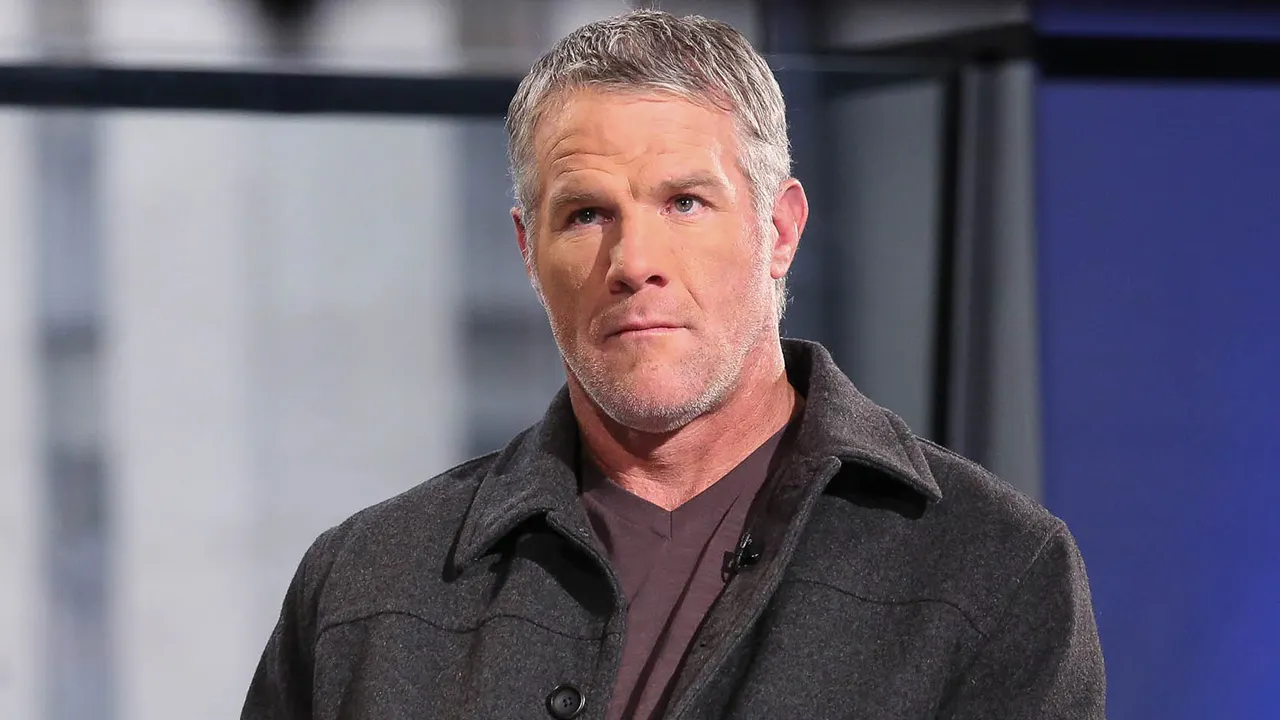
Brett Favre Opens Up About His Battle with Parkinson’s Disease
Brett Favre, the legendary NFL quarterback who dazzled fans for two decades with his gritty play and cannon arm, recently shared a candid update about his ongoing battle with Parkinson’s disease. On his podcast “4th and Favre,” the 56-year-old Hall of Famer pulled back the curtain on his health struggles since revealing his diagnosis before Congress in September 2024. His openness provides a deeply personal glimpse into how this progressive neurological disorder affects his daily life, challenging common misconceptions about the disease along the way. “I’m probably like most people – I thought there was just one Parkinson’s and that was it,” Favre admitted. “There’s not. There’s multiple, many forms of Parkinson’s.” This revelation came during a conversation about Philip Rivers returning to the NFL at 44, when Favre reflected that he might have been able to play limited snaps until age 50 if not for his health challenges.
The former Green Bay Packers star went on to explain that he has idiopathic Parkinson’s, the most common form of the disease. Contrary to popular belief that all Parkinson’s patients experience visible tremors, Favre noted that his symptoms manifest differently. “I get from time to time, ‘Oh you must not be too bad because you don’t shake,'” he shared. “I have very little shaking. I have some, but it’s pretty rare.” Instead, Favre experiences Parkinson’s primarily through rigidity and stiffness, which he described in vivid terms: “When I wake up in the morning before I take my medicine, I’m as close to a 2 by 4 as you could possibly get.” Only after taking his medication do his muscles and joints “ease their grip” on him, allowing him some relief throughout the day.
Favre’s battle illuminates the three primary symptom categories of Parkinson’s: cognitive and memory issues, tremors and shaking, and the rigidity and stiffness that dominates his experience. While his cognitive function remains relatively stable for now, he acknowledges the progressive nature of the disease. “As you well know, there’s no cure,” he stated pragmatically. “I hear from time to time, ‘Well, they’re five years away from a cure.’ I hope that that’s the case. But I’m not holding my breath.” This clear-eyed assessment reveals Favre’s approach to his condition—facing it with the same straightforward determination that characterized his playing career.
The timing of Favre’s health struggles provides a poignant contrast to his legendary physical durability during his playing days. From 1991 to 2010, Favre became synonymous with toughness, starting an astonishing 297 consecutive regular-season games—an NFL record for quarterbacks that still stands today. He played through broken bones, torn ligaments, and countless other injuries that would have sidelined most players. Now, in retirement, Favre faces a different kind of physical challenge—one that medication can help manage but not eliminate. Though he may experience increased tremors when fatigued toward the end of the day, his primary struggle is with the stiffness that greets him each morning.
Throughout his remarkable 20-year NFL career with the Falcons, Packers, Jets, and Vikings, Favre accumulated staggering statistics: 71,838 passing yards and 508 touchdown passes. His gunslinger mentality and competitive fire led the Packers to a Super Bowl victory and earned him three consecutive NFL MVP awards from 1995-1997. Favre retired as one of the most beloved figures in NFL history, known for playing the game with childlike enthusiasm despite the enormous pressure of professional football. This same authentic approach now characterizes his discussion of Parkinson’s—sharing openly without seeking sympathy, educating others while maintaining his dignity.
Favre’s willingness to discuss his condition publicly serves multiple important purposes. It helps destigmatize neurological disorders, educates the public about the diverse manifestations of Parkinson’s disease, and potentially encourages others facing similar challenges. By detailing how the disease affects his daily routine—from morning stiffness to medication management—Favre provides valuable insight into living with a progressive condition. While his future remains uncertain, as it does for all Parkinson’s patients, his characteristic resilience shines through. The same man who once played through countless injuries and setbacks now brings that fighting spirit to perhaps his toughest opponent yet—one that can’t be defeated with a last-minute touchdown pass, but must be faced one day at a time with courage and determination.