


Quick-Thinking Officer Uses Drone Technology to Rescue Missing Elderly Person in Pennsylvania
In a remarkable display of modern policing technology saving lives, the West Chester Police Department successfully located a missing elderly person in a wooded area during frigid temperatures. The rescue operation, which took place last Sunday, demonstrated how emerging technologies like drones equipped with thermal imaging capabilities are revolutionizing search and rescue efforts in emergency situations.
The incident began when the West Chester Police Department received a call for assistance from a neighboring agency regarding a missing elderly individual. Responding swiftly to this urgent situation, the department deployed one of their officers who had received specialized training as a drone pilot. This cross-training proved invaluable as temperatures dropped and concerns for the missing person’s safety grew with each passing hour. The officer brought the department’s drone equipped with advanced thermal imaging technology and a powerful spotlight to aid in the search efforts, significantly expanding the search capabilities beyond what ground teams alone could accomplish.
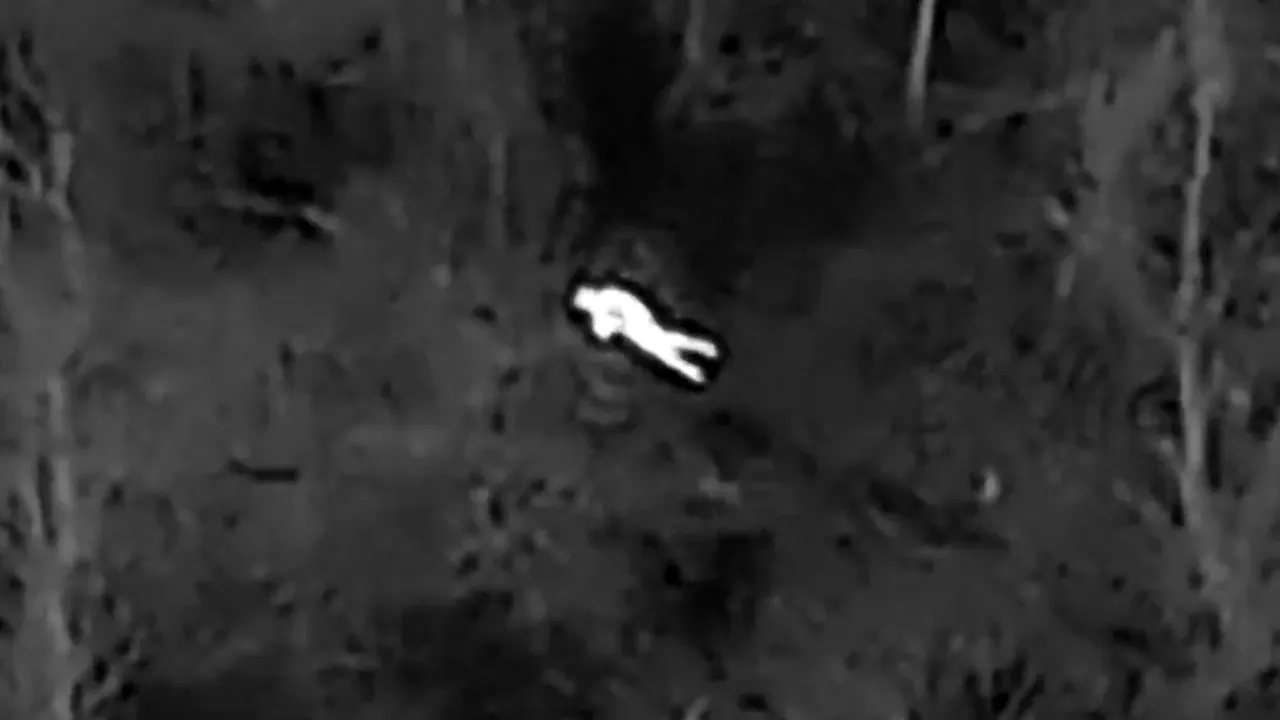
Using the drone’s thermal imaging system, the officer was able to detect the heat signature of the missing person who had become lost in a densely wooded area. The technology allowed the officer to pinpoint the individual’s exact location from above, cutting through visual obstacles like vegetation and darkness that would have hampered traditional search methods. Photos released by the police department clearly show the thermal outline of the missing person captured by the drone’s imaging system – a glowing figure that might have remained invisible to searchers on the ground. Once located, the officer used the drone to guide ground teams directly to the elderly person by providing real-time directions and illuminating the area with the drone’s spotlight.
Medical assistance was provided immediately upon reaching the individual, with authorities reporting that care was “delivered swiftly” – a critical factor given the cold weather conditions that posed serious health risks, particularly for an elderly person who had been exposed to the elements for an extended period. While specific details about the person’s condition were not released, the timely location and rescue likely prevented what could have evolved into a tragic outcome. The successful operation highlighted the significant advantage that aerial technology provides in covering large areas efficiently and detecting human presence even in challenging environmental conditions.
The West Chester Police Department proudly shared this success story on social media, emphasizing how the integration of technology with proper training enables them to deliver “high quality service to our community.” This rescue represents a growing trend in law enforcement and emergency services, where agencies are increasingly adopting drone technology to enhance their operational capabilities. The department noted that this rescue demonstrates their commitment to “leveraging technology with training” as part of their broader mission of “helping to build safer and stronger communities.” This approach reflects the evolution of modern policing methods that combine traditional skills with technological innovations.
As drone technology becomes more sophisticated and accessible, its applications in public safety continue to expand beyond search and rescue to include disaster assessment, crime scene investigation, and traffic monitoring. This rescue operation serves as a compelling example of how investing in such technologies and providing officers with cross-disciplinary training can yield life-saving results. The West Chester Police Department’s successful use of drone technology in this instance not only saved a life but also provides a model for other departments considering similar programs. As one elderly person returns home safely thanks to quick thinking and advanced technology, the value of these investments in public safety becomes clear not in abstract budget discussions, but in the very tangible outcome of a life preserved against challenging odds.