




Cryptocurrency Markets Enter Year-End Consolidation Phase: What’s Next for Bitcoin, XRP, and Shiba Inu?
As 2023 draws to a close, the cryptocurrency market has entered a period of relative calm, with major assets consolidating after a volatile year. With U.S. markets on holiday, significant price movement is unlikely until trading activity resumes in the new year. This temporary lull provides an opportunity to analyze the current technical positions of three prominent cryptocurrencies—Shiba Inu, XRP, and Bitcoin—and what their price structures might indicate for early 2024 performance.
Shiba Inu Faces Quadruple Resistance Challenge in Technical Deadlock
Shiba Inu (SHIB) finds itself in one of its most challenging technical environments of the year, trapped beneath multiple layers of resistance that have effectively capped any meaningful recovery attempts. The popular meme token is currently trading near local lows with remarkably suppressed volatility, creating a precarious position for holders hoping for a year-end rally.
The technical picture reveals SHIB confronting not just one but four distinct resistance barriers. The first and most immediate challenge comes from a cluster of short-term moving averages, which continue to trend downward while the token trades below them. These fast-moving indicators have consistently terminated relief rallies before they can gain momentum, preventing the follow-through buying necessary to establish a new trend. As long as SHIB remains beneath this initial barrier, upward movements appear reactive rather than sustainable.
Beyond this immediate obstacle lies a medium-term moving average that has functioned as formidable dynamic resistance since October. Each approach to this level has been met with rejection, reinforcing the larger downtrend structure. This level holds particular significance as it typically attracts swing traders who reenter short positions, adding selling pressure precisely when upward momentum begins to build. The third barrier—the long-term trend average—sits considerably higher and represents more of a psychological threshold than a technical one. This indicator determines whether SHIB is in a recovery or bear phase, and with the price significantly below this average, the market remains firmly in bearish territory.
The final obstacle is structural—SHIB remains confined within a descending price channel characterized by consistently lower highs and lower lows. Even if the token manages to reclaim one or two moving averages, a genuine trend reversal requires breaking out of this larger bearish structure. Without this breakthrough, any recovery risks becoming just another lower high within the prevailing downtrend. This technical reality is reflected in momentum indicators, with the Relative Strength Index (RSI) hovering in the low 40s—weak but not capitulating—while declining volume suggests buyers remain on the sidelines even as selling pressure has eased, resulting in market stagnation rather than reversal.
XRP Shows Signs of Regime Change After Months of Frustration
XRP has spent most of 2023 struggling to establish a sustainable bullish trend, with each upward movement culminating in lower highs, brief rallies, and corrective structures. The digital asset frequently reversed course upon reaching key resistance zones, lacking the momentum necessary for extended advances. In essence, XRP has behaved more like an asset trapped in distribution than one in expansion.
This context makes the current situation particularly noteworthy, as XRP has begun displaying notably different behavior after months of constricted and frustrating price action. Rather than experiencing a complete structural breakdown during the broader market retreat, XRP carved out a controlled declining channel that now appears to be flattening. Selling pressure has visibly diminished while volatility compression increases—signaling a potential regime shift from consistent rejection, though not yet indicating an explosive upside move.
The contrast with earlier 2023 price action is striking. Previously, XRP struggled to maintain positions above medium-term moving averages for more than a few sessions, with each test of trend resistance met by immediate selling pressure. Now, instead of being immediately repelled from these important levels, the price is stabilizing near them—a subtle but significant distinction. Early bull phases tend to absorb resistance, while bear markets reject it outright. Momentum indicators support this evolving narrative, with the RSI stabilizing in the low-40s range and no longer making lower lows, suggesting that downward momentum has ceased accelerating. Volume has also normalized after significant sell-offs earlier in the cycle, indicating that forced selling has largely concluded, leaving positioning as the primary factor.
While declaring a full-fledged bull market would be premature—XRP remains below long-term resistance from a structural perspective—it’s worth noting that bull markets often begin with failed breakdowns rather than clear breakouts. The inability of XRP to move substantially lower despite bearish structure may represent the first indication that market control is shifting, creating potential opportunity for early 2024.
Bitcoin Enters Year-End Hibernation Amid Institutional Absence
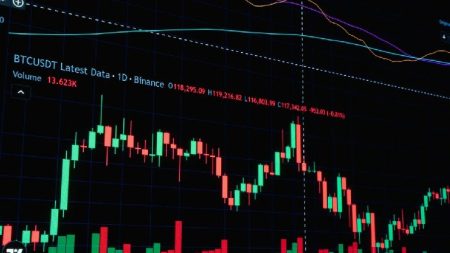
Bitcoin, the market’s leading cryptocurrency, has entered its characteristic end-of-year consolidation phase. Following a steep November decline, price action has contracted into a narrow range with declining volatility, as market participants on both sides appear exhausted rather than confident. This represents a holding pattern rather than either distribution euphoria or accumulation panic, with technical indicators reflecting this indecision.
From a technical perspective, Bitcoin is trading well below its critical moving averages. The 200-day average looms far above as distant resistance, while the 50-day and 100-day averages continue their downward trajectories. The RSI hovers in the mid-40s, signaling indecision rather than fear, while momentum indicators remain flat. Volume has decreased significantly since the November sell-off, indicating that aggressive market participation has temporarily ceased as the year concludes.
What appears on the chart is only part of the story—the underlying market dynamics are equally important. By late December, activity in risk assets typically diminishes substantially. Institutional reallocations freeze, trading desks close their books, and fund managers focus more on year-end reporting than initiating new positions. Liquidity decreases as spreads widen, reducing the likelihood of significant trend formation during this period. Meanwhile, retail interest wanes after a turbulent year, typically remaining subdued until the calendar turns. This combination of institutional absence and retail fatigue explains why Bitcoin tends to trade sideways as the year concludes.
Given these conditions, volatility is unlikely to increase before December 31. Major institutional players typically avoid forcing large positions into low-liquidity holiday conditions unless absolutely necessary, preferring to wait for more favorable market environments. When capital flows do return—usually during the first full trading week of January—they tend to arrive with renewed conviction and purpose, potentially setting the tone for early 2024 market direction.
Market Outlook: Patience Required as Year-End Consolidation Continues
As 2023 comes to a close, cryptocurrency investors find themselves in a waiting game. The current market environment—characterized by compressed volatility, diminished volume, and narrowing price ranges—suggests that significant directional moves are unlikely until institutional and retail participation returns in January. This temporary lull offers traders and investors an opportunity to reassess positions and prepare strategies for what could be a dynamic start to the new year.
For Shiba Inu, the technical challenges remain substantial, with multiple layers of resistance likely to cap recovery attempts in the near term. Any sustainable bullish movement would require breaking through not just one but several technical barriers, suggesting that patience may be required from SHIB holders. XRP, meanwhile, shows more encouraging signs of potential trend change, with price stabilization near key levels and diminishing selling pressure potentially setting the stage for stronger performance in early 2024. Bitcoin’s sideways consolidation reflects typical year-end dynamics, with the leading cryptocurrency likely to establish clearer directional momentum once full market participation resumes in January.
As market participants look toward 2024, the current consolidation phase represents not an absence of opportunity but rather a period of preparation before the next significant market phase begins. When liquidity returns and institutional positioning resumes in earnest, the groundwork laid during this quiet period—particularly the technical structures forming in assets like XRP—may prove crucial in determining which cryptocurrencies lead the next market cycle. For investors and traders, the coming weeks offer a valuable opportunity to position accordingly before volatility inevitably returns to the cryptocurrency markets.