


The Democratic Party’s Rocky Year: Key Figures Face Challenges in 2025
In a year of political recalibration following Republican gains, the Democratic Party found itself navigating treacherous waters throughout 2025. What emerged wasn’t merely policy disagreements but a fundamental identity crisis that created clear political casualties whose stumbles will influence the upcoming 2026 midterm elections. The party’s establishment wing faced unprecedented pressure from an emboldened progressive movement, creating tension that defined much of the year’s internal party dynamics.
The established Democratic leadership found themselves increasingly squeezed between governing pragmatism and progressive demands. This tension became painfully visible as House Minority Leader Hakeem Jeffries and House Whip Katherine Clark both faced primary challenges from their left flank, with challengers explicitly citing dissatisfaction with their approach to opposing the Trump administration. Meanwhile, progressive voices like New York City Mayor-elect Zohran Mamdani promised expansive government programs, while Representative Alexandria Ocasio-Cortez publicly mused about potentially challenging Vice President J.D. Vance for the presidency. This progressive momentum created visible fractures within the party, with moderate Democrats privately expressing concern that such leftward movement might alienate centrist voters crucial for any potential 2026 victories. The question hanging over Democrats is whether this internal pressure represents a vocal minority or signals a genuine directional shift for the party’s future.
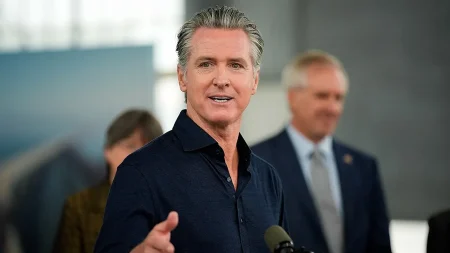
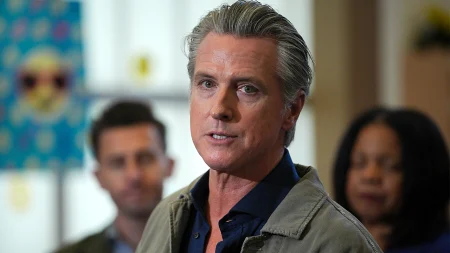
California Governor Gavin Newsom spent 2025 establishing himself as a prominent counterweight to President Trump, but the year may have revealed his limitations as much as his strengths. Newsom’s highest-profile move came through a controversial redistricting effort designed to challenge Republican congressional seats in California – a direct response to similar Republican efforts in Texas. While this cemented his position as a fighter willing to go toe-to-toe with Republicans, it also raised questions among some Democrats about the wisdom of matching hardball tactics rather than offering a distinct alternative vision. With his gubernatorial term nearing its end and 2028 presidential speculation swirling, Newsom’s challenge became increasingly clear: he has effectively positioned himself as a Trump antagonist, but has yet to demonstrate how this confrontational approach translates into a positive governing philosophy that can stand on its own merits rather than simply in opposition to Republican policies.
Former President Joe Biden’s legacy suffered significant blows in 2025, as the Trump administration moved quickly to dismantle key elements of his presidency. The border situation proved particularly damaging, as Trump’s executive orders produced rapid reductions in border crossings, undermining Biden’s previous claims of having done everything possible to address the issue. More troubling for Democrats were the revelations that emerged about Biden’s final years in office. A congressional investigation into his use of autopen signatures suggested an unprecedented delegation of presidential authority to aides, while reporting from journalists Jake Tapper and Alex Thompson detailed extensive efforts by Biden’s inner circle to manage perceptions of his cognitive capabilities. These revelations created a dual problem for Democrats: they provided Republicans with ammunition to question Democratic transparency while simultaneously forcing the party to reckon with its own willingness to overlook concerning signals about Biden’s fitness during his presidency.
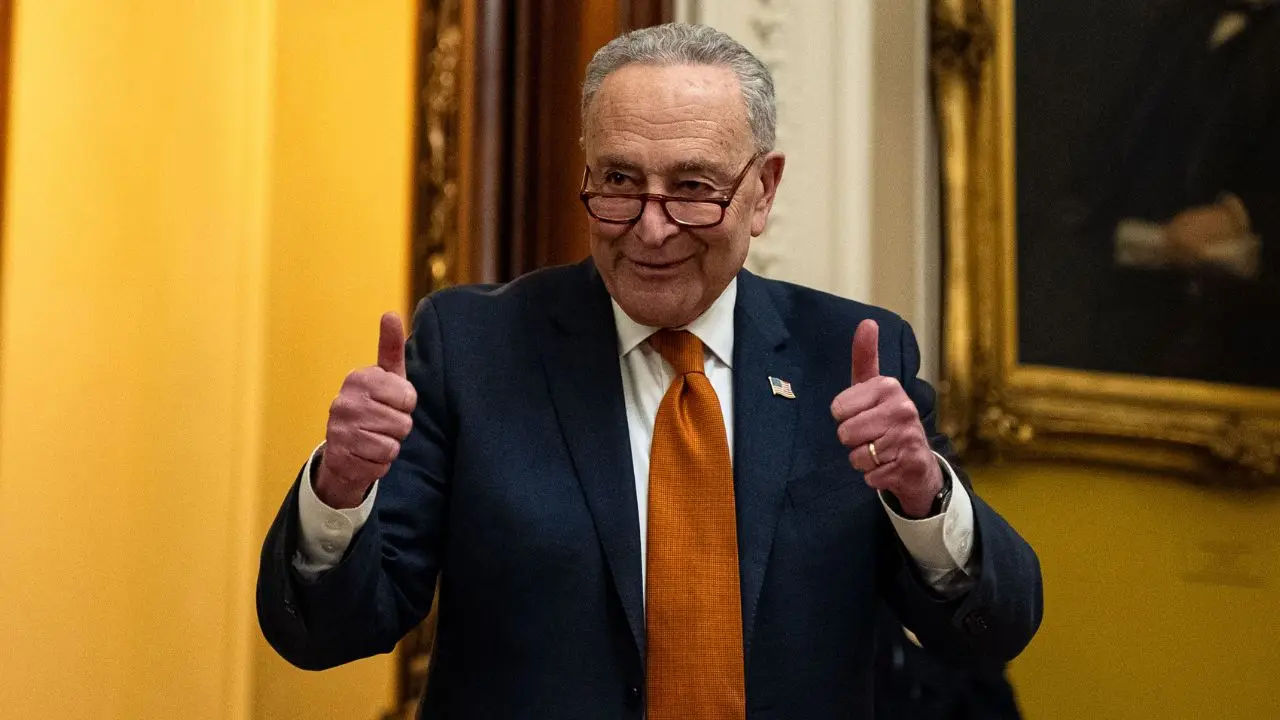
Senate Minority Leader Chuck Schumer emerged as perhaps the year’s most wounded Democratic figure following a disastrous 43-day government shutdown that exposed his weakened leadership position. The shutdown ended only after eight Democratic senators broke ranks to support a Republican resolution, leaving Schumer appearing unable to maintain party discipline at a critical moment. His calculated approach to the standoff – apparently designed to demonstrate sufficient resistance to satisfy progressive demands while eventually finding an exit strategy – satisfied neither wing of the party. Moderates questioned his judgment in allowing the shutdown to extend for so long, while progressives viewed the eventual outcome as capitulation. Schumer’s political troubles compounded during New York City’s mayoral race, where his obvious discomfort with socialist candidate Zohran Mamdani’s nomination created an awkward dynamic that highlighted the ideological divide within the party. By year’s end, serious questions lingered about Schumer’s ability to effectively lead Senate Democrats into the challenging 2026 electoral landscape.
As Democrats close out 2025, the party faces fundamental questions about its direction and leadership heading into a critical midterm election cycle. The progressive-moderate divide shows no signs of resolution, with each faction believing their approach represents the best path forward for regaining power. This tension manifests not just in policy disagreements but in competing theories about voter outreach, messaging strategy, and candidate recruitment for upcoming races. Meanwhile, national figures like Newsom must decide whether to continue primarily as Trump antagonists or to develop more forward-looking visions that can stand independently. The ghosts of the Biden administration continue to influence current debates, particularly around questions of transparency and governance. And leadership figures like Schumer face increased scrutiny about their effectiveness in marshaling party unity during critical legislative battles. How Democrats navigate these internal challenges in the coming months will significantly shape their prospects for the 2026 midterms and potentially determine which wing of the party emerges with greater influence over its future direction.