


Democrats Pivot on Economy as 2026 Elections Approach
In a significant shift from the 2024 election cycle, Democrats are now leveraging economic concerns to their advantage in recent ballot contests. Democratic National Committee Chair Ken Martin bluntly acknowledged the central issue at the DNC’s winter meeting, stating, “Look, we know what’s important right now. S–t is too expensive.” This candid assessment reflects the party’s strategic pivot to addressing affordability concerns that once benefited Republicans but now appear to be working in Democrats’ favor following their strong showing in the 2025 elections.
The Democratic victories in last month’s contests represented a remarkable turnaround from just a year earlier when inflation concerns helped propel President Donald Trump and Republicans to power. Democratic Governors Association Executive Director Meghan Meehan-Draper credited the success of candidates like Mikie Sherrill of New Jersey and Abigail Spanberger of Virginia to their unwavering focus on economic issues. Both candidates exceeded polling expectations with double-digit wins in their blue-leaning states by making affordability central to their messaging. Even in New York City, far-left candidate Zohran Mamdani secured an unlikely mayoral victory by emphasizing cost-of-living concerns throughout his campaign. This consistent economic messaging appears to have resonated with voters who continue to feel the pinch of persistent inflation.
Looking ahead to the 2026 midterms, Democrats are doubling down on their affordability message as they attempt to reclaim congressional majorities. Democratic Congressional Campaign Committee Chair Suzan DelBene of Washington state has made it clear that Democrats will “hold Republicans accountable for their policies that are hurting American families.” With Democrats needing to flip just three GOP-held House seats to regain control of the chamber, DelBene plans to highlight what she characterizes as Republicans’ “big broken promise” to lower costs for American families. This strategy represents a complete reversal from 2024, when Republicans successfully campaigned on economic concerns, suggesting Democrats have found a way to “flip the script” on the affordability issue that previously worked against them.
Republicans, however, are pushing back against this Democratic narrative. National Republican Congressional Committee Chair Richard Hudson points to former President Biden as the source of economic problems, stating, “There are challenges out there with the economy, because Biden broke it, and House Republicans, working with President Trump, are going to fix it.” President Trump himself has repeatedly echoed this sentiment in recent weeks, telling supporters, “When I took office last January, I inherited a mess, and very simply, I’m fixing it.” Despite these assertions, recent polling suggests voters may not be buying the Republican explanation. A Fox News national poll revealed that three-quarters of Americans view the economy negatively, with more respondents blaming Trump than Biden for current economic conditions, and Trump’s economic approval ratings have dropped to record lows.
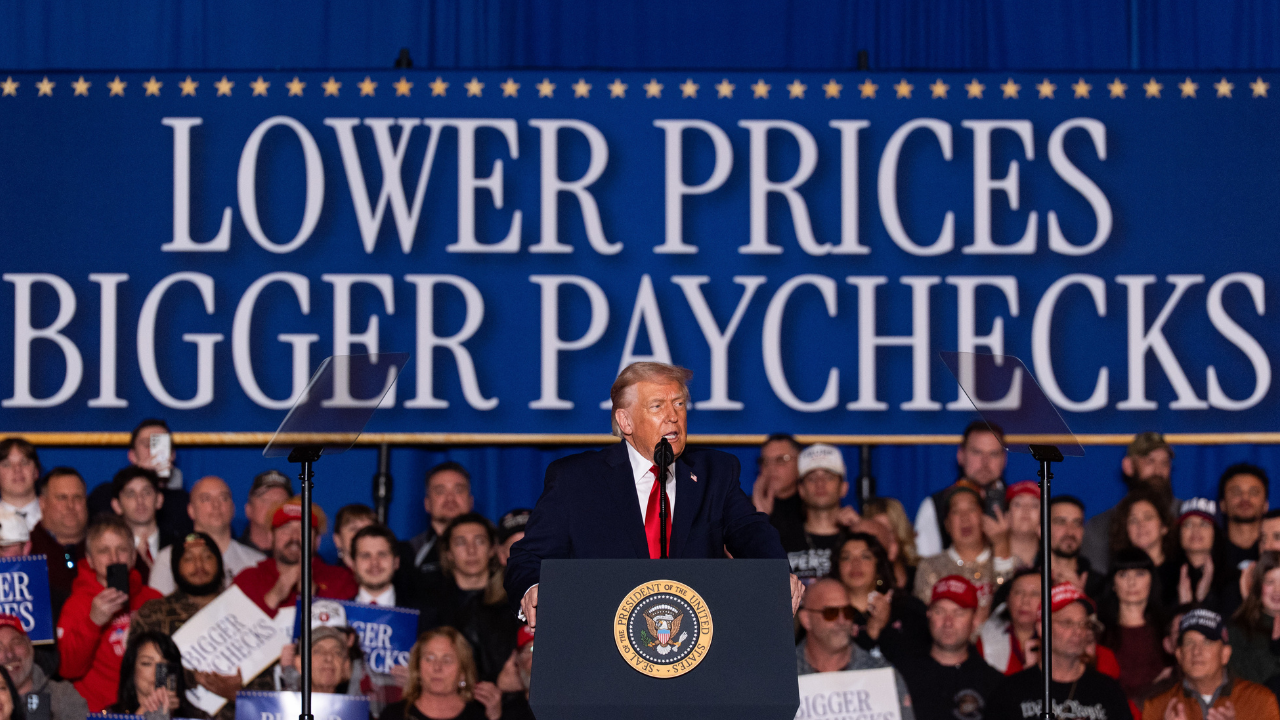
The economic battleground has forced Trump to engage more directly with affordability issues despite initially dismissing Democrats’ focus on the topic as a “hoax.” The president has recently scaled back some tariffs and pledged to lower food prices, making campaign stops in battleground states to highlight these efforts. Republicans received a boost from better-than-expected government reports on inflation and economic growth last week, fueling optimism within the party about economic trends. Former RNC chair Michael Whatley, now running for Senate in North Carolina, expressed confidence that “we’re seeing signs already that the economy is starting to tick up and is starting to take hold as the President’s policies are getting in place.” Similarly, National Republican Senatorial Committee Chair Tim Scott predicted that the tax cuts included in the GOP’s recent domestic policy legislation would help make 2026 “the year where Donald Trump’s activities, his actions, the legislation we’ve passed, shows up for the American voter.”
Democrats, however, remain confident in their economic messaging heading into the midterms. DNC Chair Martin forcefully rejected the Republican narrative, arguing that Republicans “didn’t inherit a mess — they manufactured it. They took the economy and drove it straight into a ditch. They took certainty and swapped it for chaos.” Martin’s provocative prediction that “Donald Trump has lost the economy, is losing his mind, and is going to lose the midterms” encapsulates the Democrats’ belief that they have successfully repositioned themselves on what was once Republican territory. With nearly two years until the 2026 midterms, both parties clearly recognize that economic concerns, particularly around affordability, will remain central to voters’ decisions. The party that most effectively addresses these kitchen-table issues may well determine control of Congress in the next election cycle, setting up an extended battle over economic messaging and policy in the months ahead.