


Israel’s Historic Recognition of Somaliland Signals Diplomatic Shift in the Horn of Africa
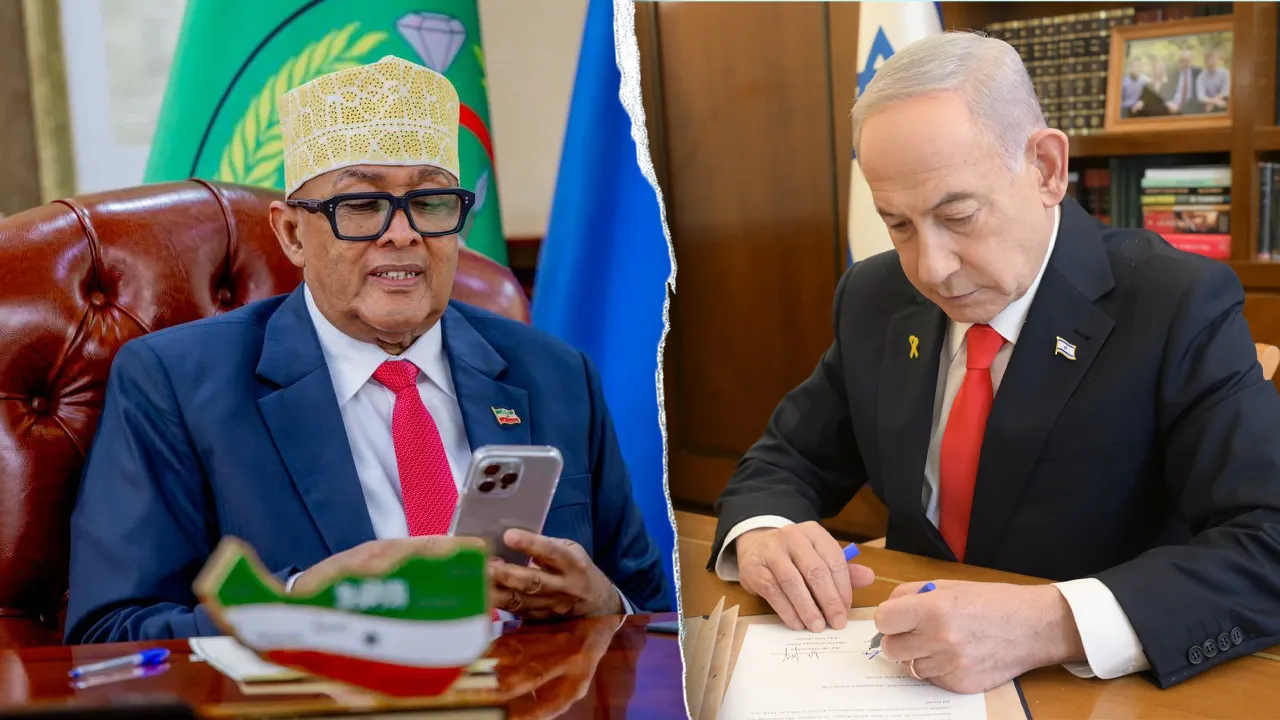
In a groundbreaking diplomatic move, Israel has become the first country to formally recognize Somaliland as an independent nation, potentially reshaping geopolitics in the Horn of Africa. Prime Minister Benjamin Netanyahu announced this historic decision on December 26, alongside Israel’s Foreign Minister Gideon Sa’ar and Somaliland’s President Dr. Abdirahman Mohamed Abdullahi. The recognition comes “in the spirit of the Abraham Accords,” the landmark agreements brokered during the Trump administration that normalized relations between Israel and several Arab nations. This diplomatic breakthrough marks a significant achievement for Somaliland, which declared independence from Somalia in 1991 but has struggled for international recognition for over three decades. Israel’s decision to establish full diplomatic relations, including the appointment of ambassadors and opening of embassies, validates Somaliland’s long pursuit of legitimacy on the world stage.
The development represents more than just a bilateral agreement—it signals potential strategic realignment in a critical region. Somaliland occupies a strategic position near the entrance to the Red Sea, through which approximately 30% of the world’s container ship traffic passes en route to or from the Suez Canal. The territory has expressed its “firm intention to accede to the Abraham Accords” and looks forward to building formal diplomatic ties with Israel. President Abdullahi welcomed the recognition as a “milestone in Somaliland’s longstanding pursuit of international legitimacy,” stating that it reaffirms the territory’s “historical, legal and moral entitlement to statehood.” Somaliland’s Ministry of Foreign Affairs characterized the decision as a “constructive contribution to peace, stability and cooperation” across both the Horn of Africa and the Middle East, suggesting the territory sees this recognition as part of a broader regional transformation.
Shortly after Israel’s announcement, reports emerged that South Sudan had become the second nation to officially recognize Somaliland, raising questions about whether other countries—particularly the United States—might follow suit. The Trump administration was reportedly “looking into” recognition of Somaliland as recently as August, with potential plans for a new air and sea base at Berbera Port. Such a development would give the U.S. a strategic foothold directly across from Yemen and the Iran-backed Houthi terrorists, who have been attacking shipping in the Red Sea. However, former President Trump appeared ambivalent in his public statements, asking reporters, “Does anyone know what Somaliland is, really?” while also promising to “study” the matter. His scheduled meeting with Netanyahu at Mar-a-Lago on December 29 may include discussions of Somaliland, though reports suggest Trump remains “not ready” to embrace its independence.
The contrast between Somaliland and Somalia highlights the complex realities of the region. While Somalia continues to battle Islamist fundamentalist fighters, including ISIS and al-Shabab terrorists, Somaliland officials claim their territory has “eliminated radicalism” and aligned itself with Western democratic values. Somaliland Minister of the Presidency Khadar Hussein Abdi emphasized that, unlike Somalia, their territory has “remained democratic, peaceful and self-governing” for over three decades. “It’s time for Somalia to focus on its own challenges and to be constructive. The illusion of Somali unity ended long ago,” Abdi stated, underscoring the deep divisions that make reconciliation between the territories unlikely in the near future. Israel’s recognition validates this separate path and may encourage other nations to reconsider their stance on Somaliland’s status.
The diplomatic breakthrough comes at a time of heightened regional tensions, with the ongoing conflict in Gaza and persistent Houthi attacks on shipping in the Red Sea disrupting international commerce. Netanyahu has reportedly invited President Abdullahi to visit Israel and praised his “leadership and commitment to promoting stability and peace.” This budding relationship between Israel and Somaliland may provide both parties with strategic advantages—Israel gains a new ally in a predominantly Muslim region, while Somaliland receives the international legitimacy it has long sought. The establishment of formal diplomatic ties could pave the way for increased economic cooperation, security partnerships, and cultural exchanges between the two nations.
The recognition of Somaliland by Israel represents a significant shift in the diplomatic landscape of the Horn of Africa and potentially sets the stage for broader international acceptance of Somaliland’s independence. While questions remain about how other global powers, particularly the United States, will respond to this development, the decision has already altered the status quo in a strategically important region. As Foreign Minister Sa’ar noted, relations between the two states have developed “based on extensive and ongoing dialogue,” suggesting that this recognition is the culmination of careful diplomatic work rather than an impulsive decision. Whether this marks the beginning of wider international recognition for Somaliland or remains limited to a few countries will likely depend on geopolitical considerations and the evolving situation in the broader Middle East and Horn of Africa. What’s clear is that Israel’s bold diplomatic move has brought renewed attention to Somaliland’s three-decade quest for statehood and created new possibilities for regional alliances and partnerships.