


West Bank Church Arson: A Community’s Resilience Amid Growing Tensions
In the pre-dawn hours of a December Monday, while most of Jenin slept, three individuals crept onto the grounds of the Holy Redeemer Catholic Church in the West Bank city. By 3 a.m., they had set fire to the church’s Christmas tree and damaged parts of its Nativity scene—a disturbing act that could have deepened religious divisions in an already tense region. The Palestinian Authority Police acted swiftly, reviewing surveillance footage and ultimately arresting three Palestinian suspects. During the arrests, authorities confiscated tools believed to have been used in the attack and issued a strong condemnation of what appeared to be an attempt to inflame sectarian tensions in the occupied West Bank, where Christians represent a small but historically significant minority.
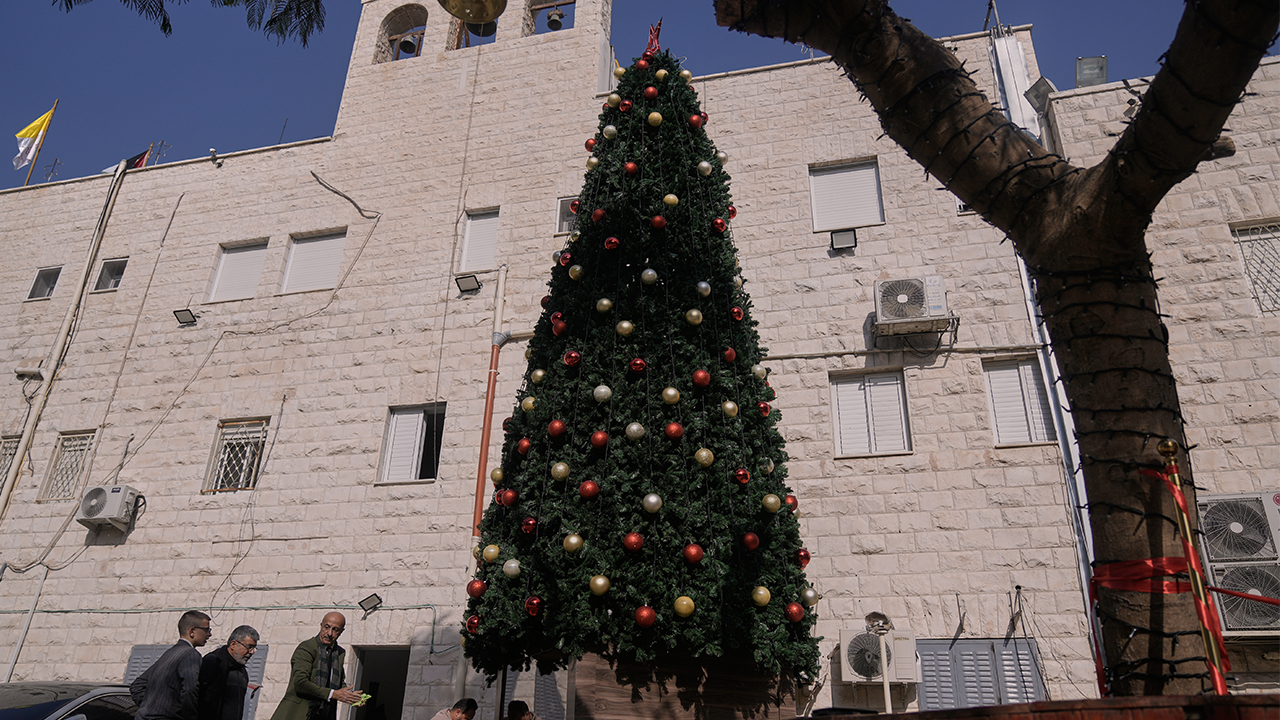
The attack left behind a stark visual: a Christmas tree stripped to its metal skeleton, its green branches burned away, with red and gold ornaments scattered across the church courtyard like fallen hopes. Yet what followed speaks volumes about the resilience of Jenin’s interfaith community. Within just one day, the church had cleaned up the charred remains and erected a new Christmas tree in time for Christmas Mass. The Holy Redeemer Church organized a special ceremony attended by both Muslim and Christian leaders from the community, as well as local politicians—a powerful demonstration of unity in the face of division. Reverend Amer Jubran, the local priest, emphasized that the arson was an isolated incident and highlighted the city’s steadfast unity despite the provocation, saying, “This occasion reaffirmed that attempts to harm religious symbols will never diminish the spirit of the city nor the faith of its people.”
This incident occurs against the backdrop of a troubling decline in the Christian population throughout the West Bank and broader Middle East. Christians now make up just 1-2% of the West Bank’s approximately three million residents, with the vast majority being Muslim. This small community finds itself increasingly caught between multiple threats—facing pressure from both Israeli settlers and Palestinian extremists. Many Christians have chosen to leave the region altogether, contributing to a broader exodus of Christians from the Middle East as people flee ongoing conflicts and growing religious intolerance. The dwindling Christian presence represents the erosion of one of the region’s oldest religious communities in the very land where Christianity began.
The vulnerability of Christian communities extends beyond the West Bank. In Israel proper, church authorities and monitoring organizations have documented a concerning rise in anti-Christian sentiment and harassment, including in Jerusalem’s historic Old City—home to sites sacred to Christianity, Judaism, and Islam. Israeli extremist settlers have reportedly vandalized and set fire to areas surrounding churches and Christian villages. These incidents reflect a broader deterioration of interfaith relations in a region where religious identity often intersects with political conflict, creating layers of tension that impact daily life for religious minorities. The Christmas tree burning in Jenin is thus not an isolated event but part of a troubling pattern affecting Christians throughout the Holy Land.
The ongoing Israel-Hamas war in Gaza has intensified violence in the West Bank as well. The Israeli military’s operations against terrorists have resulted in hundreds of Palestinian casualties and displaced tens of thousands of people. Meanwhile, terrorist attacks have killed Israelis both within Israel and in the West Bank. This cycle of violence has coincided with increases in both Israeli settler aggression and Palestinian attacks on Israelis, creating an atmosphere where extremism can flourish and minorities often suffer disproportionately. In this context, the burning of a Christmas tree—while perhaps seeming minor compared to the broader conflict—represents the kind of symbolic attack that can deepen sectarian divides at a time when unity and understanding are desperately needed.
Despite these challenges, the response to the Jenin church attack offers a glimpse of hope. The quick action by Palestinian Authority Police in arresting suspects demonstrates a commitment to protecting religious minorities and religious sites. The community’s unified response—Muslims and Christians standing together against religious intolerance—suggests that bonds between ordinary people sometimes remain stronger than the forces trying to divide them. As another Christmas passed in the Holy Land with fewer Christians present than in previous generations, the resilience shown by the Holy Redeemer Church community stands as a reminder that the spirit of coexistence endures even in difficult circumstances. While the charred Christmas tree may symbolize the threats facing Christians in the region, the new tree that quickly replaced it represents the enduring faith and determination of those who remain.