


Concerns Arise Over Anti-Zionist Ties in Mamdani’s Transition Committee
A recent report by the Anti-Defamation League (ADL) has cast a spotlight on Mayor-elect Zohran Mamdani’s transition team, highlighting concerns about the composition of his advisory committees as he prepares to take office on January 1. According to the ADL’s findings, approximately 20% of Mamdani’s 400-member transition committee—roughly 80 individuals—have documented histories of making anti-Zionist or anti-Israel statements. The report specifically identifies committee members with connections to groups like Students for Justice in Palestine, Jewish Voice for Peace, and Within Our Lifetimes, organizations the ADL characterizes as “openly promoting terror and harassing Jewish people.” This revelation comes on the heels of the recent resignation of Mamdani’s director of appointments, Catherine Almonte Da Costa, after the emergence of decade-old social media posts containing antisemitic and anti-police rhetoric, raising questions about the vetting process for the incoming administration’s appointments.
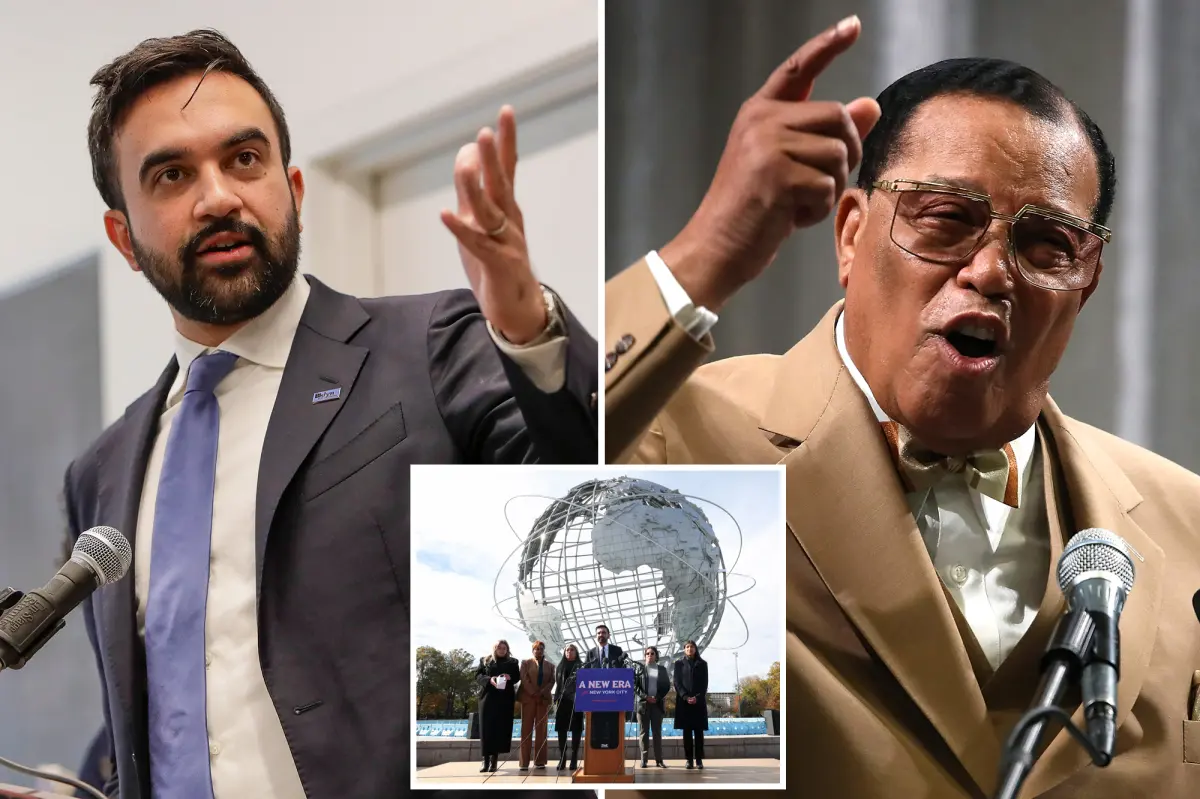
Among those specifically named in the report is Zakiyah Shaakir-Ansari, appointed to the youth and education committee, who was photographed in front of a banner featuring an inverted red triangle—a symbol associated with Hamas—with the phrase “Long Live The Resistance” during a City College anti-Israel encampment last spring. The report also mentions Gianpaolo Baiocchi, a member of the community organizing committee, who was previously arrested at an NYU encampment characterized by inflammatory anti-Israel rhetoric. Other concerning appointments include Youssef Mubaraz, who dismissed reports of Hamas terrorists raping and kidnapping victims on October 7 as “propaganda,” and Kazi Fouzia, who suggested that resistance is “justified when people are occupied” in the aftermath of the attack that claimed 1,200 Israeli lives. The ADL report additionally flags several committee members with ties to Nation of Islam leader Louis Farrakhan, known for his antisemitic rhetoric, including attorney Jacques Léandre, who reportedly attended the group’s 2022 conference where Farrakhan criticized “the Jews and their power.”
In response to these findings, the ADL has expressed concern that “many of Mayor-Elect Mamdani’s Transition Committee appointments are inconsistent with his campaign commitments to prioritize the safety of New York’s Jewish community.” The organization suggests that the composition of these committees will directly influence the administration’s policies and approach to addressing Jewish community concerns, raising serious questions about whether these concerns will be adequately represented or addressed. The report comes at a sensitive time for Mamdani, a democratic socialist who has faced ongoing criticism for his staunch criticism of Israel, even as he has recently made efforts to build bridges with New York’s Jewish community, including appearing in a Hanukkah video with actor Mandy Patinkin.
When asked about the ADL report during a press conference, Mamdani defended his appointments while emphasizing his commitment to protecting all New Yorkers, including Jewish residents. “I have always spoken out against antisemitism and hatred in any form,” he stated, “and have made it clear that the commitment I have made to protect New Yorkers, to protect Jewish New Yorkers, is one that I will uphold as the next mayor of the city.” Mamdani criticized the ADL report for failing to distinguish between antisemitism and criticism of the Israeli government, arguing that this conflation “draws attention away from the very real crisis of antisemitism we see, not only just in our city, but in the country at large.” He emphasized that his transition team consists of more than 400 New Yorkers assembled to provide guidance during this period of governmental change.
However, Mamdani’s response has not satisfied all critics. Rabbi Marc Schneier, who leads the Foundation for Ethnic Understanding, challenged the mayor-elect’s distinction between antisemitism and criticism of Israel, stating, “Mamdani is drawing a false distinction between antisemitism and criticizing the Israeli government. He is in no position to draw such a distinction when he will not even recognize Israel’s right to exist as a Jewish state, which is antisemitic in of itself.” This critique underscores the complex and often contentious nature of discussions surrounding Israel, antisemitism, and political discourse in New York City, particularly in the wake of heightened tensions following the October 7, 2023 Hamas attack on Israel and subsequent conflicts.
Beyond concerns about antisemitism, Mamdani has also faced questions about other transition team members, including individuals described as advocates for cop killers and anti-police activists. These appointments have raised additional concerns about the incoming administration’s stance on law enforcement and public safety, issues of significant importance to many New York City residents across the political spectrum. In light of these concerns, the ADL has urged Mamdani to provide transparency regarding the vetting process for transition team members and to outline how this process might evolve as he finalizes appointments for his administration. As Mamdani continues to build his team—recently announcing Samuel Levine, an alumnus of former President Joe Biden’s administration, as his commissioner of Consumer and Worker Protection—these questions about ideology, representation, and vetting remain at the forefront of discussions about the incoming administration.
This controversy highlights the delicate balancing act facing Mamdani as he prepares to assume office in a diverse city with significant Jewish and Muslim populations, progressive and moderate constituencies, and complex international perspectives. His ability to navigate these tensions while building an effective administration capable of addressing New York City’s many challenges will be a defining aspect of his early tenure as mayor. The scrutiny of his transition committee appointments reflects broader societal tensions around identity politics, international conflicts, and the boundaries of acceptable political discourse—tensions that show no signs of abating as Mamdani’s January 1 inauguration approaches.