


Trump’s Greenland Ambitions Spark Tensions with Denmark
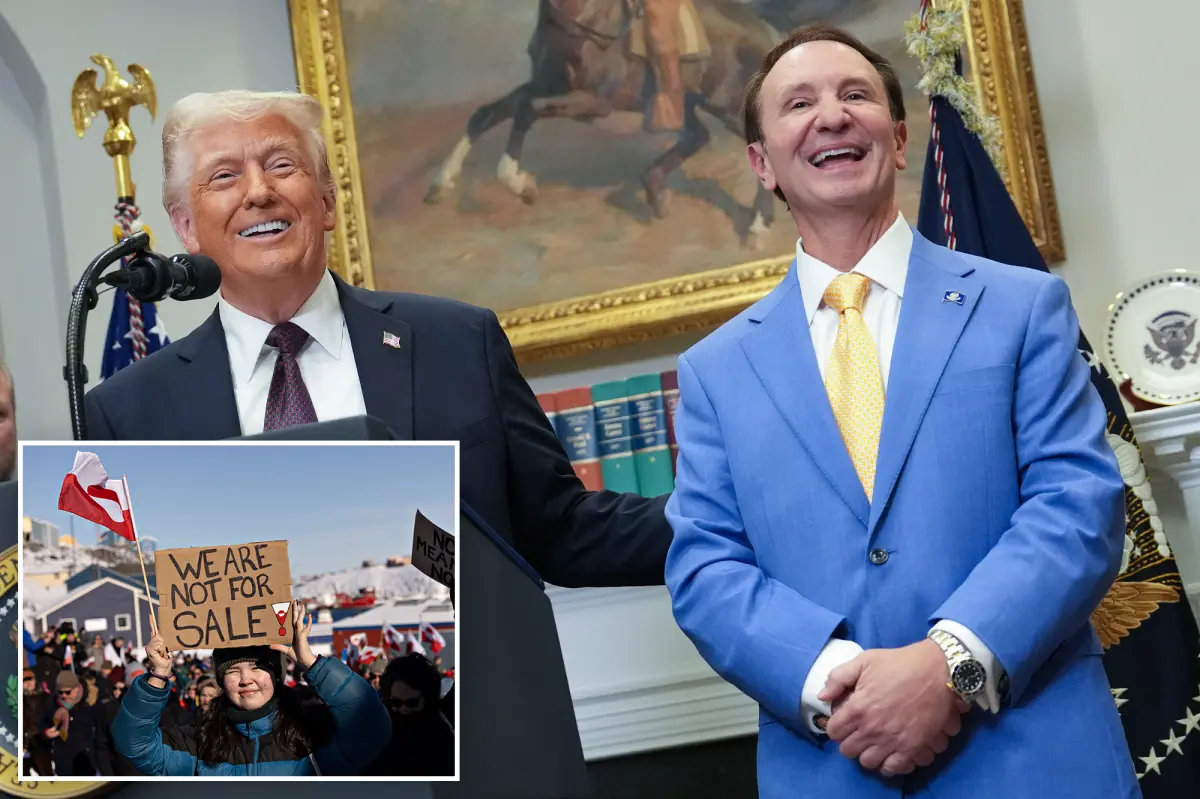
In a move that has reignited diplomatic tensions with Denmark, President Trump appointed Louisiana Governor Jeff Landry as a special envoy to Greenland on Sunday evening. This appointment underscores the administration’s continued interest in the world’s largest island, which has been a point of contention between the United States and Denmark since Trump first floated the idea of acquiring the territory during his first term. “Jeff understands how essential Greenland is to our National Security, and will strongly advance our Country’s Interests for the Safety, Security and Survival of our Allies, and indeed, the World,” Trump stated in his announcement. Landry enthusiastically accepted the voluntary position while confirming he would maintain his gubernatorial duties, saying, “It’s an honor to serve you in this volunteer position to make Greenland a part of the US.” Landry, 54, brings political experience to the role as a former congressman and state attorney general who was elected Louisiana’s governor just last year.
Danish officials responded swiftly to the appointment, with Foreign Minister Lars Løkke Rasmussen noting that it “confirms the continued American interest in Greenland.” However, Rasmussen’s statement contained a clear warning: “We insist that everyone—including the US—must show respect for the territorial integrity of the Kingdom of Denmark.” This measured but firm response highlights Denmark’s growing concern over what they perceive as American overreach regarding Greenland, which is an autonomous territory within the Danish realm. The exchange marks the latest chapter in what has become an increasingly sensitive diplomatic issue between the two traditionally strong allies, with Danish officials repeatedly emphasizing that Greenland is not for sale despite American interest.
President Trump has made no secret of his interest in Greenland, repeatedly suggesting throughout both his administrations that the United States should take control of the island. His focus on Greenland stems from its strategic location along key global shipping routes and its vast untapped mineral resources, which have become increasingly accessible as climate change reduces the ice cover in the region. According to reports, Trump administration officials have privately developed plans for how the U.S. might gain influence over Greenland, including a potential pathway where Greenland would first become independent from Denmark and then enter into a compact of free association with the United States. Such an arrangement would give Washington significant influence over Greenland’s defense and security matters while allowing for greater American access to the island’s natural resources.
The administration’s interest in Greenland was further highlighted in March when Vice President JD Vance visited American forces stationed at Pituffik Space Base (formerly known as Thule Air Base). During this visit, Vance delivered pointed criticism of Denmark’s stewardship of the territory, stating, “Our message to Denmark is very simple: you have not done a good job by the people of Greenland. You have under-invested in the people of Greenland, and you have under-invested in the security architecture of this incredible, beautiful landmass filled with incredible people.” Such direct criticism of a NATO ally’s governance of its own territory represents an unusual diplomatic approach that has only served to heighten tensions between Washington and Copenhagen. The comments also reflect the administration’s strategy of appealing directly to Greenlanders by suggesting they would be better served under American influence than Danish oversight.
While American media coverage of the Greenland issue has waxed and waned, Danish authorities have remained vigilant about what they view as attempted American interference in their sovereign affairs. In August, Denmark summoned the then-acting U.S. ambassador Mark Stroh following reports that three individuals with connections to President Trump had allegedly attempted to influence public opinion in Greenland in favor of closer ties with Washington. This formal diplomatic protest demonstrates how seriously Denmark takes these perceived encroachments, viewing them not merely as diplomatic faux pas but as potential threats to their territorial integrity. The Danish government appears increasingly concerned that American influence operations could undermine their relationship with Greenland, potentially encouraging independence movements that might eventually lead to the scenario outlined in the Trump administration’s reported plans.
The seriousness with which Denmark views these developments was further illustrated earlier this month when the Danish Defense Intelligence Service issued a stark warning in its annual report. The intelligence assessment stated that the United States “is leveraging economic power, including threats of high tariffs, to assert its will, and the possibility of employing military force – even against allies – is no longer ruled out.” Such language from a NATO member about the United States represents an extraordinary deterioration in relations between the two countries. The appointment of Governor Landry as special envoy to Greenland only serves to validate Danish concerns that American interest in acquiring or controlling Greenland remains a genuine policy goal rather than merely presidential rhetoric. As this diplomatic tension continues to unfold, it raises broader questions about America’s approach to its traditional alliances and whether the pursuit of strategic interests in the Arctic might come at the cost of longstanding partnerships that have been cornerstones of U.S. foreign policy for decades.