


Australian Prime Minister Faces Public Anger at Bondi Beach Vigil Amidst Rising Tensions
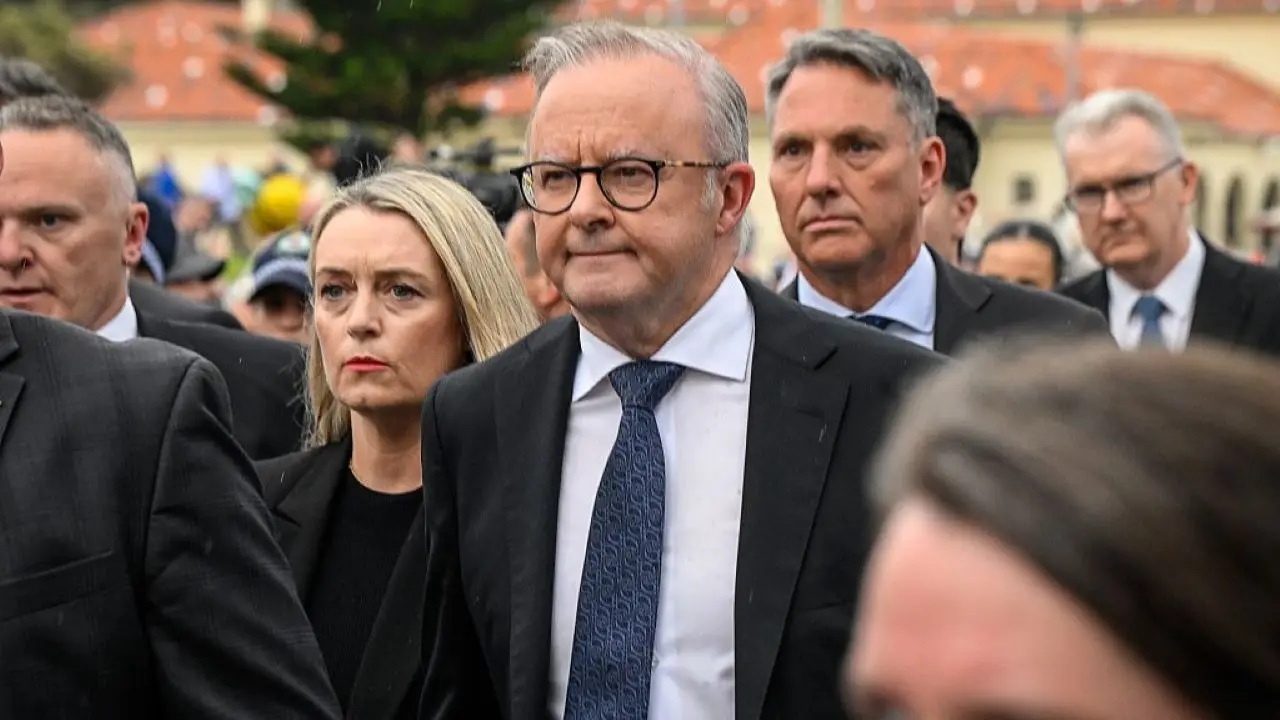
In a powerful display of community grief and political discord, Australian Prime Minister Anthony Albanese encountered an unexpected wave of disapproval when he attended a memorial vigil at Bondi Beach this Sunday. The gathering, which drew an estimated 10,000 mourners, was meant to honor the victims of the recent Bondi Beach shooting tragedy that claimed 15 lives and left dozens hospitalized. However, the somber occasion quickly reflected deeper tensions within Australian society when Albanese was met with resounding boos from the crowd, highlighting growing concerns about the government’s approach to antisemitism and Middle Eastern politics.
The public reaction came at a particularly sensitive moment as David Ossip, president of the New South Wales Jewish Board of Deputies, acknowledged the Prime Minister’s presence. As boos echoed across the beach, Ossip attempted to steer the focus back to unity, declaring, “This has to be the nadir of antisemitism in our country. This has to be the moment when light starts to eclipse the darkness.” In stark contrast to Albanese’s reception, opposition leader Sussan Ley received enthusiastic cheers from the same crowd—a response many attribute to her promise that a coalition government under her leadership would reverse Albanese’s controversial decision to recognize a Palestinian state, a policy move that has deeply divided Australians since its announcement.
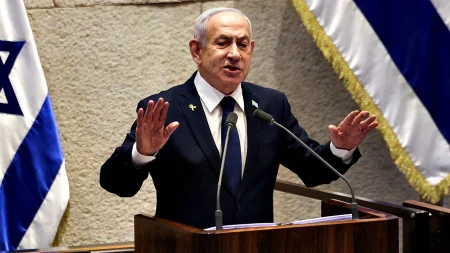
This public demonstration of discontent arrives against a backdrop of intensifying criticism from Jewish leaders and Israeli officials who claim the Australian government failed to address warning signs of rising antisemitism in the months preceding the attack. Israeli Prime Minister Benjamin Netanyahu pointedly referenced a letter he had sent to Albanese earlier this year, arguing that Australia’s recognition of a Palestinian state “pours fuel on the antisemitic fire.” Netanyahu’s critique went further, stating bluntly: “Your government did nothing to stop the spread of antisemitism in Australia. You did nothing to curb the cancer cells that were growing inside your country. You took no action. You let the disease spread and the result is the horrific attacks on Jews we saw today.” This direct condemnation from Israel’s leader has only intensified the pressure on Albanese’s administration as it grapples with the aftermath of the tragedy.
The December 14 attack, which now stands as one of Australia’s most devastating acts of violence in recent history, was carried out by a father-son duo whose motives remain under investigation by counter-terrorism authorities. While the father was killed during the incident, the son—24-year-old Naveed Akram—survived despite severe injuries that initially left him in a coma. As Akram regained consciousness, authorities wasted no time in bringing charges of murder and terrorism against him, signaling the government’s determination to pursue justice for the victims and their families who continue to mourn their loved ones.
The national conversation around this tragedy has transcended the immediate grief to encompass broader questions about Australia’s social cohesion, immigration policies, and approach to religious tensions. Security measures have been heightened across the country, with anti-terror police recently detaining seven men in related investigations as authorities work to determine whether the attack represents an isolated incident or signals a more concerning pattern of extremism. For many Australians, particularly within the Jewish community, the government’s response to these events will be viewed as a critical test of leadership amid increasingly complex global and domestic tensions.
As Australia begins the difficult process of healing from this tragedy, the contrasting receptions of political leaders at the Bondi Beach vigil serve as a stark reminder of how deeply divided the nation has become on issues of foreign policy and domestic security. The challenge now facing Prime Minister Albanese extends beyond addressing the immediate aftermath of violence—he must find a way to bridge these divides while reassuring a frightened public that their government can effectively protect them from future threats. Whether this moment will indeed mark, as David Ossip hoped, a turning point where “light starts to eclipse the darkness” depends largely on how leaders across the political spectrum respond to the concerns so vocally expressed by those gathered to mourn at Bondi Beach.