




Life’s Journey: From Simple Beginnings to Complex Wonders
Our story begins with a single cell, emerging from the primordial Earth billions of years ago. This seemingly insignificant event marked the beginning of life’s incredible journey on our planet. Consider the extraordinary nature of that first life form – perhaps a simple bacterium floating in ancient seas, containing just enough genetic material to replicate itself. From this humble origin, through countless generations and evolutionary adaptations, life diversified and complexified in ways that would have been impossible to predict. The path from that first cell to the rich tapestry of life we see today wasn’t linear or predetermined; it was shaped by environmental changes, random mutations, natural selection, and perhaps even catastrophic events that reset the evolutionary clock. Yet through it all, life persisted and found new ways to thrive, developing increasingly sophisticated strategies for survival.
The complexity we observe in living systems today is staggering when we pause to consider it. From the intricate biochemical pathways within each cell to the specialized organs working in concert within our bodies, life has developed solutions to challenges that engineers can only dream of replicating. Our immune systems can identify and neutralize countless threats, our brains can process vast amounts of information in milliseconds, and our DNA contains a blueprint refined over eons. Even seemingly simple organisms display remarkable complexity – consider how ants build elaborate colonies with specialized roles, how plants communicate through chemical signals, or how bacteria develop resistance to antibiotics. This complexity didn’t emerge suddenly but through incremental changes, each building upon what came before. Nature’s innovations weren’t designed but discovered through the relentless process of evolution, with each adaptation offering some advantage in a particular environment at a particular time.
Human behavior represents perhaps the most fascinating level of complexity to emerge from life’s journey. Our actions aren’t merely instinctual but shaped by consciousness, cultural learning, social relationships, and individual experiences. We create art that moves us to tears, build technologies that connect us across vast distances, and develop moral systems that guide our collective behavior. We experience love, grief, wonder, and curiosity – emotional states that somehow emerge from the physical substrate of our brains yet feel transcendent in their significance. Our behavior is influenced by factors ranging from our genetic inheritance to our childhood experiences, from our cultural context to our personal choices. The interplay between these factors creates the rich diversity of human expression we see across the globe, with each person representing a unique configuration of humanity’s potential.
Yet for all our complexity, we remain connected to life’s origins. The same fundamental processes that governed that first cell – metabolism, reproduction, response to environment – continue within us today. Our bodies still operate according to biochemical principles established billions of years ago, and our DNA shares remarkable similarities with seemingly distant relatives on the evolutionary tree. We depend on ecosystems populated by countless other species, from the bacteria in our gut to the plants that produce our oxygen. This interconnectedness reminds us that we aren’t separate from nature but an expression of it – perhaps its most self-aware manifestation, but still subject to its laws and dependent on its systems. In our complexity, we have gained the ability to reflect on our place in this web of life, to trace our evolutionary history, and to consider our responsibilities to the planetary systems that sustain us.
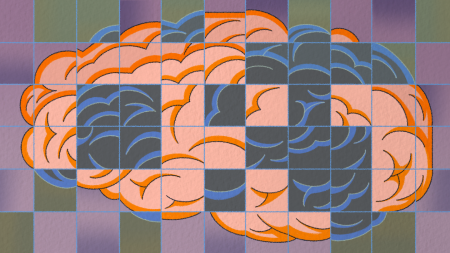
Our growing understanding of life’s complexity carries profound implications. In medicine, recognizing the intricate interactions within our bodies has led to treatments that would have seemed miraculous a century ago. In conservation, appreciating the delicate balance of ecosystems helps us protect biodiversity. In psychology, acknowledging the multifaceted nature of human behavior leads to more compassionate and effective approaches to mental health. Yet this understanding also highlights the limits of our knowledge – for every system we decode, new questions emerge. The human genome has been mapped, but we’re still discovering how genes interact and express themselves. The brain has been imaged in incredible detail, but consciousness remains enigmatic. Life’s complexity isn’t a puzzle to be solved but a reality to be continually explored, with each discovery revealing new depths to investigate.
As we face unprecedented global challenges – from climate change to pandemics – our appreciation of life’s complexity becomes not just intellectually fascinating but practically essential. Complex problems require approaches that respect the interconnected nature of living systems and recognize that simple interventions often produce unintended consequences. The resilience that has characterized life since its beginnings offers both inspiration and practical lessons as we navigate an uncertain future. Perhaps most importantly, understanding the remarkable journey from single cell to human consciousness evokes a sense of wonder that transcends scientific curiosity. In contemplating life’s evolution from simplicity to complexity, we glimpse something profound about existence itself – its creative potential, its persistent adaptability, and its capacity to generate consciousness capable of appreciating its own remarkable story. This narrative connects us not just to our evolutionary ancestors but to all living things that share this planet, reminding us that in our complexity, we remain part of life’s ongoing journey.