



When Pets Take Flight: The Wild World of “Emotional Support Animals” on Planes
In an era where pet ownership has evolved into near-worship, the friendly skies have transformed into a veritable aerial zoo. The phenomenon began with a loophole in air travel regulations that allowed virtually anyone to designate their pet as an “emotional support animal” (ESA) with minimal verification. Though the Department of Transportation tightened regulations in 2020 to allow only trained service dogs on aircraft, creative passengers have continued finding ways to bring unusual companions aboard. This rise of “animal-stolen valor” has created problems not just for airlines and fellow passengers, but also for individuals with legitimate disabilities who depend on actual service animals. The distinction between a true service animal and an impostor often comes down to behavior—real service animals are working, not being coddled or fed treats throughout the flight. Unfortunately, these counterfeit comfort companions have given legitimate service animals a bad reputation, creating difficulties for those who truly need them.
The most audacious example of pushing ESA boundaries involved influencer Piêtra Luccas, who brought her alleged “service” Great Dane aboard a United Airlines flight, documenting the journey on Instagram to the outrage of many viewers. The massive canine—a breed that can reach 32 inches at the shoulder and weigh up to 175 pounds—sparked immediate criticism from social media users who questioned how such an enormous animal could reasonably fit in an airplane cabin. “Who brings a horse on an airplane?” one commenter quipped, while others called out the “absolute narcissism” behind such a decision. This wasn’t the airline industry’s first encounter with a Great Dane, either. In 2023, passenger Gabriel Bogner transported his 140-pound Dane named Darwin on a cross-country flight from New York to Los Angeles. Interestingly, fellow passengers reportedly praised Darwin for being better behaved than some human travelers, highlighting how even unusual service animals can sometimes defy expectations.
Speaking of horses, miniature service horses have actually received legitimate recognition under the Americans with Disabilities Act since 2011. One such equine traveler was Fred, a 115-pound miniature horse who accompanied his owner Ronica Froese on a flight from Michigan to Ontario in 2020. Froese, who suffers from an incurable autoimmune disease, explained that Fred was specifically trained to help her pick up objects when her condition prevented her from bending over or lifting items. Despite facing criticism for bringing such an unconventional animal aboard, Froese correctly pointed out that her choice of service animal was legally protected. The contrast between legitimate service animals like Fred and questionable emotional support animals highlights the complex landscape airlines must navigate when determining which animals to allow in the cabin.
Some attempted animal passengers have been decidedly more exotic, pushing the boundaries of what constitutes reasonable accommodation. In 2018, passenger Cindy Torok was removed from a Frontier Airlines flight after attempting to bring her emotional support squirrel, Daisy, onboard. Despite claiming she had proper documentation and her daughter had called ahead to verify the squirrel’s admittance, airline representatives maintained that Torok had failed to specify what type of support animal would be accompanying her. The situation escalated dramatically, with Torok reporting that police threatened to arrest her for trespassing if she refused to disembark with her rodent companion. “You’re not taking my baby from me,” Torok reportedly told officers before eventually leaving the aircraft and subsequently filing a lawsuit against the airline. Even more dramatically, in 2018, United Airlines denied boarding to a peacock named Dexter attempting to fly from Newark to Los Angeles, despite the owner purchasing a separate ticket for the colorful bird. The airline cited the peacock’s weight and size as disqualifying factors and stated they had explained this to the customer multiple times before their arrival at the airport.
Not all unusual animal passengers have been denied boarding. In 2018, an eight-year-old rabbit named Coco successfully traveled from San Francisco to Japan on United Airlines after her owner Takako Ogawa registered her as an emotional support animal. Ogawa paid $100 to bring Coco aboard in a portable kennel, and the stylish bunny reportedly wore a bowtie for part of the journey before changing into a bib while enjoying a mid-flight snack of nuts. This successful animal journey stands in stark contrast to less fortunate attempts, such as when a passenger and her emotional support pig were removed from a US Airways flight from Connecticut to Washington. Fellow passenger Robert Phelps estimated the swine weighed between 70-80 pounds and described the surreal scene: “Everybody was trying to surmise what it could be, because no one thought it was a pig. Other than a Fellini movie, where would you see a person with a pig?” The pig and its owner were ultimately removed before takeoff after the animal became disruptive.
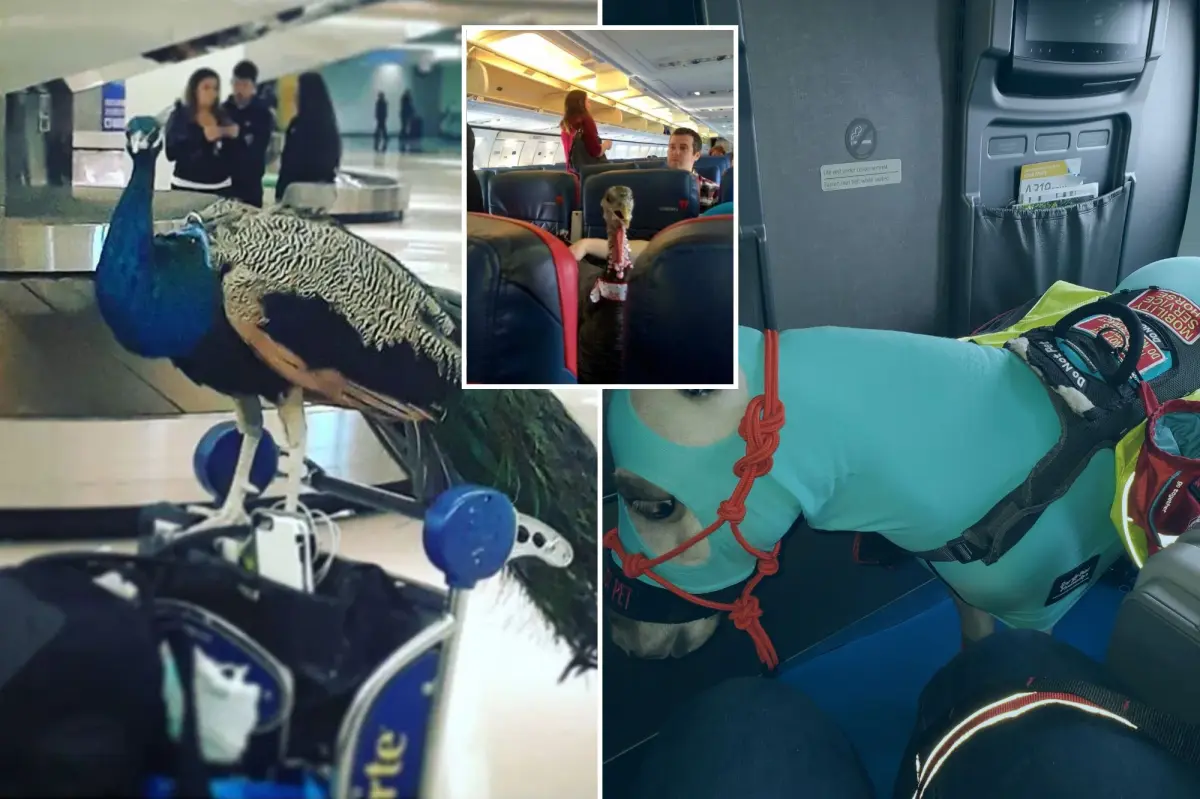
Perhaps the most unusual attempted airline passenger was a live turkey, photographed peering between airplane seats in an image that went viral on Reddit. According to the post, the turkey was brought aboard as an “emotional support pet” on a Delta flight, leaving fellow passengers and internet commenters equally baffled. This incident, along with a 2023 attempt to bring an “emotional support” boa constrictor named Bartholomew through security at Tampa International Airport, represents the extreme end of the emotional support animal spectrum. The snake was discovered during X-ray screening, prompting TSA to quip on Instagram, “Our officers at Tampa International Airport didn’t find this hyssssssterical!” while reminding travelers that bringing “snakes on a plane” was strictly prohibited. These increasingly outlandish attempts to classify exotic pets as necessary emotional support companions have prompted airlines and regulatory agencies to tighten restrictions, creating a more challenging environment for those with legitimate service animal needs while attempting to prevent the friendly skies from transforming into a complete menagerie.