


Technology Meets Traditional Policing in Microsoft’s Hometown
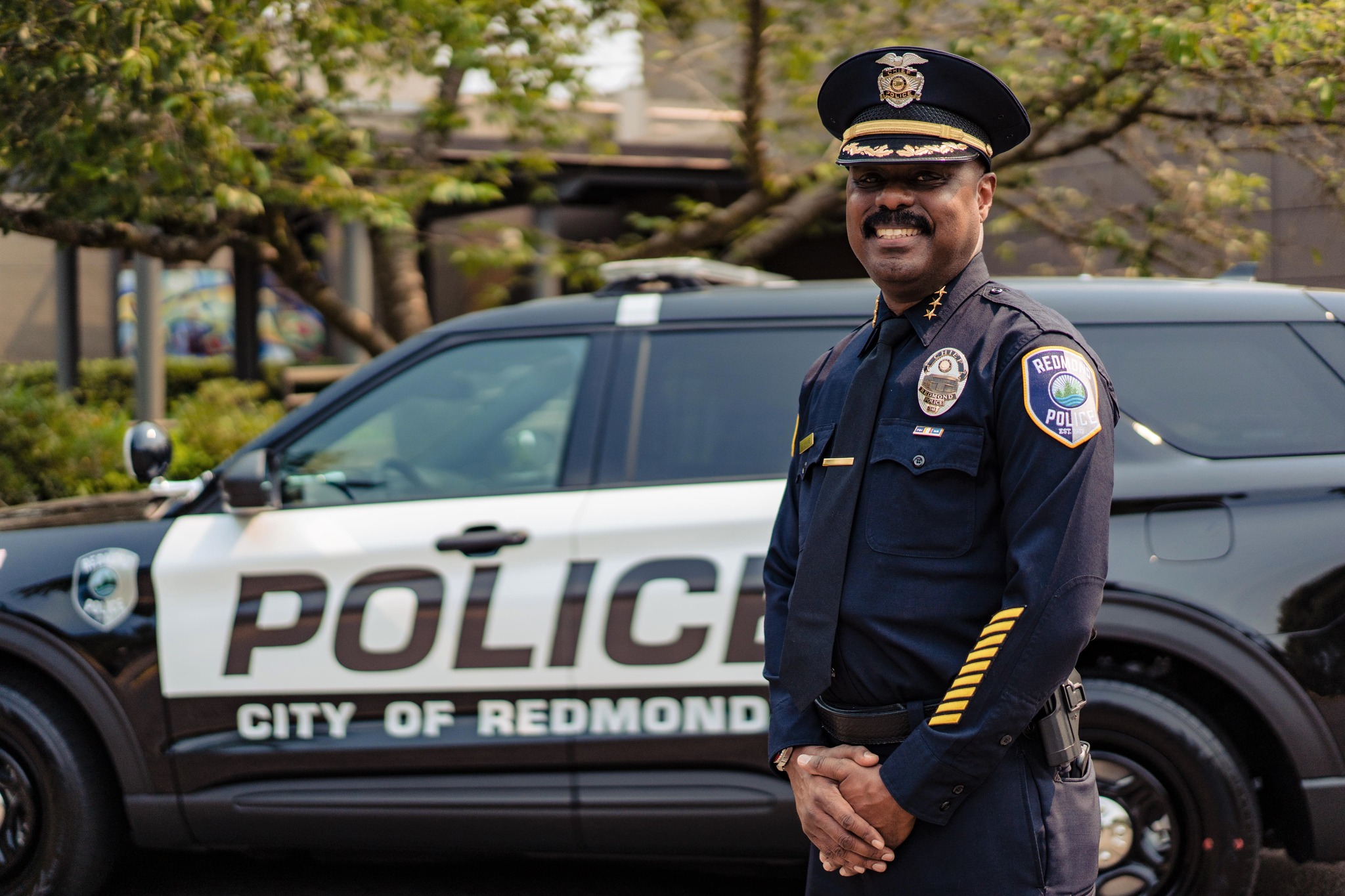
In the technological hub of Redmond, Washington, Police Chief Darrell Lowe is pioneering a new era of law enforcement that seamlessly integrates cutting-edge innovation with traditional policing values. With Microsoft’s global headquarters as a backdrop, Lowe isn’t merely an observer of technological advancement—he’s actively incorporating everything from autonomous drones to artificial intelligence into his department’s daily operations. Since taking the helm six years ago, this 30-year law enforcement veteran has pursued a vision of transforming Redmond Police Department into a premier agency, with technology serving as the foundation of this ambitious mission. While Lowe acknowledges the benefits of being in Microsoft’s backyard, he clarifies that his department doesn’t receive direct funding from the tech giant. Instead, he navigates the booming public safety tech landscape independently, carefully selecting tools that enhance officer efficiency without sacrificing the human element that remains central to effective community policing.
Lowe’s approach to technological adoption is pragmatic and results-driven. He primarily seeks solutions that streamline operations and simplify tasks for his approximately 85 officers. One notable addition to his department’s toolkit is an AI-powered investigative platform from San Francisco-based Longeye. This sophisticated system processes and analyzes digital evidence—from surveillance footage and phone records to crime scene photos and interviews—at speeds that far exceed human capabilities. In one remarkable example, the platform helped investigators confirm critical evidence in a cold case by analyzing 60 hours of jail phone calls in mere minutes, a task that would have required weeks of human review. However, Lowe maintains a balanced perspective on AI’s role in law enforcement, emphasizing that such tools complement rather than replace traditional investigative work. “It’s really important for law enforcement agencies and officers not to get lazy and think AI is the answer,” he cautions, “because you still have to corroborate whatever that is.” This philosophy reflects his broader approach to technology adoption—embracing innovation while recognizing its limitations.
The Redmond Police Department’s technological evolution extends well beyond AI. Under Lowe’s leadership, the department has implemented various specialized tools, including adhesive GPS trackers for pursuing fleeing vehicles and handheld narcotics analyzers capable of identifying over 530 controlled substances through transparent packaging without direct contact. But perhaps the most transformative addition to Redmond’s law enforcement arsenal has been its drone program. Lowe equates the impact of drones on modern policing to the revolutionary shift from police call boxes to handheld radios. The department now employs two full-time drone pilots who operate from a dedicated flight control center equipped with autonomous drones from Seattle-based Brinc and Skydio. These aircraft are integrated directly into the dispatch system, allowing them to launch automatically and arrive at incident scenes in under two minutes—often before ground units can respond. This rapid aerial response capability has fundamentally changed how the department handles certain types of calls, providing officers with critical situational awareness before they arrive and sometimes eliminating the need for in-person contact entirely.
A recent incident highlights the practical benefits of this approach. When dispatchers received a call about an individual experiencing a mental health crisis on a street corner—screaming at the sky and waving their arms—the traditional response would have involved sending officers to make direct contact, a scenario that can sometimes escalate unpredictably. Instead, a drone arrived at the scene within 30 seconds. From 250 feet above, the pilot observed the individual, determined that no crime was occurring and no one was in danger, and continued monitoring as the person eventually walked away without incident. “We canceled the ground unit response. There was no need for police contact,” Lowe explains. This outcome represents exactly what the chief hopes to achieve with technology—de-escalation and resource optimization that benefits both the department and the community. To address inevitable privacy concerns surrounding aerial surveillance, Lowe implemented a “horizon-first” policy: drone cameras remain pointed skyward during transit and only tilt downward once they reach the specific GPS coordinates of a call, minimizing unnecessary observation of uninvolved areas and individuals.
Despite these successes, not all technological implementations have proceeded smoothly. The Redmond City Council recently paused the department’s Automated License Plate Reader (ALPR) program following regional concerns about data sharing practices, particularly regarding whether U.S. Immigration and Customs Enforcement could potentially access the collected information. The department had begun deploying ALPRs earlier this year to alert officers when vehicles linked to crimes, missing persons, stolen property, or other critical incidents were detected. Lowe has pushed back against what he characterizes as “hysteria” surrounding the technology, arguing that cameras serve a legitimate law enforcement purpose in public spaces. “There is no expectation of privacy in a public place on a tax-funded road,” he asserts, noting that Washington’s tolling cameras often capture more personal data, including drivers’ faces, and retain it for longer periods than his ALPR systems. While acknowledging that privacy concerns are legitimate, Lowe maintains they must be balanced against legal precedent and public safety benefits. The situation has created a complex challenge for the city council, which must now consider potential legal ramifications of breaching the contract signed to launch the ALPR program.
Throughout his career, from his early days in Santa Monica, California, to his current leadership position in Redmond, Lowe has embraced innovation as a core element of effective policing. He credits his formative professional experience under former Santa Monica Police Chief Jim Butts with embedding technology in his “cop DNA.” Looking back on his career trajectory, Lowe finds humor in how dramatically the job has evolved from his initial expectations. “When we all got into this, we wanted to go out there and catch bad guys… play cops and robbers and that whole thing,” he reflects. “I never imagined that I’d be negotiating multi-million-dollar, multi-year [tech] contracts as a cop.” Yet despite his enthusiasm for technological advancement, Lowe remains firmly committed to preserving the fundamentally human aspects of policing. Technology, in his view, should enhance rather than replace the personal connection between officers and the community they serve. “We can never take the human out of the loop,” he emphasizes. “When people contact the police, it’s often not on their best day. It’s to have another human there to empathize and sympathize. It’s the reason why most of us got into this profession—to help others.” This philosophy—balancing innovative tools with compassionate service—defines Chief Lowe’s approach to leading law enforcement in one of America’s most technologically advanced communities.