



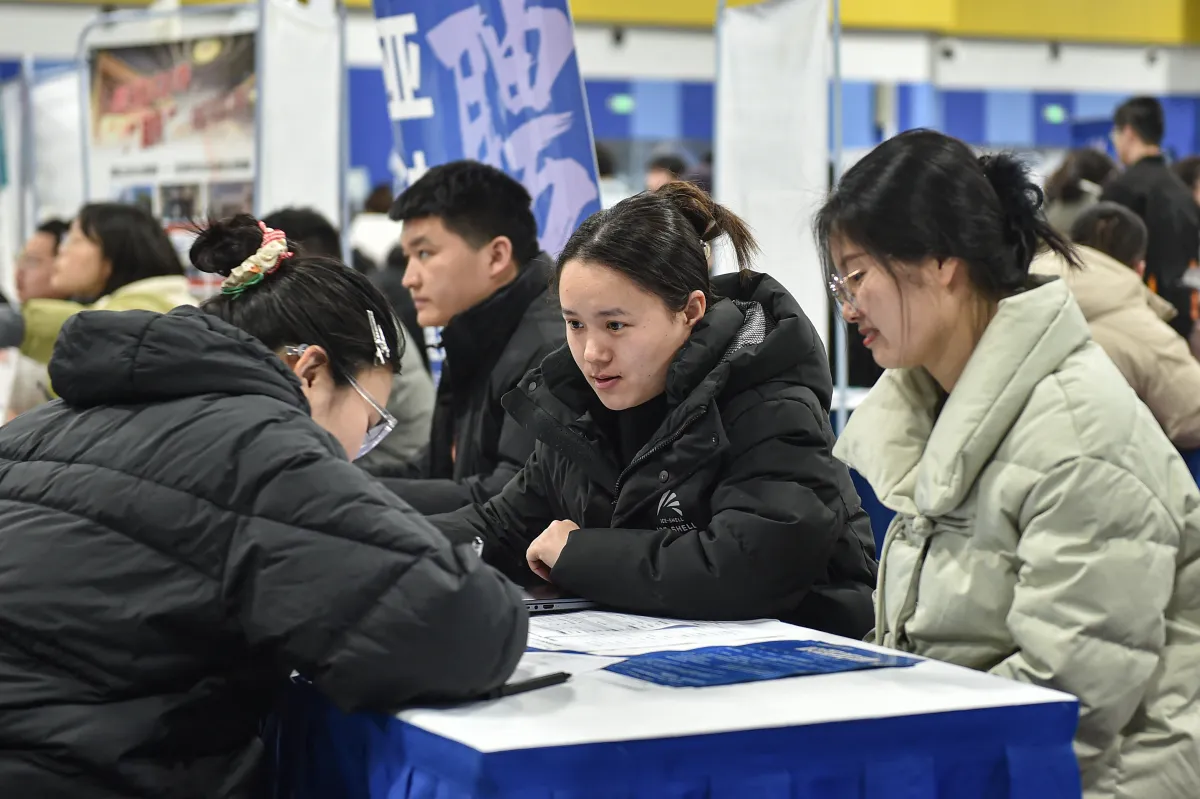
China’s Youth Unemployment Crisis: A Generation in Economic Limbo
Despite China’s general economic recovery and stimulus efforts, a troubling picture emerges for the nation’s young people. Approximately 20 million urban Chinese youth remain unemployed, representing roughly 12 percent of this demographic, according to Newsweek’s analysis of official statistics. This persistent challenge comes at a critical moment for the world’s second-largest economy, which continues to navigate post-COVID recovery amid slowing growth, weak consumer demand, and a prolonged real estate crisis. The particularly high jobless rate among young citizens reveals a disconnect between China’s broader economic recovery and the opportunities available to its next generation of workers, raising questions about both economic and social stability in the coming years.
The numbers tell a concerning story: urban Chinese aged 15-24 faced an unemployment rate of nearly 17 percent last month. While this marks a five-month low, it still represents an increase of 0.8 percentage points compared to the previous year. The slightly older 25-29 demographic fares somewhat better with a 7.2 percent unemployment rate, though this figure still exceeds the national urban average of 5.1 percent. What’s particularly troubling is how these challenges coincide with record numbers of university graduates entering the job market. China is set to produce 12.7 million new graduates this year, intensifying competition for limited positions. This mismatch between education output and job creation has created a pressure cooker situation, with millions of well-educated young people finding themselves unable to secure stable employment despite their qualifications and ambitions.
China’s handling of unemployment statistics adds another layer of complexity to understanding the full scope of the problem. After youth unemployment rates soared above 21 percent in 2023, the government temporarily suspended reporting these figures altogether. When reporting resumed six months later, authorities had implemented a revised methodology that notably excluded students from youth unemployment data. The new approach also no longer counts individuals with minimal part-time work (even as little as one hour per week) as unemployed, nor does it include jobless youth who aren’t actively seeking work. Officials justified these changes by explaining that the addition of the 25-29 age bracket better reflects the reality that more young people now pursue higher education and enter the job market later. However, critics point out that these methodological adjustments diverge from international standards, which include students actively seeking work in unemployment calculations, potentially masking the true extent of the crisis.
This situation presents serious implications for both individual lives and broader Chinese society. For young people, prolonged unemployment or underemployment can lead to financial strain, delayed life milestones, and psychological distress. Many are forced into the precarious gig economy, which already employs over 200 million urban workers (approximately 40 percent of the urban labor force) but offers little stability or security. From a social perspective, the growing dissatisfaction among youth poses challenges to the Chinese Communist Party’s paramount goal of maintaining social stability. The government’s traditional social contract—promising economic prosperity and upward mobility in exchange for political compliance—becomes increasingly strained when younger generations face diminished economic prospects despite following prescribed educational paths. The Mercator Institute for China Studies warns that if the party’s focus on industry-driven growth fails to generate sufficient prosperity to boost personal wealth, it risks “undermining its own ambition of serving the people and leaving many Chinese to shoulder the costs.”
The government’s response to youth unemployment has included various initiatives aimed at job creation and vocational training, but results remain limited. State media portrays the employment situation as “generally stable,” with Li Chang’an, a professor at the University of International Business and Economics, suggesting the country remains on track to achieve its annual target of keeping urban unemployment around 5.5 percent. However, the significant gap between overall unemployment figures and those affecting young people indicates a structural problem that short-term measures have yet to address effectively. The challenge is further complicated by broader economic shifts, including China’s attempt to transition from export-led manufacturing to a more service-oriented economy, automation replacing entry-level positions, and companies increasingly prioritizing experienced workers during periods of economic uncertainty.
Looking ahead, China faces the dual challenge of creating sufficient quality jobs for its educated youth while maintaining broader economic growth. Without addressing this fundamental imbalance, the country risks squandering its demographic dividend and fostering a generation marked by unfulfilled potential and diminished expectations. The current situation represents more than just an economic statistic—it embodies the aspirations, frustrations, and uncertain futures of millions of young Chinese. How Beijing navigates this challenge will significantly influence not only its economic trajectory but also the social compact between the government and its next generation of citizens. As record numbers of graduates continue entering the job market each year, the pressure to find sustainable solutions only intensifies, making youth employment a defining issue for China’s future stability and prosperity.