


Community Stunned by MIT Professor’s Tragic Death in Quiet Boston Suburb
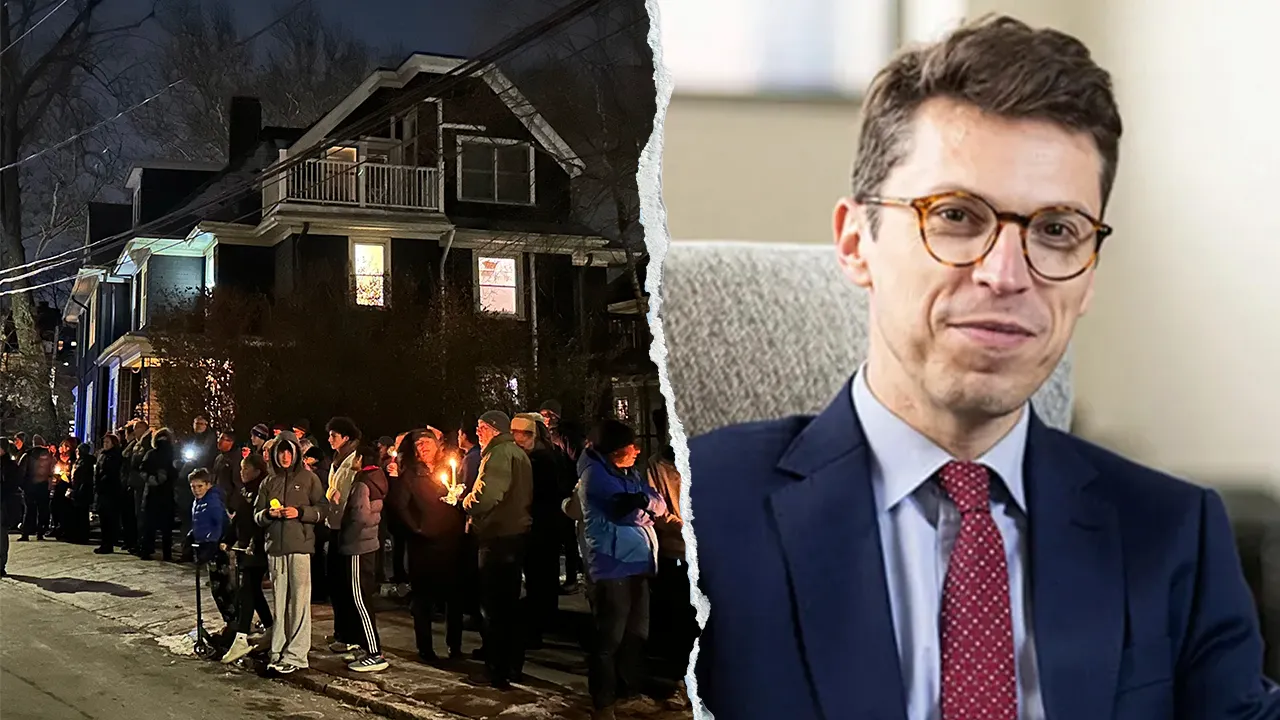
The Brookline neighborhood, typically known for its safety and tranquility, has been shaken to its core following the shocking murder of MIT professor Nuno Loureiro. On Monday night, Loureiro was shot at the entrance of his apartment building and tragically succumbed to his injuries the following morning at a local hospital. The violent incident has left residents questioning the security of their community and mourning the loss of a brilliant scientific mind. “It’s scary to be in Brookline,” remarked local resident Lloyd Rosenthal. “It’s supposed to be safe, but no one’s talking.” This sentiment echoes throughout the community as neighbors struggle to comprehend how such violence could erupt in their peaceful enclave. One resident described hearing “three loud bangs” that initially sounded like someone forcefully entering an apartment, while another neighbor, Anne Greenwald, expressed her fear: “I don’t know what happened or why it happened. It’s very scary, though. We’re living in such terrible times right now that it seems like violence is just happening everywhere.”
The murder has left a family devastated and a community searching for answers. Eurydice Hirsey, who knew Loureiro through his wife Ines, described the family’s state as one of “raw horror… terror.” The couple shares three children ranging from elementary school to college age. “It’s a family that’s feeling such indescribable pain,” Hirsey noted, capturing the profound grief that has enveloped Loureiro’s loved ones. Her husband added a poignant observation about the broader implications, saying “the only answer to terrorism is a strong civil society,” while acknowledging that “in the meantime, we face a lot of hate and suffering.” The investigation is being conducted jointly by the Brookline Police Department, the Norfolk County District Attorney’s Office, and the Massachusetts State Police, though no suspects have been named thus far in this mysterious killing.
Authorities have been quick to clarify that despite regional concerns about violence on college campuses, there appears to be no connection between Loureiro’s death and the recent shooting at Brown University that left two students dead and nine injured. Ted Docks, special agent in charge of FBI Boston, addressed reporters to specifically dispel any speculation about a link between these tragic events. While the Brown University shooting has been under intense scrutiny, investigators see Loureiro’s murder as an isolated incident, which perhaps makes it all the more perplexing for the Brookline community accustomed to relative safety and calm.
Nuno Loureiro was far more than just another victim of violence—he was a distinguished academic whose contributions to science were significant and far-reaching. Having joined MIT in 2016, Loureiro was appointed last year to lead the school’s prestigious Plasma Science and Fusion Center, one of MIT’s largest laboratories with over 250 employees. There, he dedicated his research to expanding clean energy technology, work that held promise for addressing some of humanity’s most pressing environmental challenges. His academic journey was equally impressive: he studied physics at the Instituto Superior Técnico in Lisbon, Portugal, earned his doctorate from Imperial College London in 2005, and completed postdoctoral work at both the Princeton Plasma Physics Laboratory and the UKAEA Culham Centre for Fusion Energy before taking a research position at the Institute for Plasmas and Nuclear Fusion in Lisbon.
The response to Loureiro’s death has rippled through both academic and diplomatic circles. MIT spokesperson Kimberly Allen expressed the institution’s grief: “Our deepest sympathies are with his family, students, colleagues, and all those who are grieving.” The university has initiated “focused outreach and conversations” to support those who knew the professor. Meanwhile, U.S. Ambassador to Portugal John J. Arrigo offered his condolences via social media: “I extend my deepest condolences to the family, friends, and colleagues of Nuno Loureiro, who led MIT’s Plasma Science and Fusion Center. We honor his life, his leadership in science, and his enduring contributions.” These statements reflect the high esteem in which Loureiro was held and the significant loss his death represents to the scientific community.
As Brookline residents lay flowers outside Loureiro’s apartment building and grapple with the reality of violence in their midst, the community finds itself at a crossroads of grief and uncertainty. The shocking nature of this crime—a respected professor gunned down at his own doorstep—challenges the very notion of safety that many residents had taken for granted. For Loureiro’s colleagues, students, and family, the focus now turns to preserving his legacy in science while seeking justice for his untimely death. The investigation continues as authorities work to piece together the circumstances of this tragic event, leaving a community to mourn not only the loss of a brilliant mind but also, perhaps, some measure of their innocence about the security of their cherished neighborhood. Through this collective grief, however, emerges a renewed commitment to the values that defined Loureiro’s work: the pursuit of knowledge and solutions that benefit humanity.