


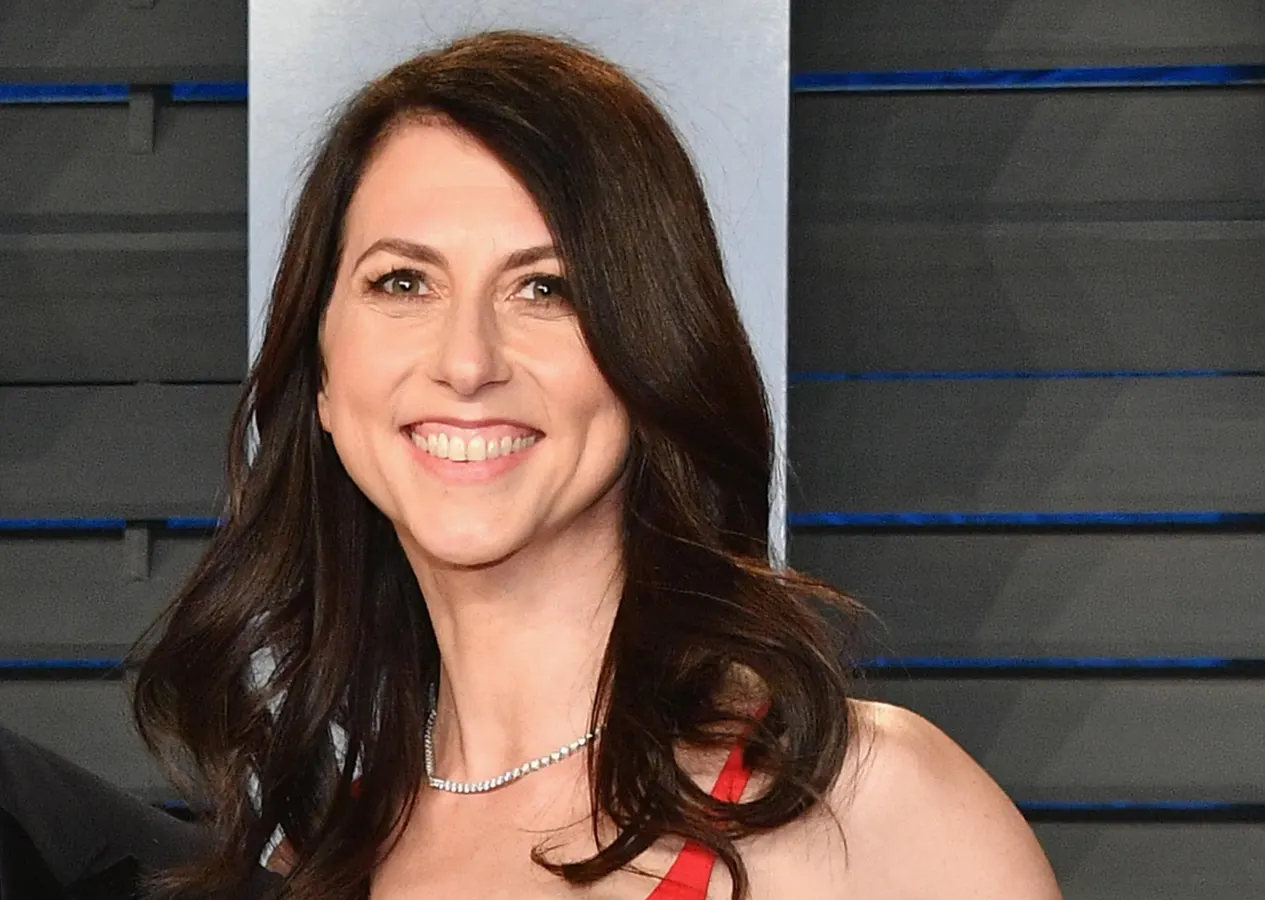
MacKenzie Scott’s Transformative Philanthropy: A Model of Generosity
In a remarkable display of philanthropic commitment, MacKenzie Scott announced on Tuesday that she has donated $7.2 billion over the past year—her largest annual giving total since she began publicly sharing her charitable activities in 2019. This latest contribution brings her lifetime giving to an impressive $26 billion, establishing her as one of America’s three most generous philanthropists. Only Warren Buffett and Bill Gates have given more in absolute terms, with estimated lifetime donations of $65 billion and $48 billion respectively. What makes Scott’s generosity particularly notable is that she has now surpassed both Michael Bloomberg and George Soros in total dollar amounts donated, though Soros maintains the distinction of having given away the highest percentage of his personal wealth. Scott’s humility shines through in her accompanying essay, where she downplays the dollar figure, noting that “any dollar amount is a vanishingly tiny fraction of the personal expressions of care being shared into communities this year.”
Scott’s recent donations have benefited approximately 200 organizations, with particular emphasis on higher education institutions (including Historically Black Colleges and Universities and programs supporting Native and other underserved students) and climate initiatives (such as the Global Methane Hub and ClimateWorks Foundation). While Scott has become known for her no-strings-attached gifts to grassroots organizations, this year marks a shift in her approach, with the majority of recipients being organizations she has previously supported. Her giving style remains distinctively low-profile—she rarely comments publicly on her philanthropy beyond occasional essays posted to her website, Yield Giving. This understated approach stands in stark contrast to many high-profile donors who seek recognition and influence through their giving.
The source of Scott’s wealth is her approximately 400 million Amazon shares received during her 2019 divorce from Amazon founder Jeff Bezos. In just six years, she has divested more than 75% of these shares—assets that would be worth $52 billion if sold immediately upon receipt, or $72 billion had she held onto them until now. This rapid pace of giving places her in sharp contrast to her ex-husband, who despite being the world’s third-richest person with a fortune of $242 billion, has donated less than one-fifth of Scott’s total contributions. Forbes now estimates Scott’s net worth at approximately $30 billion, significantly down from her 2021 peak of $59 billion. Had she retained all her Amazon shares, her current wealth would approach $91 billion, making her the world’s second-wealthiest woman after Alice Walton.
Unlike many ultra-wealthy philanthropists, Scott has chosen not to establish a traditional private foundation. Instead, she appears to be transferring substantial portions of her Amazon shares to donor-advised funds (DAFs), including an account at the National Philanthropic Trust. This approach offers significant tax advantages—particularly important given Washington state’s newly enacted 7% capital gains tax on top of the national 23.8% rate—while providing greater flexibility and privacy than a conventional foundation. Private foundations must distribute at least 5% of their assets annually and publicly disclose all financial details, whereas DAFs have no mandated distribution timeline or transparency requirements. This structure allows Scott to avoid capital gains taxes when transferring appreciated Amazon shares to the DAF before selling them, and enables her to redirect the tax-free proceeds toward impact investments in areas she has identified as priorities: affordable housing, women’s health, and culturally-sensitive teletherapy.
In her latest essay, Scott encourages others to embrace their own expressions of kindness and generosity, writing: “There are many ways to influence how we move through the world, and where we land.” Her chosen method of influence is unmistakably philanthropy—she has now given away over 46% of her wealth, second only to the 95-year-old Soros in percentage terms. This level of giving stands in stark relief against the broader landscape of American billionaire philanthropy, where only 11 members of the Forbes 400 list have donated more than 20% of their wealth, and the vast majority have given away less than 5%. Scott’s approach represents not just extraordinary generosity in dollar terms, but also a fundamentally different philosophy about wealth and responsibility.
Scott’s philanthropy exemplifies a distinct model of giving—one characterized by humility, urgency, and trust in the organizations she supports. While many billionaires create elaborate philanthropic structures designed to perpetuate both their wealth and influence for generations, Scott appears genuinely committed to redistributing her fortune during her lifetime. Her stated aim to give “until the safe is empty” reflects a perspective that views extreme wealth concentration as a temporary stewardship rather than a permanent entitlement. By directing funds toward historically marginalized communities and addressing pressing global challenges like climate change, Scott is not merely giving away money—she is actively working to rebalance systemic inequities. In a philanthropic landscape often criticized for reinforcing existing power structures, Scott’s approach offers a compelling alternative: one that trusts recipients to determine their own needs, moves with unusual speed, and prioritizes impact over personal recognition or control.