

Lumotive Expands Globally to Commercialize Breakthrough 3D Sensing Technology
Redmond, Washington-based Lumotive is taking significant strides toward global expansion after securing $59 million in venture capital earlier this year. The company, which specializes in miniaturized 3D sensors based on metamaterials technology, has recently opened new offices in Oman and Taiwan to accelerate its market penetration worldwide. This expansion represents a critical transition for Lumotive as it moves from a primarily innovation-focused organization to one ready for large-scale commercialization. “These milestones mark a pivotal moment for Lumotive as we move from innovation to large-scale commercialization,” said CEO Sam Heidari in a recent announcement that also highlighted the addition of two seasoned tech industry veterans to the company’s leadership team.
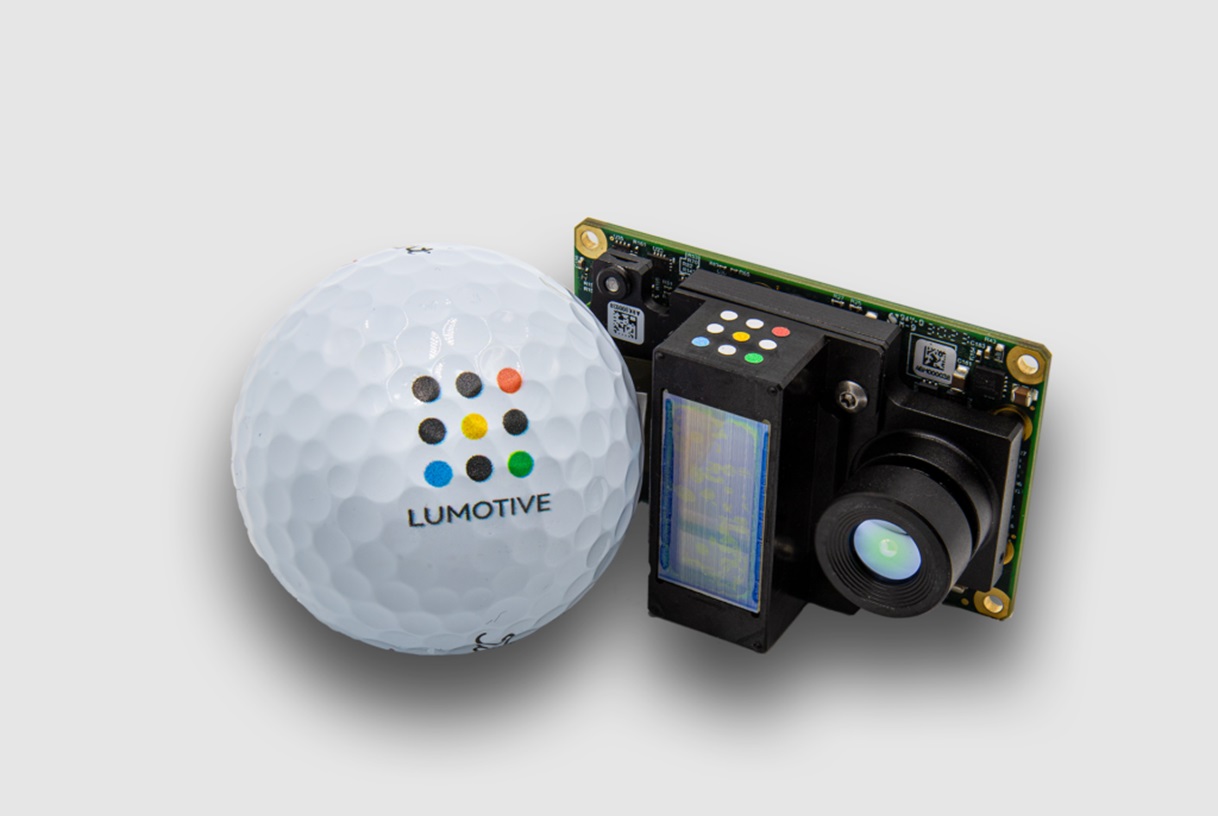
Founded in 2017 as a spinoff from Intellectual Ventures in Bellevue, Washington, Lumotive has developed a revolutionary Light Control Metasurface (LCM) platform that enables electronic steering of laser light without moving parts. This technology allows for 3D rendering of surroundings using a device smaller than a credit card—a significant advancement in lidar (light detection and ranging) technology. While initially conceived for autonomous vehicles, Lumotive has pivoted to focus primarily on robotics applications. “To be honest, even though we have had good engagements in automotive, our primary focus has been robotics,” Heidari explained to GeekWire. The company has already secured partnerships with robotics companies across three continents: Hokuyo Automatic in Japan, Namuga in South Korea, and E-Photonics in Saudi Arabia, with additional collaborations in development.
The company’s global expansion includes strategically placed new offices to support its growing international presence. The Center of Excellence in Muscat, Oman, will provide dedicated customer engineering and program management resources for Middle Eastern and European markets, while the Taiwan office strengthens Lumotive’s manufacturing operations and field application capabilities near key Asian partners. This geographic diversification has been accompanied by a 50% increase in workforce over the past year, bringing the company’s global employee count to nearly 80, with approximately half based at the Redmond headquarters. Two key executive appointments underscore this expansion: Tristan Joo, with over two decades of experience in optical semiconductors, has joined as Executive Vice President of Global Business, and Hassan Moussa, who previously led Valeo’s lidar program, has taken the role of Vice President of Customer Engineering and General Manager of Lumotive Oman.
The company’s vision extends beyond simply providing hardware components. Moussa emphasized that Lumotive is fundamentally changing how 3D sensors are built, “shifting 3D sensing from niche lidar systems to a broader ecosystem where anyone can build it, just like cameras.” This democratization of 3D sensing technology could significantly expand its applications across various industries. Lumotive’s impressive investor roster includes heavyweight backers such as Bill Gates’ investment fund, Samsung Ventures, the Amazon Industrial Innovation Fund, Silicon Valley’s MetaVC, and Oman’s ITHCA Group—all betting on the company’s ability to transform how devices perceive and interact with their physical surroundings.
In an investment landscape currently dominated by artificial intelligence, Lumotive represents something of an outlier. When the company secured its Series B funding earlier this year, The Wall Street Journal noted that Lumotive was bucking the trend that strongly favored AI investments over other technologies. Heidari acknowledges this challenge: “Coming up with something that is not AI today—sometimes you just don’t get the audience, even though what we are doing obviously is going to benefit the AI revolution.” He draws an apt comparison, noting that “AI is like a brain… Your brain without your senses is very limited. You need the eyes and the ears to absorb the physical world in order to utilize your brain.” This perspective positions Lumotive’s sensing technology as complementary rather than competitive with AI advancements.
Looking beyond its current focus, Lumotive sees promising opportunities for its optical semiconductor technology in data centers powering the AI revolution. “In data centers, there are switches that connect different racks of CPUs or GPUs, and these switches today are very power-hungry and very expensive,” Heidari explained. “There are initiatives in the industry to simplify them by keeping them all in the optical domain, versus a hybrid of optical and electronic types of switches. So we are planning to be active in that market as well.” The semiconductor industry has already taken notice of Lumotive’s potential—the company was recently named on Electronic Product Design & Test’s list of top startups and received the prestigious “Startup to Watch” award from the Global Semiconductor Alliance at an event attended by 1,700 semiconductor industry executives, including Nvidia CEO Jensen Huang. As Lumotive continues its global expansion and technology development, it appears well-positioned to transform how devices perceive and interact with the physical world, potentially establishing itself as a foundational component provider for the next generation of smart devices, robots, and infrastructure.