

U.S. Military Jets Approach Venezuelan Airspace in Show of Force
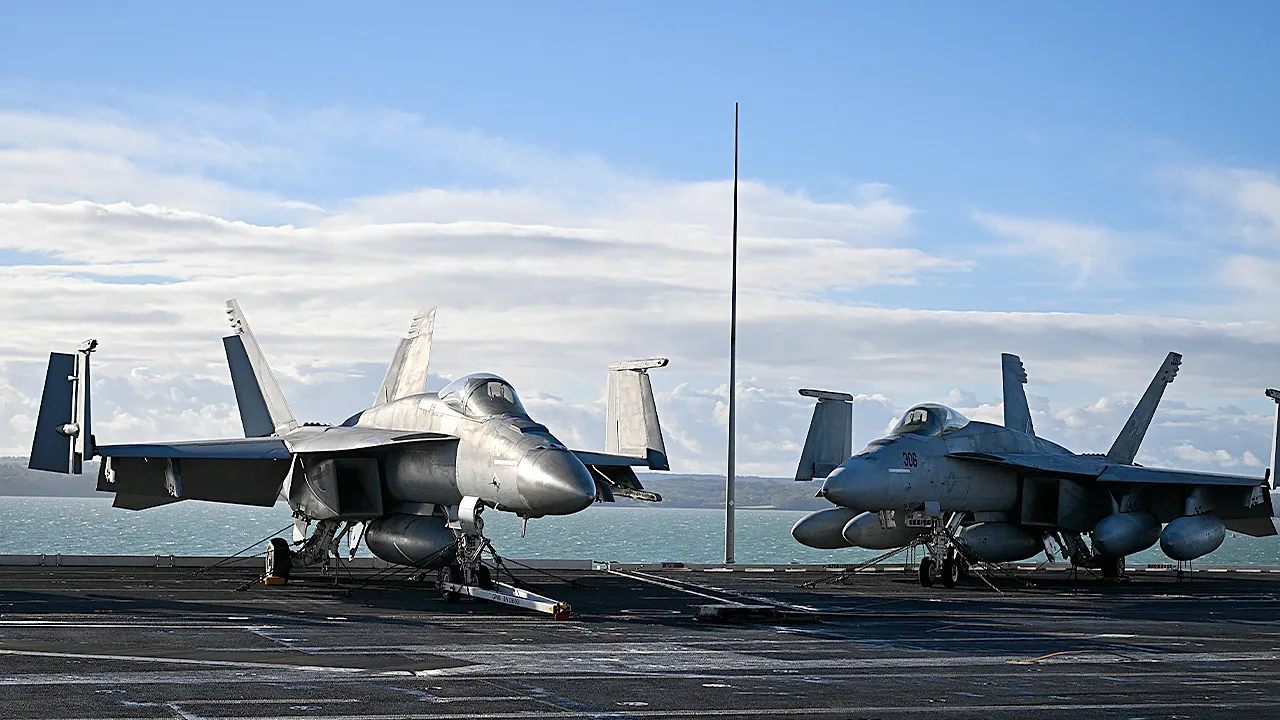
In a significant escalation of military presence near Venezuela, the United States deployed two F/A-18 fighter jets over the Gulf of Venezuela on Tuesday. This 30-minute flight, tracked on Flightradar24, represents what appears to be the closest approach of U.S. military aircraft to Venezuelan airspace to date. A U.S. defense official, speaking anonymously, characterized the mission as “routine training” intended to demonstrate operational capabilities, while emphasizing that the jets remained in international airspace throughout their flight. Though the official declined to confirm whether the aircraft were armed, the proximity of these advanced fighters to Venezuelan territory sends a clear message in what has become an increasingly tense regional standoff.
This latest demonstration follows months of escalating U.S. military activities near Venezuela’s borders, though with a notable difference in proximity. While the U.S. has previously deployed strategic bombers like the B-52 Stratofortress and B-1 Lancer along Venezuela’s coastline, Tuesday’s F/A-18 deployment brought American military assets considerably closer to Venezuelan sovereign territory. The pattern of increased military presence began several months ago when U.S. forces initiated strikes against vessels allegedly involved in drug trafficking operations in both the Caribbean Sea and eastern Pacific. The first reported U.S. military strike targeting a vessel purportedly departing from Venezuela with illicit drugs occurred in September, marking a significant shift in American operational tactics in the region.
The Trump administration has consistently framed these operations as essential components of its broader strategy to combat drug trafficking networks operating in the region. Venezuelan President Nicolás Maduro, however, vehemently denies these allegations, seeing them instead as part of a coordinated campaign of pressure against his government. Tensions reached a new height in November when President Trump instructed commercial airlines to treat Venezuelan airspace as effectively closed, aligning with Federal Aviation Administration warnings to civilian carriers. This move further isolated Venezuela’s aviation sector while signaling the administration’s willingness to take increasingly aggressive stances toward what it perceives as security threats emanating from the South American nation.
Military experts provide sobering assessments of what a potential conflict might look like. Retired Rear Admiral Mark Montgomery, now senior director at the Foundation for Defense of Democracies’ Center on Cyber and Technology Innovation, told Fox News Digital that Venezuela’s primary military capabilities consist of fighter jets, limited naval assets, and Russian-manufactured surface-to-air missile systems. Despite these resources, Montgomery suggested that U.S. forces could neutralize Venezuela’s air and maritime defenses within “the first day or two of a campaign plan.” This assessment highlights the stark military imbalance between the nations, despite Venezuela’s significant investments in defense equipment from allies like Russia and China over the past two decades.
The condition of Venezuela’s military infrastructure appears less formidable than official presentations might suggest. Isaias Medina, who served as a Venezuelan diplomat before breaking with the Maduro government, noted that the country’s military capabilities are considerably weaker in reality than they appear on paper. This assessment aligns with reports from military analysts who point to maintenance challenges, parts shortages, and training deficiencies that have plagued Venezuela’s armed forces in recent years. These limitations stand in stark contrast to the sophisticated and well-maintained assets of the U.S. military, which maintains overwhelming technological and logistical advantages in any potential confrontation.
Meanwhile, the deployment has sparked concern in Washington, where some senators have vowed to push legislation that would prohibit U.S. military action against Venezuela should the Trump administration pursue such a course. This political pushback reflects broader debates about the appropriate use of American military power and concerns about potential overreach in the region. As fighter jets continue their patrols and naval assets monitor shipping routes, both nations appear locked in a tense standoff with unpredictable outcomes. For citizens of Venezuela, already struggling with profound economic and humanitarian challenges, the sound of jet engines overhead represents yet another layer of uncertainty in their country’s troubled relationship with the United States – a relationship that seems increasingly defined by military posturing rather than diplomatic engagement.