

Finding Love Beyond Limitations: How Dateability is Changing the Dating Game for the Disabled Community
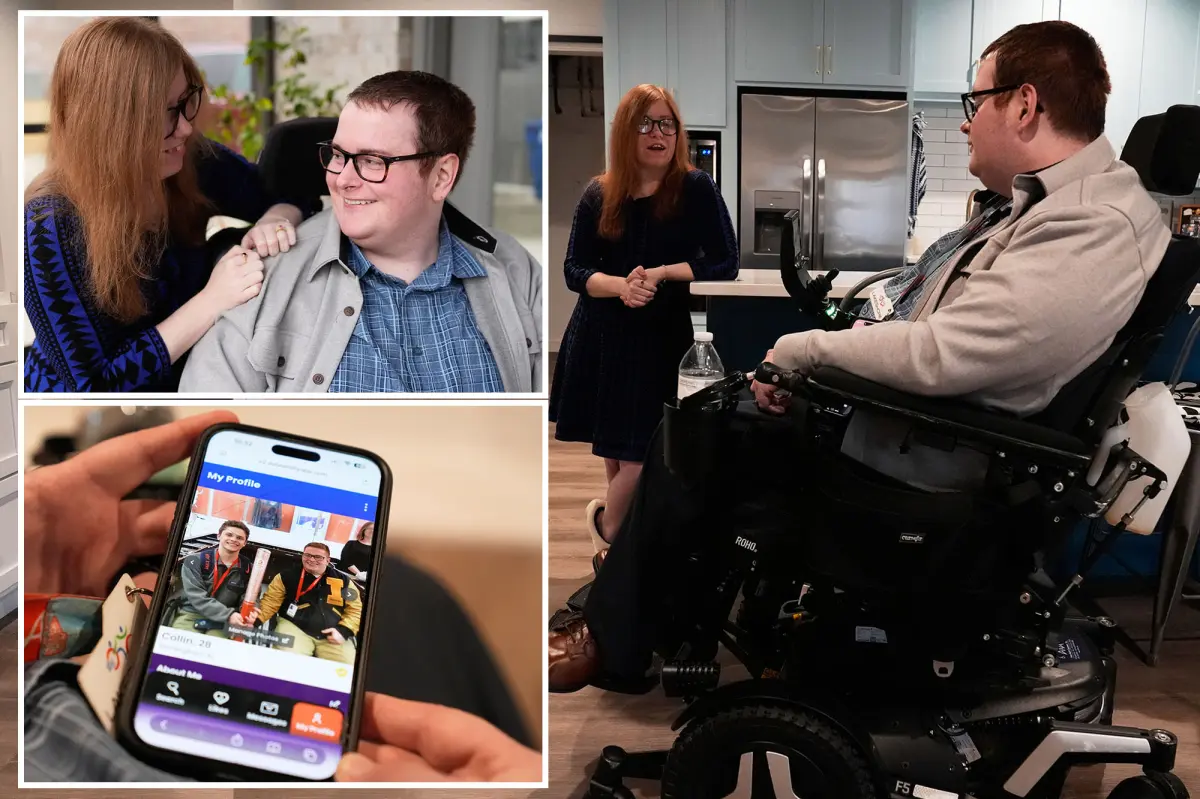
In the vibrant tourist town of Branson, Missouri, 23-year-old Kaci LaFon faced a challenge that went beyond the typical dating frustrations of young adults. As someone living with Ehlers-Danlos syndrome and other chronic health conditions, traditional dating apps left her feeling defeated after five years of attempts that inevitably “petered out.” The problem wasn’t a lack of matches but rather how those matches responded to her health challenges—either completely unprepared to navigate her needs or, worse, treating her like an invalid they needed to rescue. “I tried and I failed,” Kaci reflected, feeling that her chronic illness had become an insurmountable barrier to finding genuine connection. Then came a turning point: her mother discovered Dateability, an app specifically designed for people with disabilities and chronic illnesses. This discovery led Kaci to Collin LaFon, who lives with cerebral palsy and understood her struggles intimately. After years of disappointment, both found in each other what mainstream dating had failed to offer—understanding, acceptance, and love without conditions. Their September wedding marked the beginning of a partnership built on mutual understanding of what Collin describes as “that extra piece that goes along with everything” when navigating life and love with a disability.
This exact scenario inspired Denver sisters Jacqueline and Alexa Child to create Dateability three years ago. Jacqueline, now 31, lives with multiple severe health conditions including Ehlers-Danlos, Lupus, and rheumatoid arthritis, requiring a feeding tube to stay alive. Her experiences with traditional dating apps had been consistently demoralizing: “Any mention of disability was completely negative. They wouldn’t even give it a chance, had no idea what my life looked like, but they just assumed it would be miserable.” The rejection and ghosting she experienced motivated the sisters to build something better—an inclusive platform where disabled individuals could connect without the immediate prejudice and misconceptions that plagued mainstream dating scenes. Their vision resonated powerfully within the disabled community; from 1,000 users in their first month, they’ve expanded to approximately 40,000 registered users across the United States, Canada, Mexico, and the UK. The platform offers both free and premium options, with the latter providing enhanced features like seeing all profiles that have expressed interest at once. Importantly, Dateability also welcomes non-disabled users who have genuine connections to the disability community, whether through loved ones or advocacy work, while screening against those who might fetishize disability.
The app has created life-changing connections for users like Sophie Brisker, a 23-year-old from Pikesville, Maryland. Sophie developed debilitating chronic fatigue syndrome and other long-term conditions just before her 18th birthday, leaving her housebound for months at a time and reliant on a wheelchair for longer distances. When she joined Dateability in 2022, she was primarily seeking companionship, uncertain whether a romantic relationship would be feasible given her limitations. “It’s really exhausting trying to explain to someone all of your limitations and the illnesses you have,” she explained, highlighting the emotional labor often required of disabled people in dating scenarios. Through the app, Sophie connected with a partner who suffers from long COVID-19 and other chronic illnesses. Their shared experiences created an immediate understanding that transcended what most relationships offer: “We hit it off on everything. We understood each other in ways that other people just couldn’t.” Now planning to move together to Louisville, Kentucky, their story exemplifies how Dateability facilitates connections based on genuine compatibility and mutual understanding rather than despite disabilities.
The need for specialized dating platforms becomes clearer when considering the scope of disability in America. According to the Centers for Disease Control and Prevention, over 70 million US adults—approximately one in four—reported having a disability in 2022, the same year Dateability launched. This substantial demographic has historically been underserved in dating spaces, facing not just stigma and misconceptions about their abilities, but also practical barriers. Many social venues aren’t fully accessible, whether due to physical limitations like missing ramps, or sensory challenges like poor lighting or excessive noise. Even online, many dating platforms lack essential accessibility features such as sign language support or compatibility with screen readers for visually impaired users. These obstacles, combined with the emotional burden of disclosing personal needs and accommodations, have led many disabled individuals to abandon dating entirely or never attempt it in the first place. Dateability addresses these challenges by creating a space where disability isn’t something to explain, justify, or overcome, but simply one aspect of users’ identities in a community that understands.
Matthew Shapiro, a 34-year-old disability advocate from Richmond, Virginia who was born with cerebral palsy and uses a power chair, found that mainstream dating apps often harbored individuals with questionable intentions. “I was looking for a space where it felt like community,” he explained. His dating history included relationships with both disabled and non-disabled partners, including one where his partner questioned her ability to manage his personal care needs. Through Dateability, Matthew connected with an older mother of two who was born without fingers on her left hand. Though their romantic relationship eventually transitioned to friendship, it provided Matthew with an unprecedented experience: “It was the first time I ever felt fully seen and accepted and sort of loved in a relationship.” His experience highlights how specialized platforms like Dateability eliminate the uncertainty of acceptance that accompanies traditional dating for disabled individuals. Instead of hoping potential matches will be “cool with who you are,” as Matthew puts it, on Dateability, “it’s all right there,” creating a foundation of transparency and acceptance from the outset.
The impact of Dateability extends beyond just creating romantic connections—it’s helping change the narrative around disability and relationships. For many disabled individuals, the app represents an affirmation that they deserve love without qualification or hesitation. As Matthew Shapiro poignantly states, “People with disabilities deserve love and deserve relationships, just like anyone else. Love without worry. Love without hesitation and question.” This sentiment reflects the broader significance of platforms like Dateability in challenging societal assumptions about disabled lives and relationships. By facilitating connections between people who understand each other’s realities—whether both are disabled or one is an ally with genuine understanding—the app is helping to normalize disability within the context of dating and relationships. The success stories emerging from the platform, from Kaci and Collin LaFon’s marriage to Sophie Brisker’s plans for cohabitation, demonstrate that meaningful, fulfilling relationships are entirely possible when barriers to connection are removed. In doing so, Dateability isn’t just helping individuals find partners—it’s contributing to a more inclusive understanding of love, relationships, and human connection that recognizes and celebrates the full spectrum of human experience, including disability.