


Syria’s Dramatic Transformation: One Year After Assad’s Fall
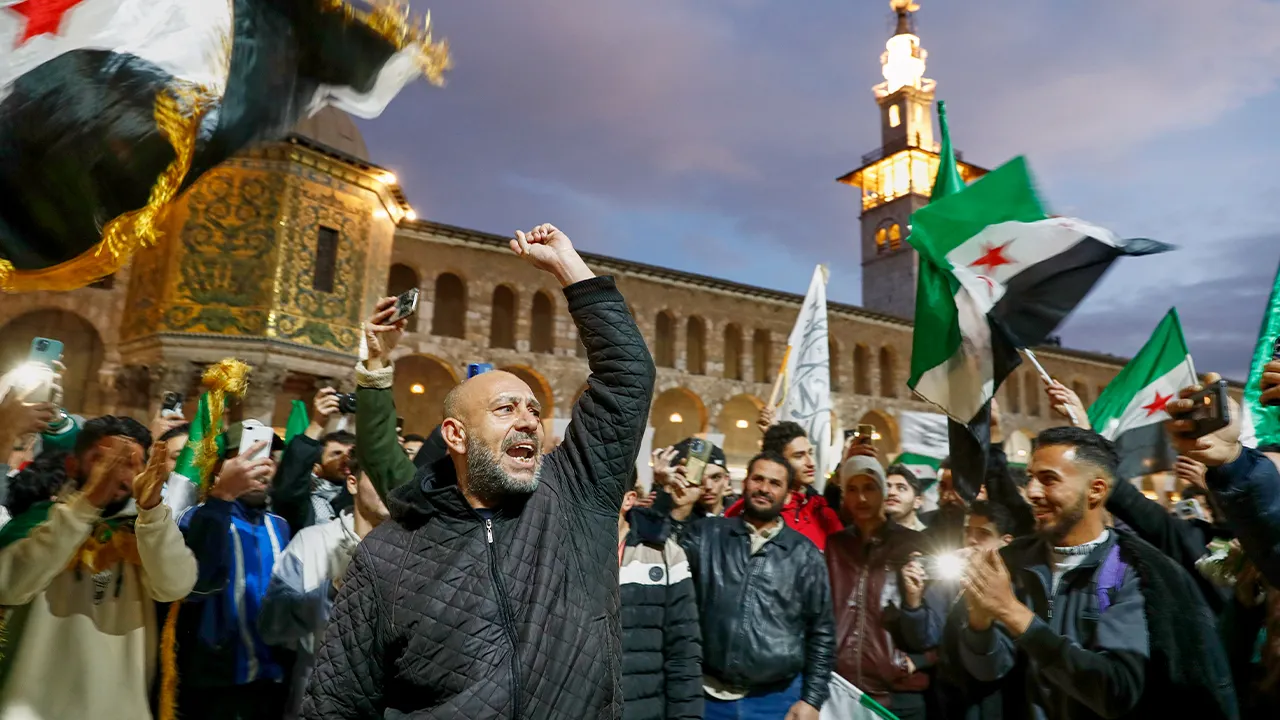
In a remarkable turn of events that has reshaped Middle Eastern politics, tens of thousands of Syrians flooded Damascus streets to commemorate the first anniversary of the Assad regime’s collapse. The celebrations marked exactly one year since Bashar al-Assad fled the capital as rebel forces swept through Syria in a lightning offensive, ending five decades of Assad family rule. This historic transition has initiated a wave of transformative changes across Syria’s political landscape, culminating in unprecedented diplomatic breakthroughs with the United States, including interim President Ahmed al-Sharaa’s historic White House visits with President Donald Trump.
The anniversary coincides with another significant development: the imminent rollback of the Caesar Syria Civilian Protection Act, America’s most restrictive sanctions on Syria since 2019. The full repeal is now written into the 2026 National Defense Authorization Act, scheduled for a House vote this week. “Every Syrian is celebrating liberation and now celebrating the removal of the Caesar Act,” explained Mouaz Moustafa, executive director of the Syrian Emergency Task Force and an original drafter of the sanctions bill. He described the sanctions relief as “the greatest gift that the Syrian people could have gotten” on this first liberation anniversary, noting that the Caesar Act had been “shattering Syria’s economy and Syria’s future, even if everything else went well.” This economic relief represents a crucial step toward rebuilding the nation’s devastated infrastructure and economy.
Syria now confronts the monumental task of national reconstruction while seeking justice for the estimated 170,000 people who remain forcibly disappeared between March 2011 and August 2025, according to the Syrian Network for Human Rights. The overwhelming majority of these disappearances occurred in former Assad regime detention centers. The country has also experienced concerning outbreaks of sectarian violence this year, particularly in Sweida, where clashes erupted between Druze militias, Sunni Bedouin tribes, and Syrian government forces. Despite these challenges, former U.S. Ambassador to Syria Robert Ford observed promising developments in accountability, noting that “President Ahmed al-Sharaa has put on trial, publicly, on live television in Syria, more than a dozen security force members who are charged with violating human rights, such as extrajudicial killing and illegal detention and torture.” Ford remarked that convictions would be “remarkable… all the more remarkable under the presidency of a man who used to be in al Qaeda.”
The international rehabilitation of al-Sharaa—formerly known by his nom de guerre Abu Mohammed al-Jolani and once a leader of the Islamist group Hayat Tahrir al-Sham—represents one of the most surprising elements of Syria’s transformation. In July, the U.S. State Department formally revoked the foreign terrorist organization designation of Hayat Tahrir al-Sham, reflecting the administration’s shifting approach to Syria’s new leadership. President Trump has met with al-Sharaa three times since returning to the White House and has offered praise despite the Syrian leader’s controversial past. Trump has also urged Israel to maintain a “strong and true dialogue” with Damascus amid Israeli ground incursions into southern Syria, stating, “We are doing everything within our power to make sure the Government of Syria continues to do what was intended, which is substantial, in order to build a true and prosperous Country.”
The regional implications of Syria’s political transformation extend beyond its borders, affecting dynamics with Russia, Iran, and Israel. Al-Sharaa called on the Russian government earlier this year to hand over Assad—who was granted asylum in Moscow—to face justice for atrocities committed during his rule. This request highlights the complicated relationship between Syria’s new government and its former patrons. Meanwhile, Rep. Joe Wilson, a member of the House Foreign Affairs Committee and longtime advocate for the Syrian people, described the past year’s developments as “incredible,” noting that “Syria has transformed from a Putin puppet and Iranian regime ally to a partner of the United States, joining the coalition against ISIS and removing Hezbollah, al-Qaeda, and ISIS.” Wilson credited Ambassador Tom Barrack and President Trump for seizing “an historic opportunity by supporting the efforts of President al-Sharaa and lifting crippling sanctions on Syria.”
The road ahead for Syria remains challenging, with sectarian tensions, economic reconstruction, and justice for victims of human rights abuses representing just some of the obstacles the new government must navigate. Wilson acknowledged that “there is progress to be made,” but argued that “absent these bold and visionary actions to give Syria a chance, the country would descend into factionalized chaos to be exploited by terrorists.” He emphasized Syria’s “rich, multi-ethnic, and religiously pluralistic history,” contrasting it with “over half a century under sadistic socialist Assad.” As Syria marks this first year of dramatic change, its future hangs in the balance—a testament to both the possibilities and perils of rapid political transformation in one of the Middle East’s most complex nations.