




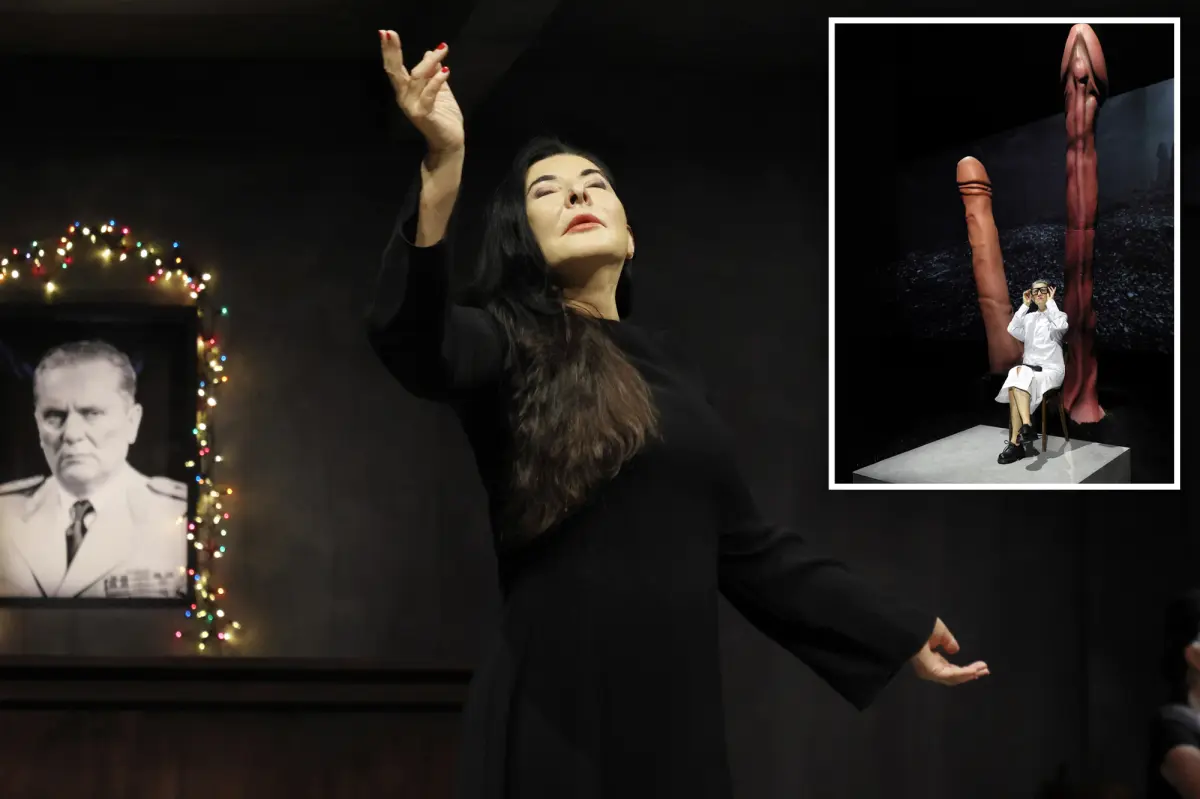
Art Controversy Erupts at Park Avenue Armory Over Abramović’s Explicit Performance
The Park Avenue Armory, a historic military building on Manhattan’s Upper East Side, finds itself at the center of a heated debate over artistic expression, community values, and potential conflicts of interest. The upcoming US debut of performance artist Marina Abramović’s “Balkan Erotic Epic” has ignited controversy, especially as the Armory continues its efforts to evict a century-old youth cadet program from the premises. This tension highlights broader questions about the purpose of public spaces, the boundaries of artistic freedom, and the allocation of public funding for cultural institutions.
The planned four-hour performance, scheduled for December 2026 with tickets already on sale for $85, features explicit sexual content that has drawn both praise and harsh criticism. According to descriptions from its UK premiere, the show depicts what Abramović describes as Balkan nude fertility rituals, including scenes of men “humping the ground,” women exposing their vulvas to “make the rain stop,” and other graphic sexual imagery featuring 12-foot penises and actors engaged in various explicit acts. The Telegraph’s chief art critic Alastair Sooke dismissed the work as “a vainglorious, vacuous piece of schlock, riddled with soft-porn cliches,” while Armory CEO Rebecca Robertson defended it, stating, “Balkan Erotic Epic makes you rethink taboos about how the body should work.”
This artistic controversy is complicated by Abramović’s position on the Armory’s board of directors since 2012, raising concerns about potential conflicts of interest. Critics like local resident Jay Stallard question whether such programming aligns with the institution’s community service obligations, stating, “I guess erotic art has its place, but what are they going to do… bring poor kids from schools and let them enjoy this sort of performance?” The Armory has declined to disclose whether Abramović is receiving payment for her performance, further fueling accusations of impropriety. Financial records indicate the institution has received nearly $20 million in public funding since 2020 while experiencing significant operational losses, with $30.4 million spent on productions in 2023 yielding only $11.4 million in returns.
The timing of Abramović’s controversial show is particularly notable as the Armory continues legal efforts to evict the Knickerbocker Greys, a 150-year-old youth cadet program that has used a small room in the building for over a century. This action persists despite legislation signed by Governor Hochul last year specifically protecting the program. The contrast between the Armory’s apparent eagerness to showcase explicit adult content while simultaneously trying to remove a historic youth program has struck many observers as revealing about the institution’s priorities. Critics suggest the Armory operates more as a “private country club” than a community resource, despite its receipt of substantial public funding.
Abramović herself is no stranger to controversy throughout her long career as the self-described “grandmother of performance art.” The Serbian-born artist, now 78, first gained notoriety in 1974 with a performance piece in Naples where she allowed audience members to do whatever they wanted to her for six hours—resulting in her clothes being cut off, sexual abuse, and even having her neck cut as she remained motionless. More recently, she faced scrutiny in 2017 when The Post investigated questions surrounding $2.2 million in donations collected for an upstate art center that never materialized. She also became unwittingly embroiled in conspiracy theories during the 2016 presidential campaign when WikiLeaks published emails referencing her “Spirit Cooking” performance, leading to unfounded accusations of satanic practices that she firmly denied.
The Abramović controversy at the Park Avenue Armory represents more than just a disagreement over artistic content—it reflects broader tensions about the role of public institutions, accountability for public funds, and the balance between artistic freedom and community standards. As the debate continues, stakeholders from all sides are questioning what purpose the historic Armory should serve in contemporary society, who benefits from its programming, and who has access to its spaces. The institution now faces the challenge of justifying its artistic choices while addressing concerns about governance, financial management, and its relationship with the community it ostensibly serves. Whether the controversy results in meaningful changes or simply fades as another chapter in New York’s cultural battles remains to be seen.