



Florida’s Controversial Black Bear Hunt: A Balancing Act Between Conservation and Criticism
After a decade-long hiatus, Florida has reintroduced its black bear hunt, drawing both enthusiastic hunters and passionate opponents into a complex conservation debate. Starting December 6, 2025, a select group of 172 permit holders will venture into Florida’s swamps and flatwoods armed with rifles and crossbows for the state’s first bear hunt since 2015. This limited hunt represents a dramatic shift from the previous approach, reflecting lessons learned from past mistakes and highlighting the ongoing tension between wildlife management and animal protection advocacy. The story of Florida’s black bear hunt touches on fundamental questions about conservation success, human-wildlife conflict, and the ethical dimensions of population control in an era of shrinking wilderness.
Florida’s black bears have made a remarkable recovery over the past few decades, growing from just a few hundred in the 1970s to more than 4,000 today—a conservation achievement the state proudly celebrates. This population rebound has prompted the Florida Fish and Wildlife Conservation Commission to implement what they describe as a carefully regulated hunt. Unlike the 2015 hunt, which issued over 3,700 permits to anyone willing to pay, this year’s approach used a random lottery to award just 172 permits, each allowing the harvest of one bear within specific hunting zones. Each zone has its own quota based on the local bear population, with resident hunters paying $100 for permits and non-residents $300. The structure reflects wildlife officials’ attempt to balance conservation with management, though this hasn’t quieted fierce opposition from environmental and animal rights groups who view the hunt as unnecessary and cruel.
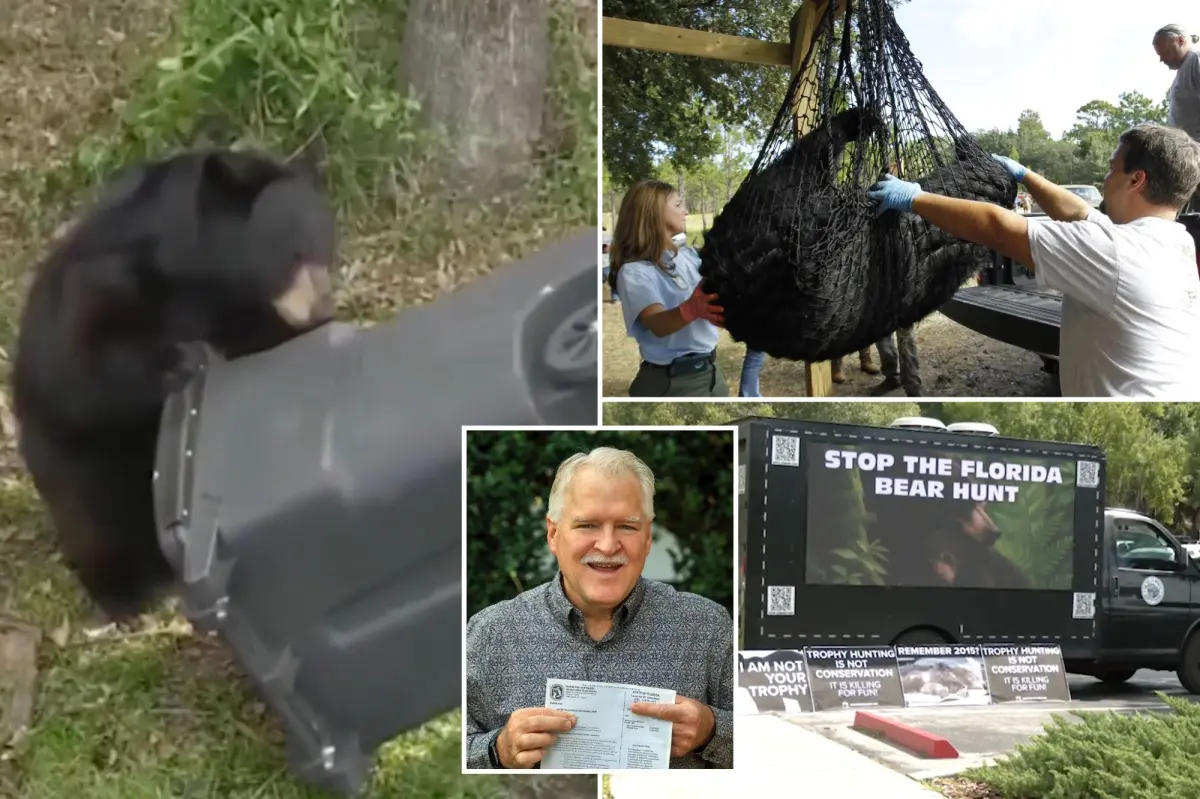
What makes this hunt particularly unusual is the success of opponents in securing about a quarter of the available permits—with no intention of using them. Organizations like the Sierra Club encouraged critics to apply for permits specifically to reduce the number of bears killed, effectively turning the state’s own system into a form of protest. “Somewhere out there a bear will be walking the grounds of the Panhandle, and I gave them a stay of execution,” said Joel Cleveland, an opponent who secured one of these permits. This creative approach to opposition highlights the passionate divide among Floridians about the hunt, which proceeded despite legal challenges that failed to convince courts to halt the season. The permit strategy represents a new frontier in conservation activism, using the regulatory framework itself as a mechanism for protection.
State wildlife officials defend the hunt as a necessary management tool for a thriving bear population that they claim could eventually outgrow available habitat. The commission’s published bear hunting guide states: “While we have enough suitable bear habitat to support our current bear population levels, if the four largest subpopulations continue to grow at current rates, we will not have enough habitat at some point in the future.” Supporters like Mark Barton of Backcountry Hunters and Anglers argue that regulated hunting provides sustainable funding for bear conservation through permit fees while helping maintain healthy population levels. This perspective frames hunting as an integral part of wildlife management rather than a contradiction to conservation goals—a view many wildlife biologists support but that remains controversial among the broader public.
The memory of the problematic 2015 hunt looms large over this year’s season. That hunt was shut down after just two days when hunters killed 304 bears—including at least 38 mother bears with cubs, potentially leaving orphaned young to die. Officials hadn’t anticipated the efficiency of modern hunters using advanced techniques and technology, leading to a rapid approach toward quotas that forced early closure. Doug Moore, a local hunting club president who manages over 6,000 acres of timberland in northeast Florida, described the 2015 hunt management as “fouled up” and “totally wrong,” while expressing support for the stricter regulations now in place. The 2025 hunt’s more limited approach reflects lessons learned from this earlier experience, though critics question whether any number of bears should be killed for sport.
Human-bear conflicts sit at the heart of the debate, with both sides offering different solutions to the same problem. Hunt supporters point to increasing reports of bears on porches, rummaging through garbage cans, and appearing in neighborhoods and playgrounds as justification for population control. They argue that public safety concerns merit active management of bear numbers through regulated hunting. Opponents counter that the real issue isn’t too many bears but poor human behavior and inadequate trash management that attracts bears to populated areas. These activists advocate for non-lethal approaches like bear-proof garbage containers, education campaigns, and habitat preservation rather than hunting. The fundamental disagreement centers on whether bears should adapt to human expansion or humans should adapt their behavior to coexist with wildlife—a question that extends far beyond Florida’s bear population to broader issues of conservation ethics in an increasingly developed world.
Florida’s bear hunt represents a microcosm of the challenges facing wildlife management across America: balancing successful species recovery with human tolerance, finding sustainable funding for conservation, and determining the appropriate role of hunting in modern wildlife stewardship. As hunters and bear advocates alike prepare for December’s hunt, the outcome will likely influence wildlife policy well beyond Florida’s borders, offering lessons about conservation in landscapes increasingly dominated by human development.