


Trump Champions “Football” Over “Soccer” at World Cup 2026 Drawing
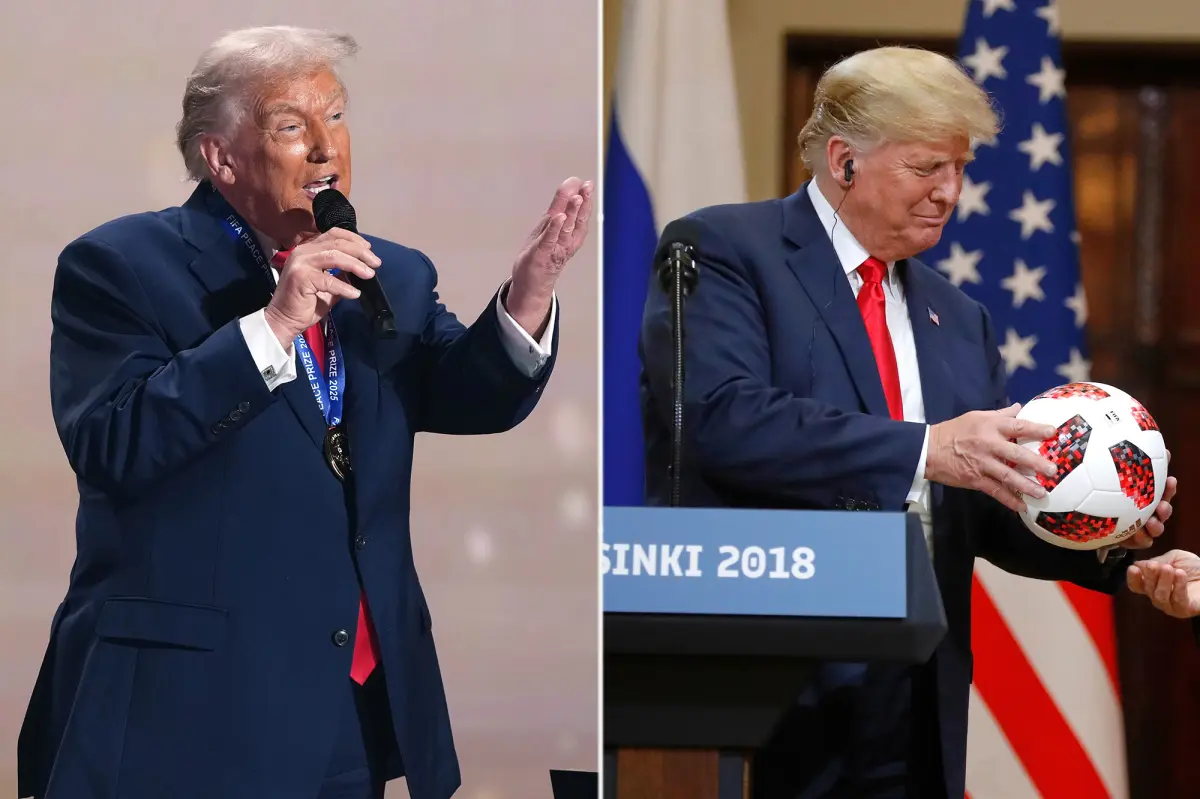
In a surprising moment at the World Cup 2026 drawing held at Washington’s Kennedy Center, former President Donald Trump made a bold declaration in the eternal soccer versus football naming debate. As the inaugural recipient of FIFA’s Peace Prize, Trump used his platform to advocate for changing how Americans refer to the world’s most popular sport. “When you look at what has happened to football in the United States, [or] ‘soccer’ in the United States, we seem to never call it that because we have a little bit of a conflict with another thing that’s called ‘football,'” Trump remarked during an on-stage conversation before the drawing. He continued his thought-provoking stance: “But when you think about it, shouldn’t it really be called, I mean, this is football, there’s no question about that. We have to come up with another name for the NFL stuff. It really doesn’t make sense, when you think about it, it isn’t really football.” His comments drew enthusiastic applause from the audience, with FIFA president Gianni Infantino, a longtime Trump ally, encouraging the positive reception.
The debate over whether to call the sport “soccer” or “football” has raged for generations, with many people incorrectly assuming that America arbitrarily created the term “soccer” to distinguish it from American football. However, research by Stefan Szymanski, a sports management professor at the University of Michigan, reveals a more nuanced history. In his 2014 work, “It’s Football, Not Soccer (And Vice Versa): On the History, Emotion, and Ideology Behind One of the Internet’s Most Ferocious Debates,” Szymanski traces the origins back to England itself. His research shows that in the early 19th century, variations of football and rugby existed somewhat interchangeably in England, with loose rules that varied between groups. This changed significantly in 1863 with the founding of the Football Association, which established the first formal rules for the sport now globally known as football or soccer. The Rugby Football Union followed suit in 1871, officially creating a distinction between the two sports.
What’s particularly fascinating about the terminology debate is that the word “soccer” wasn’t an American invention but rather originated among British elite students. As Szymanski explains, young men at prestigious universities like Oxford and Cambridge developed a linguistic trend of adding “er” to the ends of words as a form of slang. Rugby football became “rugger,” and Association Football transformed into “soccer” (derived from “Association”). This distinction helped clarify which version of football people were discussing. A letter published in The New York Times in 1905 confirmed this origin: “It was a fad at Oxford and Cambridge to use ‘er’ at the end of many words, such as foot-er, sport-er, and as Association did not take an ‘er’ easily, it was, and is, sometimes spoken of as Soccer.” Far from being an American corruption of the beautiful game’s name, “soccer” was born in the very country that now most vehemently rejects the term.
The worldwide usage of the term “soccer” expanded significantly during wartime periods when American soldiers were stationed throughout Europe, increasing cultural exchange and linguistic cross-pollination. However, the acceptance of the term “soccer” in England fluctuated based on the political relationship between the United States and the United Kingdom. The 1970s, considered a low point in US-UK relations due to America’s growing isolationism and Britain’s declining global influence, marked a turning point in how the British perceived the word. According to Szymanski, this period saw the beginning of British resistance to the term “soccer,” despite its British origins. “The penetration of the game into American culture has led to backlash against the use of the word in Britain, where it was once considered an innocuous alternative to the word ‘football,'” Szymanski writes. This shift demonstrates how language can become politicized and tied to national identity and cultural sovereignty.
Today, “soccer” remains the common term in several English-speaking countries, particularly those that have their own distinct sports already named “football.” The United States, Canada, and Australia all use “soccer” to refer to the sport that most of the world calls football. This isn’t merely linguistic stubbornness but practical disambiguation, as each nation has a different sport that claims the name “football.” American football, which played its first official game in 1892 according to the Pro Football Hall of Fame, has deep cultural roots in the United States. Similarly, Australia has Australian Rules Football, and Canada has Canadian football. While Trump’s suggestion to rename American football might seem radical to many sports fans, it highlights the ongoing tension between global sporting culture and national sporting traditions. His comments at the World Cup 2026 drawing have reignited a debate that, like the sports themselves, shows no signs of reaching a final whistle.
As the United States prepares to co-host the 2026 World Cup alongside Canada and Mexico, questions of terminology may seem trivial compared to the international goodwill and economic impact the tournament will bring. Yet, these linguistic debates reflect deeper questions about cultural identity, globalization, and the unique position of sports as both unifying forces and markers of national distinction. Whether Americans will ever widely adopt “football” over “soccer” remains to be seen, but as the world’s game continues to grow in popularity across the United States, the conversation about what to call it will likely continue evolving alongside the sport itself.