


Somalia: Beyond the Headlines
In the heart of the Horn of Africa lies Somalia, a nation whose complex reality extends far beyond the alarming headlines that often define it to the outside world. While it continues to grapple with terrorism, clan conflicts, and corruption, Somalia’s story is also one of resilience, gradual progress, and a population determined to build a better future despite overwhelming obstacles.
Somalia remains one of the most challenging security environments globally, with Islamic State and al-Qaeda affiliates—primarily al-Shabab—continuing to threaten civilian safety. Human Rights Watch reports hundreds killed in 2024 alone, either by jihadist attacks or in conflicts between the country’s clans. Al-Shabab maintains significant control over territory in southern and central regions, where they impose harsh interpretations of Sharia law, forcibly collect “taxes,” and recruit young men. Bill Roggio of the Foundation for Defense of Democracies notes that the terrorist group likely controls more ground than the estimated 25% reported in 2019, subjecting civilians to their brutal governance. The Trump administration has recently intensified military action against these groups, with U.S. Africa Command dramatically increasing airstrikes compared to operations under President Biden—including significant operations in late November targeting both ISIS-Somalia in the Puntland region and al-Shabab forces near Kismayo in the south.
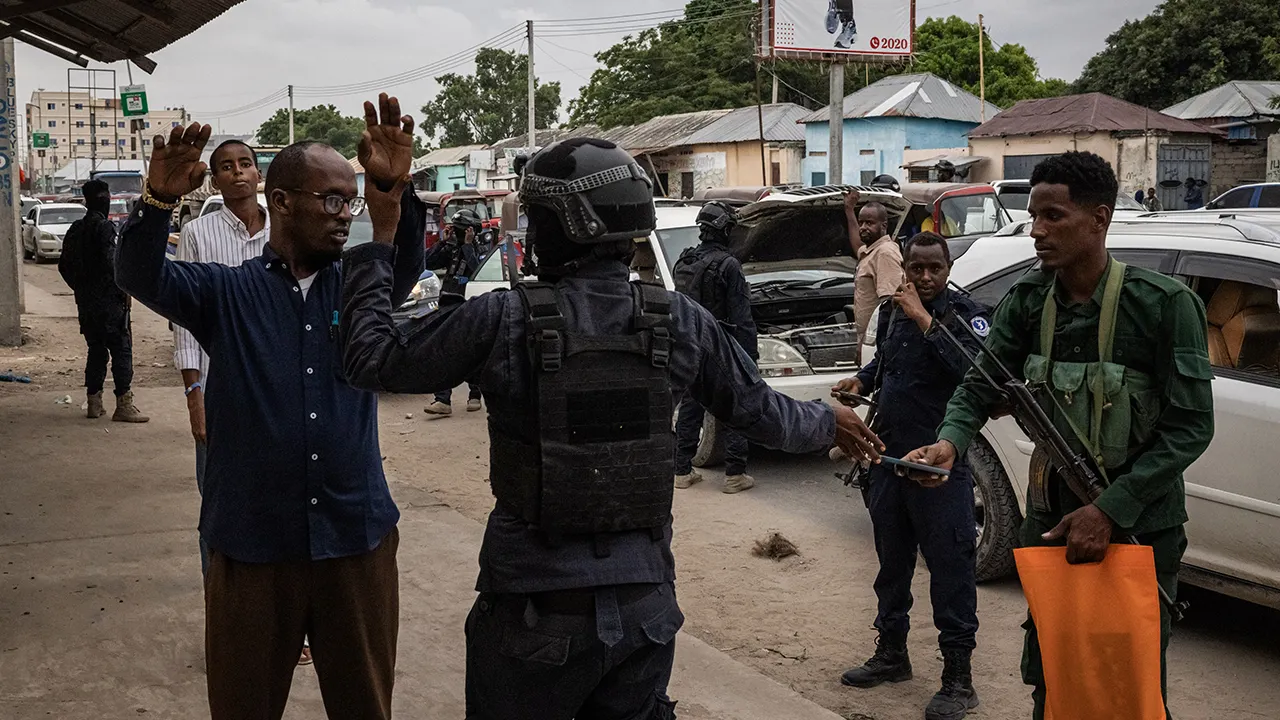
On the ground, however, the reality is nuanced and varies dramatically by location. “In Somalia, it all depends on where you are,” explains Mogadishu resident Samatar Talliye. “The country is big, and the experiences are very different.” In the capital, a cautious normalcy has emerged, with another resident, Abdisamad Artan Ahmed, describing Somalia as “currently one of the safest countries in East Africa.” The urban centers, particularly Mogadishu, showcase signs of revival—business development, property investment, and construction projects. Yet this progress exists alongside persistent danger; Human Rights Watch documented an al-Shabab attack on a beach restaurant in August 2023 that killed 37 civilians and injured over 200. The security situation remains highly geographic, with Anna Mahjar-Barducci from the Middle East Media Research Institute noting that “progress is uneven: rural and southern regions face ongoing al-Shabab threats.” Government control is strongest in Puntland and Somaliland regions but remains tenuous in Jubaland, South West State, Hirshabbele, and Galmadug, where state governments typically only secure major towns.
The economic stranglehold of al-Shabab represents one of Somalia’s most insidious challenges. The group’s financial reach extends into virtually every corner of Somali society, with the European Union’s Agency for Asylum reporting that al-Shabab’s overall financial income for 2023 exceeded $150 million. This revenue comes from a sophisticated extortion network that includes checkpoints, forced charitable contributions, business taxation, import fees at ports, kidnappings, agricultural taxes, vehicle registration fees, operating licenses, and various business ventures. The inescapable nature of this system means that nearly everyone operating in Somalia inadvertently contributes to terrorist funding. Former State Department counterterrorism analyst Tricia Bacon explains this reality starkly: “Nobody has to ‘mean’ to fund al-Shabab, but that’s sort of the cost of doing business in Somalia, because the government has been so ineffective at protecting people from al-Shabab’s extortion that you don’t really have a choice of whether or not to pay.”
The current challenges in Somalia have deep historical roots tracing back to the civil war that erupted in 1991, plunging the nation into decades of instability. Fox News correspondent Eric Shawn, who was in Mogadishu in 1992, describes a country that had “devolved into anarchy and total uncertainty” where “there was gunfire and rocket-propelled grenades being launched every night.” The collapse of central authority created a vacuum filled by warlords, resulting in mass starvation and barbaric living conditions. “The result was a horrific spectacle of a human catastrophe that was man-made and totally unnecessary and so unfortunate for the innocent civilians who had to endure a hardship that was beyond comprehension,” Shawn recalls. While conditions have improved in some areas, the legacy of this collapse continues to haunt Somalia’s institutions, with Talliye acknowledging that “government corruption is visible and painful, but people are used to complete chaos.”
For ordinary Somalis, the concept of freedom has profound meaning after decades of conflict and insecurity. Mahjar-Barducci describes it as “living without fear—being able to move freely, work safely, and care for their families. It includes safety from checkpoints and clan tensions, speaking openly, running a business without intimidation and sending children to school without worry.” Western audiences often miss the complexity of Somalia, viewing it simplistically as a failed state while overlooking the remarkable resilience of its people, strong community networks, and gradual improvements occurring despite overwhelming challenges. Despite the terror that al-Shabab continues to inspire, many Somalis maintain hope for political transformation and accountability. As Talliye explains, “People are scared of al-Shabab, and the hope is the long and painful journey towards one man, one vote. People only believe things will change when politicians are held responsible by the people.” This vision of democratic accountability represents both the ongoing struggle and enduring aspiration of a nation working to redefine itself beyond terrorism and conflict—a nuanced reality that deserves recognition alongside the more familiar narratives of danger and instability.