



Europe’s Changing Travel Landscape: New Rules, Rising Costs, and Shifting Tourism in 2025
Europe has undergone significant travel transformations throughout 2025, as destinations across the continent attempt to balance tourism with residents’ quality of life. The introduction of tighter border controls, higher costs, and stricter behavioral expectations has created a new reality for travelers. These changes reflect a broader shift in how European destinations are managing tourism—moving away from mass travel and toward what officials call “quality tourism” that prioritizes sustainability and local interests. For visitors planning European adventures, understanding these evolving regulations has become as essential as packing the right clothes or booking accommodations.
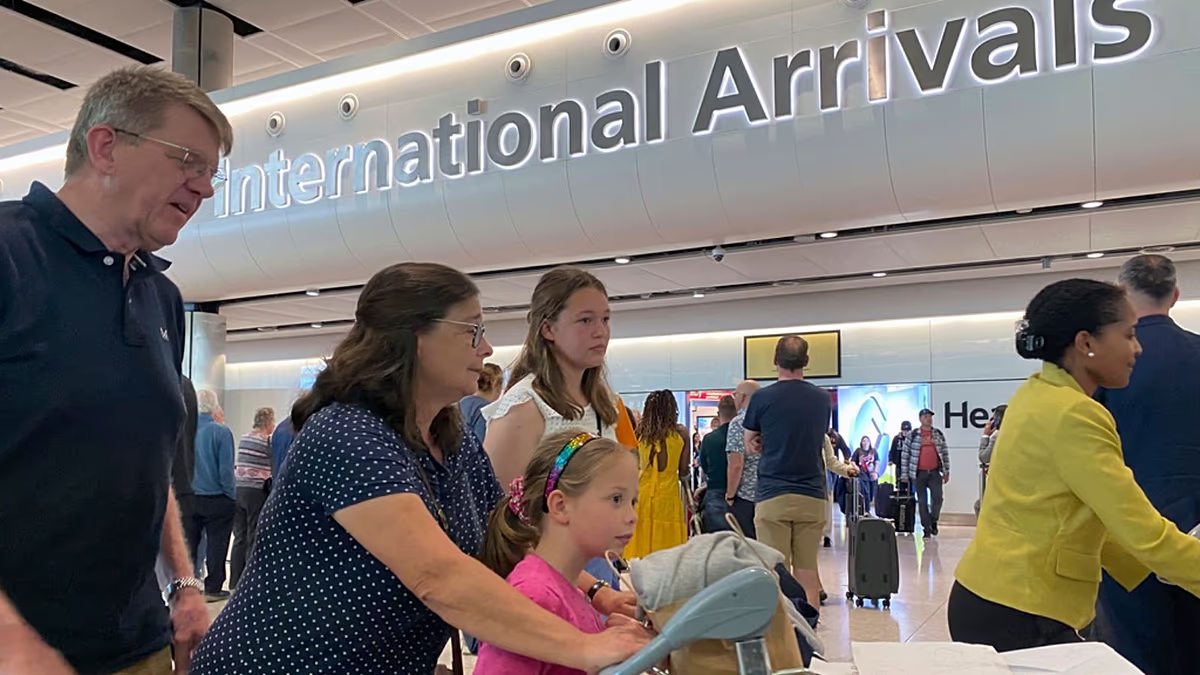
The most noticeable change has been the implementation of the long-anticipated EU Entry/Exit System (EES), which finally launched on October 12th after multiple delays. This new digital border control system replaces traditional passport stamping with electronic verification that collects biometric data—including fingerprints and facial images—from non-EU travelers. Covering most EU countries plus Iceland, Norway, Switzerland, and Liechtenstein (though excluding Ireland and Cyprus), the system aims to enhance security, combat illegal immigration, and identify visa overstayers by maintaining comprehensive digital records. The rollout hasn’t been entirely smooth, with several implementation issues causing delays, particularly at busy crossing points like the UK Port of Dover, where the launch for car passengers has been pushed to 2026 to avoid holiday travel disruptions. While these initial hiccups might mean longer waits at border crossings in the short term, the system promises more streamlined processes once fully operational. Meanwhile, two other major travel authorization systems have seen delays: the European Travel Information and Authorisation System (ETIAS), which will require visa-exempt tourists to obtain a €20 online permit, has been postponed until late 2026, and the UK’s Electronic Travel Authorisation (ETA) will only be strictly enforced beginning February 2026, requiring visitors from 85 currently visa-exempt countries to secure a digital permit costing £16 (€18.20) for stays up to six months.
The financial landscape of European travel has transformed dramatically in 2025, with costs rising across multiple fronts. Beyond basic inflation, tourists now face an array of new expenses designed specifically to manage visitor numbers and generate revenue for local infrastructure. Tourist taxes have spread throughout the continent, with Iceland, Spain, Norway, and even the UK introducing nightly fees for accommodations. Venice has maintained its controversial day-tripper fee, proving the experiment has become a permanent fixture. Simultaneously, major cities including Paris and Barcelona have implemented severe restrictions on short-term rentals like Airbnbs, primarily to protect local housing markets from tourist-driven inflation. These policies have significantly reduced the availability of budget accommodations in popular destinations. Winter sports enthusiasts have been particularly affected, with ski pass prices in Alpine resorts increasing by as much as 40 percent compared to 2021 levels due to soaring energy and maintenance costs. Together, these measures reflect a continental pivot toward attracting fewer but higher-spending visitors—a strategy officials describe as promoting “quality tourism” over mass tourism, with the dual benefits of reducing environmental impact and increasing per-visitor spending.
Tourist behavior has come under increasing scrutiny this year, with numerous localities enacting regulations to address disruptive visitor conduct. Spain’s San Sebastián joined the growing list of coastal destinations banning smoking on beaches, while Portugal’s Albufeira made headlines by instituting fines for inappropriately dressed tourists. The Spanish port of Palma took aim at noisy revelers by prohibiting party boats, a move designed to free up infrastructure and address residents’ noise complaints. France has taken perhaps the strongest stance on unruly behavior, implementing strict penalties for passengers who cause disruptions on flights—including potential fines of up to €20,000 and boarding bans lasting up to four years. These measures reflect growing frustration among residents of popular destinations who have increasingly voiced concerns about tourism’s negative impacts on their daily lives. Local governments are responding by setting clearer expectations for visitors and backing these expectations with meaningful enforcement mechanisms. The message across Europe has become increasingly clear: tourists are welcome, but respectful behavior is now mandatory rather than merely encouraged.
Air passenger rights remain in flux across Europe, with promised improvements perpetually stalled by industry resistance. For more than a decade, EU lawmakers have debated enhanced protections that would guarantee fee-free cabin bags and strengthen compensation for flight delays—issues that have become increasingly relevant as disruptions have grown more common. However, intense lobbying from airlines has successfully delayed these passenger-friendly reforms, with carriers warning that any additional consumer protections would inevitably result in higher ticket prices. Some EU member states have even advocated for reducing existing rights by extending the delay threshold for compensation from three hours to four. With no resolution achieved this year, negotiations will continue into early 2026, leaving passengers in an uncertain position. Meanwhile, Ryanair’s recent decision to eliminate paper boarding passes has raised regulatory concerns, particularly in Portugal, where aviation authorities have warned the airline that refusing boarding to passengers with physical passes may violate air passenger rights regulations. The ongoing tension between consumer protections and industry profitability continues to shape the air travel experience across the continent.
As 2025 draws to a close, European travel has clearly entered a new era defined by digital border controls, increased costs, and heightened behavioral expectations. These changes collectively represent a significant shift in how European destinations manage tourism—moving away from the volume-focused approach of previous decades toward a more sustainable model that prioritizes local residents’ quality of life. For travelers, this transformation means accepting additional preparation, higher costs, and more stringent regulations as the new normal when exploring Europe. The implicit bargain being offered is clear: tourists can still enjoy Europe’s extraordinary cultural heritage and natural beauty, but the days of unfettered, low-cost mass tourism appear to be ending. As destinations throughout the continent struggle to balance their economic reliance on tourism with preserving local communities and environments, these new policies likely represent not merely temporary measures but the beginning of a fundamental reimagining of what tourism in Europe should look like in the 21st century. The question now is whether other global destinations will follow Europe’s lead in attempting to make tourism more sustainable, both environmentally and socially.