


Amazon Now: The Ultra-Fast Delivery Service Transforming Grocery Shopping
A Race Against Time: Testing Amazon’s 30-Minute Promise
In the ever-evolving landscape of online shopping convenience, Amazon has launched a new contender that’s raising eyebrows and setting records. The “Amazon Now” ultra-fast delivery service for household essentials and groceries is redefining what it means to shop from home. During a recent test in Seattle, the service delivered impressively on its bold promise – from the moment of clicking “order” on the Amazon app to the groceries arriving at the doorstep, only 23 minutes elapsed. This handily beat Amazon’s already ambitious 30-minute delivery guarantee, setting a new standard for what consumers might expect from rapid delivery services.
Amazon Now is currently rolling out in select neighborhoods across Seattle and Philadelphia, offering a carefully curated selection that spans fresh produce, meats, seafood, pantry staples, frozen foods, beverages, and household supplies. The service integrates seamlessly with the existing Amazon ecosystem, allowing customers to track their orders in real-time and tip their drivers directly through the app. In a strategic move to boost Prime membership value, Amazon has structured the pricing to heavily favor subscribers – Prime members pay delivery fees starting at just $3.99, while non-Prime customers face a significantly steeper $13.99 charge. Both groups incur a small basket fee of $1.99 for orders under $15, encouraging larger purchases. Behind the scenes, Amazon is developing specialized rapid-delivery hubs, including converting a former Amazon Fresh Pickup location in Seattle’s Ballard neighborhood, though this particular site wasn’t involved in the test order.
From Click to Doorstep: The Shopping Experience Unveiled
The test order included six everyday items: a Red Baron frozen pizza ($4.37), 365 by Whole Foods Market multigrain bread ($2.85), a 4-pack of Duracell AA batteries ($5.47), Saltine crackers ($4.05), Sabra classic hummus ($3.95), and blackberries ($2.17). The merchandise total came to $22.86, with a $3.99 delivery fee, 64 cents in tax, and a $3 tip, bringing the final cost to $30.49. While the tester noted this seemed expensive for just six items, about $7 of that total covered the convenience of rapid delivery and driver compensation. The ordering process was straightforward through the Amazon app, which immediately provided an estimated delivery time of 1:05 PM after the order was placed at 12:38 PM.
The real magic of Amazon Now lies in its tracking capabilities. The app features an intuitive status bar showing the order’s journey from placement to delivery, with stages marked as “ordered,” “packed,” “out for delivery,” and finally “delivered.” Within minutes of ordering, the status jumped from “ordered” directly to “out for delivery,” bypassing the packing stage in the app’s display. A small Amazon vehicle icon moved across a map in real-time, showing the driver’s progress toward the delivery address. Interestingly, the estimated delivery time improved as the driver made good progress, dropping from 1:05 PM to 1:02 PM. This level of transparency addresses one of the common anxieties of online shopping – not knowing precisely when your items will arrive – and transforms it into an engaging experience where customers can literally watch their groceries coming to them.
Behind the Scenes: The Logistics of Lightning-Fast Delivery
According to permit filings uncovered during research, Amazon Now’s operations reveal a carefully orchestrated system designed for maximum efficiency. Employees pick and bag items in back-of-house stockrooms before staging completed orders on front-of-house shelves. Amazon Flex drivers then arrive, scan the orders, confirm details, and depart with packages – a process tightly scheduled to take approximately two minutes per handoff. These facilities are designed to operate around the clock, “much like a convenience store,” according to the permit documents. This continuous operation enables Amazon to fulfill its 30-minute delivery promise regardless of when customers place their orders.
The driver who delivered the test order revealed that he picked up the groceries from an Amazon Now-specific facility located near a Whole Foods at Roosevelt Way NE and NE 64th Street in Seattle – approximately 3.5 miles or a 15-minute drive from the delivery address. Interestingly, he was unaware of the planned Amazon Now delivery hub being developed just down the road in Ballard. This suggests Amazon may be compartmentalizing information about its expanding network of micro-fulfillment centers, perhaps to maintain operational flexibility or competitive advantage. The transportation implications of this new service could be significant. INRIX, a transportation software company that recently released its annual Global Traffic Scorecard, noted that Seattle’s congestion is increasing, particularly in last-mile corridors critical to delivery fleets. However, an INRIX transportation analyst suggested that Amazon Now might actually help distribute demand more evenly across the transportation network rather than concentrating congestion at larger hubs.
The Delivery: Quality, Packaging, and First Impressions
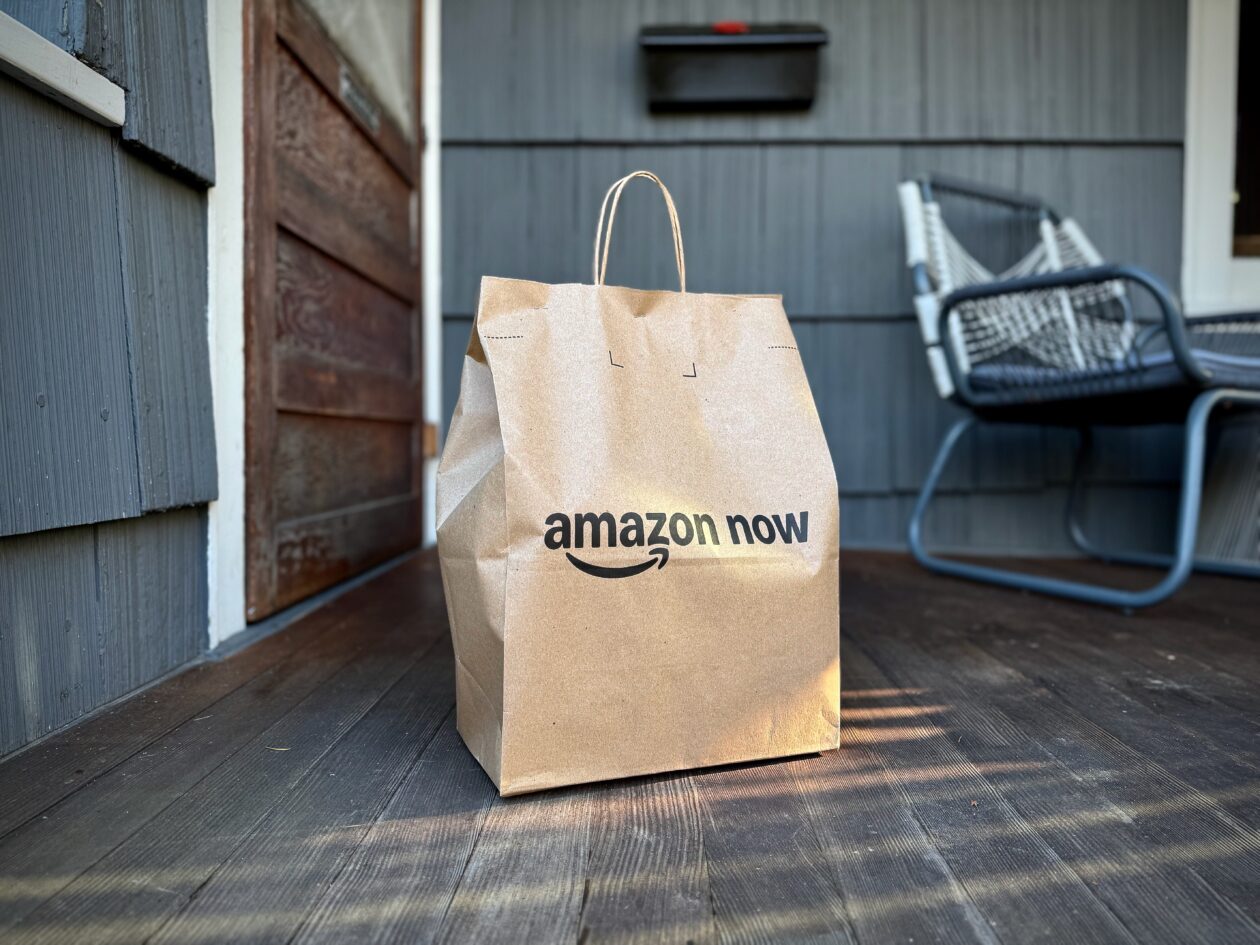
When the driver arrived at precisely 1:00 PM – just 23 minutes after the order was placed – he handed over a brown paper Amazon Now bag containing all six requested items. The groceries were packed neatly, though the bread was slightly compressed. Importantly, temperature-sensitive items remained at appropriate temperatures – the frozen pizza was still cold, as was the refrigerated hummus. The blackberries appeared fresh and comparable to what one would select personally at a grocery store. The batteries, which were the only immediate necessity for the tester, came in a four-pack, though the tester noted a preference for larger, more economical packages that weren’t available through the service.
The quality and condition of the delivered items highlight one of the fundamental challenges of grocery delivery services: convincing customers that they’ll receive the same quality they would select themselves in store. Amazon Now seems to be addressing this concern successfully, at least based on this limited test. The careful handling of temperature-sensitive items like frozen pizza and refrigerated hummus demonstrates that Amazon has implemented effective cold-chain management in its rapid delivery process. The minor compression of the bread loaf represents the kind of small compromise that customers might accept in exchange for the extreme convenience of 23-minute delivery. While the limited selection of certain items (like battery pack sizes) indicates that Amazon Now isn’t attempting to replicate the full range of a traditional grocery store, it suggests a focus on the most commonly needed items in quantities suitable for immediate use.
Amazon Now in Context: Who Needs 30-Minute Groceries?
The tester, who self-identified as “old school-ish,” reflected on who might benefit most from Amazon Now. While personally preferring traditional grocery shopping for its social aspects and browsing opportunities, the tester acknowledged several scenarios where the service could prove valuable: being sick and needing comfort items like soup and crackers delivered without leaving home; realizing you’ve forgotten crucial ingredients for dinner after already making one trip to the store; or simply valuing time so highly that the premium paid for delivery justifies not making the journey yourself. The tester’s 18-year-old immediately recognized the service concept, comparing it to DoorDash, suggesting that younger generations might find Amazon Now’s value proposition more intuitive.
Amazon Now represents the latest evolution in a decades-long trend toward convenience-focused shopping. From the earliest mail-order catalogs to the first online shopping websites to today’s ultra-fast delivery services, each innovation has further reduced the friction between wanting something and having it in hand. What makes Amazon Now particularly noteworthy is how it blurs the line between traditional e-commerce (with its inherent waiting period) and the immediate gratification of in-person shopping. The service essentially offers the best of both worlds: the convenience of shopping from your couch combined with nearly immediate fulfillment. For a population increasingly accustomed to on-demand everything, from streaming entertainment to restaurant delivery, Amazon Now feels like a natural progression. Whether this service will fundamentally change shopping habits for a significant portion of consumers remains to be seen, but it certainly represents Amazon’s continued commitment to removing every possible barrier between desire and fulfillment in the consumer experience.